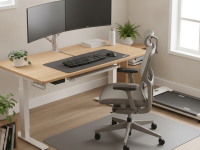
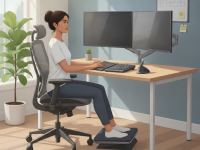
Are you looking for an ergonomic desk setup for sciatica prevention? Small changes at your workstation can relieve pressure on the sciatic nerve and improve daily comfort. This guide offers practical, evidence-based steps to design a safer, more supportive workspace that protects the lower back and long-term spine health.
Why ergonomics matter for sciatica prevention
Sciatica, characterized by sharp or burning pain radiating from the lower back down the leg, is often linked to prolonged poor posture and repetitive strain. An ergonomic desk setup helps maintain natural spinal curves and reduces load on the hips, buttocks, and lower back. By optimizing chair support, desk height, monitor placement, and movement, you create conditions that lower the risk of nerve irritation during work.
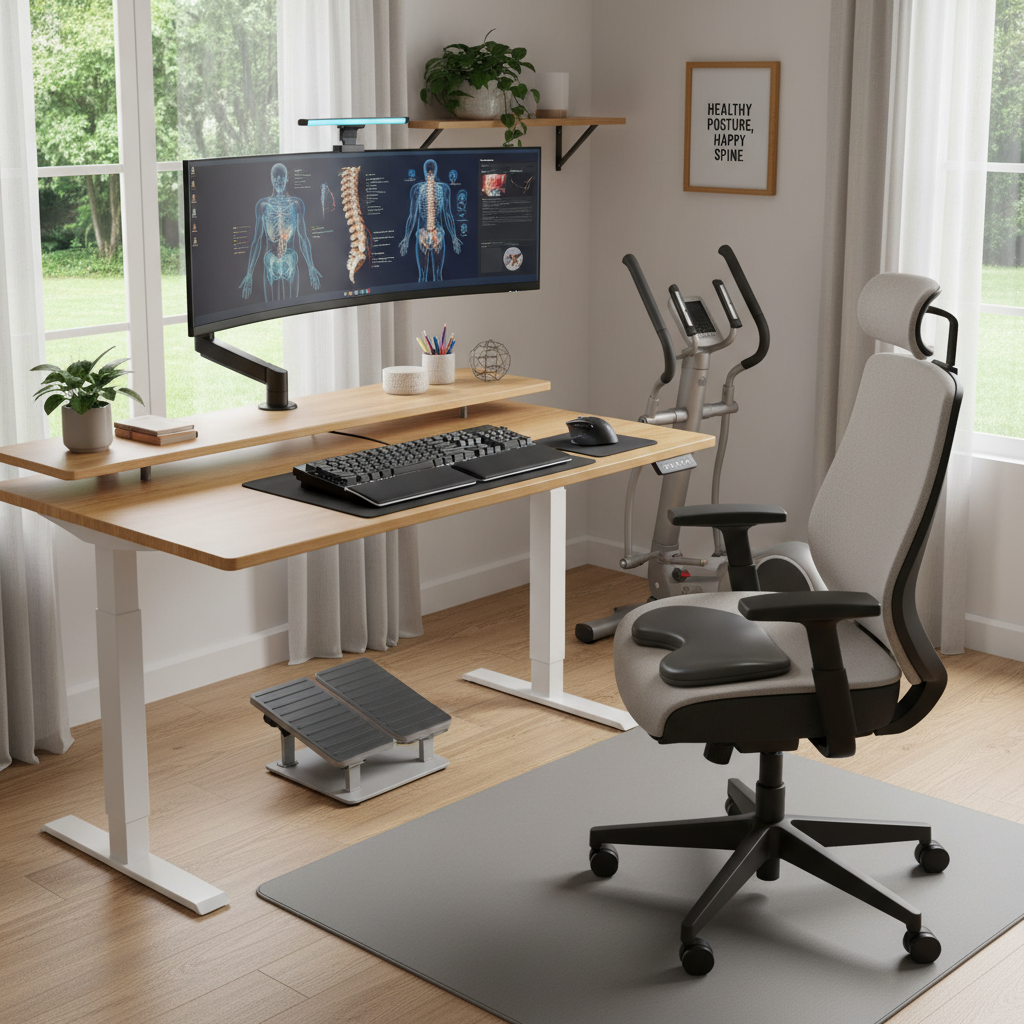
Simple adjustments can make a big difference. Consistency matters as well: short, frequent breaks are more protective than long, infrequent changes in position. The goal is to keep the spine in a neutral alignment while your body remains comfortable during desk work.
Key components of an ergonomic desk setup
Chair and lumbar support
Choose a chair with adjustable seat height, depth, and robust lumbar support. Your feet should rest flat on the floor or on a footrest, with your knees at about hip level and forming roughly a 90-degree angle. The seat depth should allow you to sit with your back against the lumbar zone while leaving about 2–4 inches of space between the back of your knees and the chair edge.
- Adjust the lumbar curve to fit the small of your back, not just the middle of your spine.
- Use armrests to support the shoulders without pulling you forward or elevating the elbows excessively.
- A breathable, cushioned seat with slight softness helps distribute pressure and reduces fatigue.
Desk height, depth, and work surface
The desk should allow your forearms to rest at about elbow height when typing, with wrists in a neutral position. Your elbows should be close to your body, forming roughly a 90-degree angle or slightly more open. The desk depth should permit comfortable reach to the keyboard and mouse without overreaching, which can strain the shoulders and back.
- A sit-stand desk or height-adjustable workstation supports varied postures and reduces sustained pressure on the spine.
- Keep frequently used items within easy reach to avoid repeated twisting or leaning.
Monitor, keyboard, and mouse positioning
Position the monitor so the top line of the screen is at or slightly below eye level. This keeps your neck in a neutral posture and prevents forward head tilt. The screen should be about an arm’s length away, reducing the need to lean forward. The keyboard and mouse should be placed directly in front of you, at elbow height, with wrists straight and relaxed.
- Consider a monitor arm to fine-tune height and distance without sacrificing desk space.
- A vertical or angled mouse and a split keyboard can reduce wrist strain for some users.
Foot support and leg position
Feet should be supported flat on the floor or on a footrest. Avoid crossing the legs for extended periods, which can alter pelvic alignment and contribute to sciatica symptoms. If your feet don’t reach the floor, a stable footrest helps maintain neutral knee and hip angles.
- Check that the chair leg clearance does not restrict foot position.
- Rotate posture periodically to distribute load across different muscle groups.
Movement, breaks, and accessories
Ergonomics isn’t only about static positioning. Integrate microbreaks and gentle movements to protect the sciatic nerve. Use a reminder to stand, stretch, or walk for a few minutes every 30–60 minutes. Accessories like a backpack or bag should be minimized or balanced to avoid asymmetrical loading.
- Slip-on footrests and anti-fatigue mats can aid comfort during standing phases.
- A foam roller or handheld massage tool can help relieve localized tension around the hips and lower back between breaks.
Practical steps to customize your workspace
Step-by-step adjustments
- Measure your seated posture: sit with your back against the chair, feet flat, knees at about 90 degrees. Adjust the chair height so your thighs are supported without contact between the edge of the seat and the backs of your knees.
- Set monitor height so the top third of the screen aligns with your eye line. If needed, use a stand or riser to bring the screen up.
- Position the keyboard and mouse at elbow height and within easy reach to prevent reaching-forward or wrist bending.
- Ensure your chair’s lumbar support aligns with the natural curve of your lower spine. If not adjustable, consider a lumbar cushion or a chair with better built-in support.
- Incorporate a sit-stand routine: alternate between sitting and standing in 30–60 minute blocks, adjusting the desk height as needed to maintain neutral posture.
Desk-friendly exercises and movement routines
Complement an ergonomic setup with short movements to prevent stiffness and nerve irritation. Simple desk-friendly stretches and activation exercises can help maintain mobility and reduce sciatica risk during daily work.
- Knee-to-chest and hip flexor stretches performed gently for 20–30 seconds on each side.
- Seated piriformis stretch: cross one ankle over the opposite knee and gently press the raised knee outward.
- Hip hinges and pelvic tilts to reinforce neutral spine alignment while standing or sitting.
- Calf raises and ankle circles to promote blood flow and reduce lower limb numbness during long hours of sitting.
When to seek professional help
While an optimized desk setup can alleviate many cases of sciatica, persistent or worsening symptoms warrant medical evaluation. Seek care if you notice severe leg weakness, numbness beyond the foot, new bowel or bladder changes, or progressive pain despite workstation adjustments. A clinician can assess for nerve compression, disc health, or other conditions and may recommend physical therapy, imaging, or targeted exercises.
Maintenance and ongoing evaluation
Regularly review your workstation every few weeks, especially after changes in tasks or hardware. Small refinements to chair height, monitor distance, or keyboard position can yield continued benefits. Keep an ergonomic mindset: prioritize neutral spine alignment, comfortable muscle loading, and regular movement to sustain sciatica prevention over time.
A high-resolution, infographic-style illustration showing an ergonomic desk setup optimized for sciatica prevention. Include labeled elements: adjustable chair with lumbar support, sit-stand desk at adjustable height, monitor at eye level with a monitor arm, keyboard and mouse at elbow height, feet resting flat on a footrest, subtle neutral office lighting, and a person seated with correct posture (hips and knees at 90 degrees, spine in natural curve). Use callouts for recommended measurements (monitor top at or slightly below eye level, elbow height for keyboard, knee angle around 90 degrees). Include a side panel with quick tips: microbreak reminders, posture reminders, and a brief checklist. Color palette: calming neutrals with blue accents, clear icons, and simple typography for readability.