Isometric holds for patellar tendonitis are a practical, low-pain strategy to build tendon load tolerance and reduce symptom flare during rehabilitation. Many clinicians use isometric exercises early in patellar tendinopathy (jumper’s knee) programs because they can provide immediate pain relief while beginning to load the tendon safely.
What is patellar tendonitis (patellar tendinopathy)?
Patellar tendonitis, also called patellar tendinopathy or jumper’s knee, is a condition characterized by pain at the tendon that connects the kneecap (patella) to the shinbone. It often affects athletes involved in running, jumping, and pivoting sports but can occur in recreational exercisers and non-athletes.
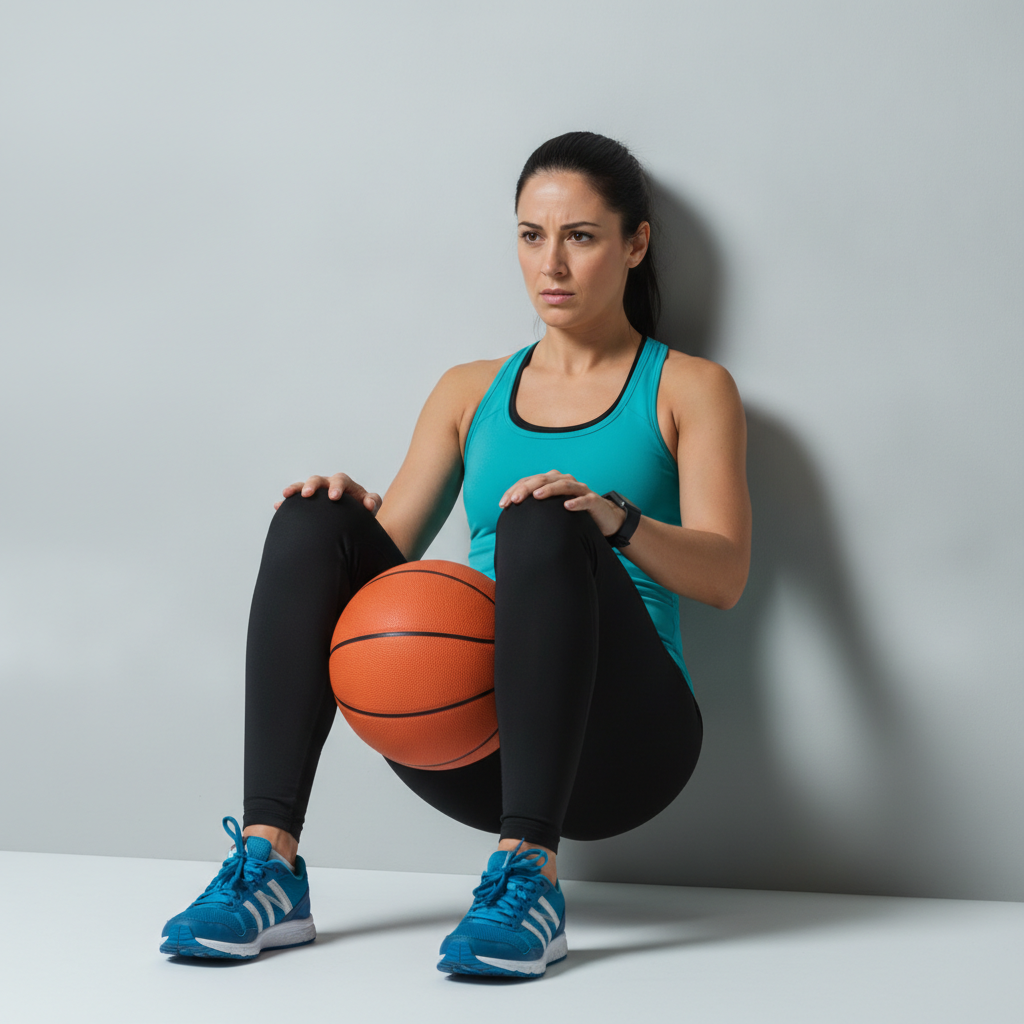
Symptoms range from localized pain during activity to stiffness and reduced performance. The underlying problem is usually a failed tendon adaptation to repetitive or excessive loading rather than acute inflammation alone.
Why use isometric holds?
Isometric holds are static muscle contractions where the joint angle does not change. For patellar tendonitis, they allow targeted loading of the quadriceps-patellar tendon unit without high strain rates or repetitive movement that can increase pain.
Clinically, isometrics can provide rapid pain relief for some people and help restore confidence to load the tendon. They also form a bridge to more demanding loading strategies like eccentric exercises and heavy slow resistance training.
Evidence and clinical reasoning
Research and clinical experience support using isometric contractions early in tendon rehabilitation to manage pain and start progressive loading. While protocols vary, isometrics are generally considered safe and effective as part of a graded tendon-loading program.
Important clinical principles include controlling load, monitoring pain response, and progressing volume and intensity in a staged manner to promote tendon adaptation while minimizing flare-ups.
How to perform isometric holds for patellar tendonitis
General tips
- Warm up briefly with light cycling or walking for 5–10 minutes to increase blood flow to the knee.
- Start with low to moderate intensity—enough to feel effort but not severe pain.
- Hold durations commonly range from 20 to 60 seconds; aim for steady breathing and good form.
- Perform isometrics in ranges that are comfortable; many find 45–60 degrees of knee flexion effective for patellar loading.
Exercise 1: Single-leg wall sit isometric
- Stand with your back against a wall and slide down until the knee is approximately 45–60 degrees of flexion.
- Shift weight to the symptomatic leg by bringing the other foot slightly off the ground or reducing weight through it.
- Hold the position for 20–45 seconds, maintaining a neutral spine and even breathing.
- Rest 60–90 seconds and repeat for 3–5 sets.
Exercise 2: Seated leg extension isometric (against immovable object)
- Sit on a chair with the knee bent to 45–60 degrees. Place a rolled towel or a stable object under the foot to provide a firm contact point.
- Press the foot into the object without allowing the knee to straighten (isometric contraction) and hold for 20–45 seconds.
- Repeat 3–5 sets with 60–90 seconds rest.
Exercise 3: Isometric leg press (if gym access)
- Set the leg press to a comfortable position with knee flexion in the mid-range. Push against the platform and hold without full extension.
- Maintain tension for 20–45 seconds, repeat 3–5 sets.
Program example (first 2–4 weeks)
Frequency: perform isometric sessions once daily for acute or high-pain phases, then reduce to 3 times per week as pain improves. Each session: 3–5 sets of 20–45 second holds with 60–90 seconds rest.
Progression: increase hold duration first (20 → 45 → 60s), then increase sets, then add mild external load (weighted vest or cuff) once isometrics are pain-tolerated. Transition to dynamic loading exercises (slow eccentric and concentric) after 2–6 weeks depending on symptoms.
Pain monitoring and progression rules
Use a pain-monitoring approach to guide progression. Mild to moderate discomfort during isometrics is acceptable, but severe pain should be avoided. A common guideline is that pain during exercise should not exceed 3 out of 10 and should return to baseline within 24 hours.
If pain increases the next day or symptoms worsen, reduce intensity, shorten holds, or increase rest days. Always prioritize consistent, progressive loading rather than aggressive spikes in volume or intensity.
When to add eccentric and heavy slow resistance training
Once pain is controlled and isometric tolerance is established, introduce eccentric-focused exercises (slow lowering phases) and then heavy slow resistance training to stimulate tendon remodeling. These modalities provide variable-length loading that is important for long-term recovery and strength.
A typical sequence: isometrics → slow concentric/eccentric single-leg squats and step downs → heavier bilateral and unilateral loading as tolerated.
Precautions and when to seek help
- Do not ignore sudden worsening of pain, marked swelling, locking, or instability—these require immediate clinical evaluation.
- If symptoms fail to improve after 6–12 weeks of structured rehab, consult a sports medicine clinician or physiotherapist for reassessment and to rule out structural issues.
- Post-surgical patients or those with systemic inflammatory disease should follow individualized protocols under medical supervision.
Practical tips for real-world rehab
- Combine isometrics with load management: reduce high-impact activities (jumping, sprinting) early, then reintroduce gradually as tendon tolerance improves.
- Address contributing factors such as quadriceps weakness, hip and ankle mobility, footwear, and training errors.
- Track symptoms and function (jumping ability, load capacity) rather than relying solely on pain scores.
Conclusion
Isometric holds for patellar tendonitis are a useful early-stage tool to reduce pain and begin restoring tendon load capacity. When combined with careful progression, pain monitoring, and later inclusion of eccentric and heavy slow resistance exercises, isometrics can be a foundational part of an evidence-informed rehabilitation plan.
For best outcomes, follow a structured program, modify activity to reduce tendon overload, and consult a qualified clinician if recovery stalls or symptoms worsen.