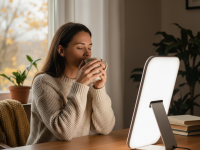
Morning sunlight exposure for sleep cycles can reset your internal clock and improve sleep quality. Morning sunlight exposure for sleep cycles signals the brain to suppress melatonin, raise daytime alertness, and align the circadian rhythm with the day-night cycle.
Why morning light matters for sleep
Natural morning light is the strongest environmental cue for the circadian system. Specialized retinal cells—intrinsically photosensitive retinal ganglion cells (ipRGCs) containing melanopsin—send light information to the brain’s master clock (the suprachiasmatic nucleus or SCN).
When the SCN receives bright morning light, it shifts the timing of physiological processes: it reduces melatonin production, increases cortisol and body temperature appropriately, and promotes daytime alertness. This coordination supports consolidated nighttime sleep and predictable sleep-wake timing.
Key physiological mechanisms
- Melatonin suppression: Morning light tells the pineal gland to lower melatonin, helping you wake up.
- Circadian entrainment: Daylight anchors the sleep-wake cycle to the 24-hour day, improving sleep regularity.
- Alertness and mood: Early light exposure boosts daytime alertness and can reduce symptoms of seasonal mood changes.
How much sunlight and when
Timing and intensity are both important. Aim to get natural light early—ideally within 30 to 60 minutes of waking. The morning window is most effective for advancing the circadian clock (making you sleepier earlier in the evening).
Duration varies by intensity. On a bright day outdoor light can exceed 10,000 lux and even reach 100,000 lux; 10–30 minutes outdoors is often sufficient. On overcast days or when staying near a window, 30–60 minutes may be needed because indoor light levels are much lower.
Practical light benchmarks
- Outdoor morning sun (bright): 10–100k lux — 10–30 minutes recommended.
- Overcast/outdoor: 1–10k lux — 20–45 minutes recommended.
- Indoor near a bright window: typically under 1k lux — 30–60 minutes recommended.
- Light therapy box: 10,000 lux at recommended distance — typically 20–30 minutes (follow device guidance).
Evidence and clinical context
Clinical and laboratory studies show that morning bright light can shift circadian phase, reduce sleep latency, and improve sleep quality in a range of populations. Research published in sleep and chronobiology journals supports morning light as a first-line behavioral tool for circadian realignment.
Light therapy is an evidence-based treatment for circadian rhythm disorders (like delayed sleep phase) and seasonal affective disorder (SAD). For many people, simple outdoor morning exposure can deliver meaningful benefits without special equipment.
Practical, evidence-based tips to use morning sunlight effectively
- Get outside soon after waking. Walking, stretching, or having coffee on a balcony provides direct light to the eyes without staring at the sun.
- Make exposure daily. Consistency is key—regular morning light anchors your rhythm far better than intermittent exposure.
- Combine light with morning activity. A short walk or gentle exercise outdoors increases effectiveness and supports alertness.
- Avoid bright screens and intense light too late in the evening. Evening light, especially blue-enriched light, delays melatonin and pushes sleep later.
- If you can’t go outside, sit by a bright window or use a medically reviewed light therapy box (10,000 lux) following manufacturer instructions.
- Keep sleep regular: wake and bedtimes within a consistent window strengthen the effect of morning light.
Special populations and considerations
Children, older adults, shift workers, and people with certain medical conditions may need tailored strategies. For example, older adults often have reduced retinal light transmission and may require longer or brighter exposure.
Shift workers and those with delayed sleep-wake phase disorder can use timed morning light (or midday/early evening avoidance of light) as part of a chronotherapy plan—preferably under clinical guidance.
Safety and contraindications
- Never stare directly at the sun. Direct gaze can harm the eyes—face the light rather than look at the source.
- Use sun protection for prolonged outdoor exposure to protect skin and eyes (sunscreen, hats, sunglasses when appropriate). For the first few minutes of morning light, brief facial exposure without sunglasses can be effective; consult an eye specialist if you have concerns.
- People with photosensitive conditions or on photosensitizing medications should consult a clinician before increasing sunlight exposure.
When to consult a professional
If you struggle with chronic insomnia, excessive daytime sleepiness, or symptoms of a circadian rhythm disorder despite consistent morning light habits, seek assessment from a sleep specialist or your primary care provider. They may recommend formal light therapy protocols, melatonin timing, actigraphy, or other targeted treatments.
Medical evaluation is also important if you have mood symptoms, significant shifts in sleep timing, or safety concerns related to sleepiness at work or while driving.
Putting it into practice: a simple morning routine
Start small and build the habit. Example routine: upon waking, open curtains and go outside or sit by a window for 10–30 minutes while doing light activity. Keep wake times consistent, limit evening screen time, and adjust duration by season and weather.
Over 1–3 weeks many people notice easier morning wakefulness, improved daytime focus, and earlier, more consolidated nighttime sleep.
Conclusion
Morning sunlight exposure for sleep cycles is a low-cost, high-impact strategy to align your internal clock, enhance daytime energy, and improve nighttime sleep. Used consistently and safely, natural morning light is one of the most powerful behavioral tools for healthy sleep and circadian health.
When in doubt, consult a sleep clinician to personalize timing and intensity—especially for persistent or severe sleep problems.