The impact of blue light on skin aging is a growing concern as daily exposure from screens and sunlight increases. Many people ask whether blue light accelerates wrinkles, pigmentation, or collagen loss and what evidence-based steps they can take to protect their skin.
What is blue light (HEV) and where does it come from?
Blue light, also called high-energy visible (HEV) light, spans roughly 400–500 nm on the light spectrum. It comes from natural sunlight as well as digital devices, LED lighting, and some indoor lamps.
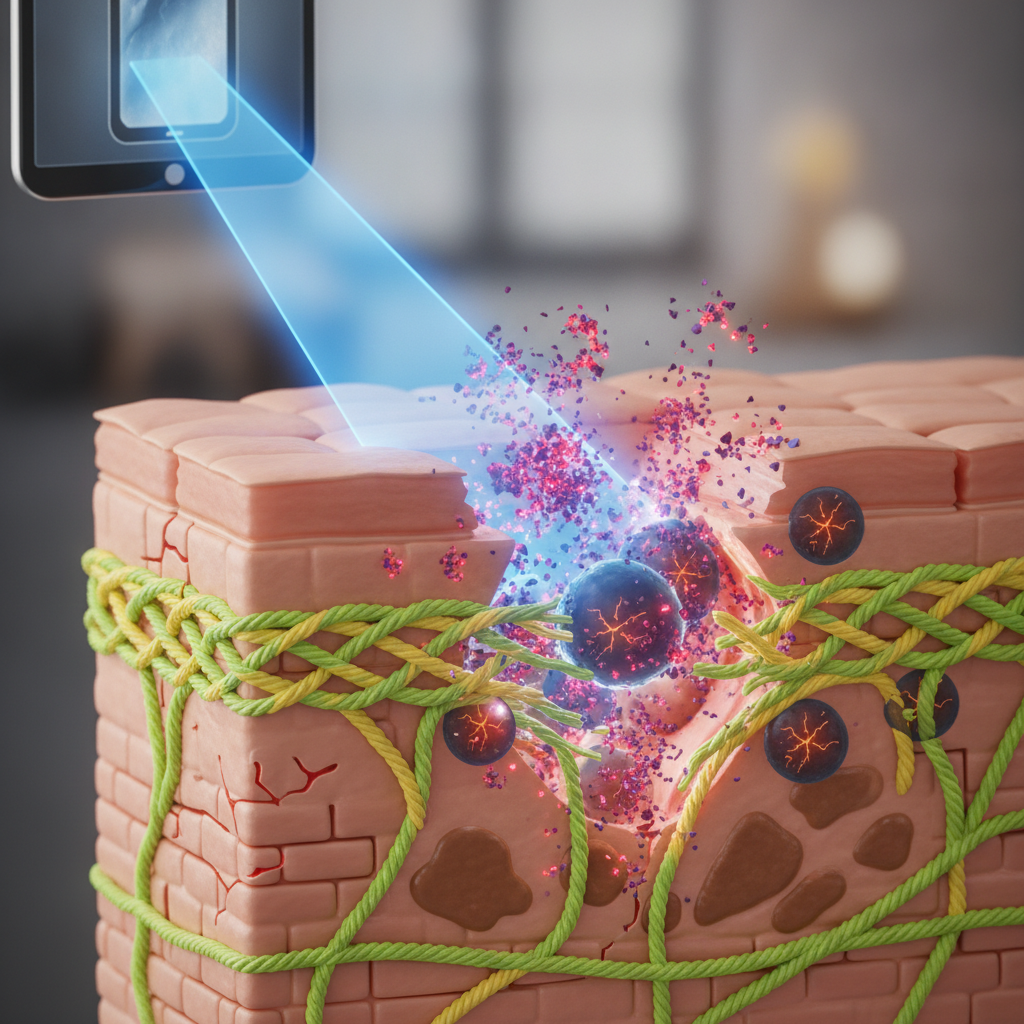
Unlike ultraviolet (UV) radiation, blue light is visible and penetrates more deeply into the skin, reaching the upper dermis where structural proteins and pigment cells reside. This deeper penetration is central to how blue light may influence skin aging processes.
How blue light affects skin aging: biological mechanisms
Research indicates blue light can increase reactive oxygen species (ROS) in skin cells, creating oxidative stress. Oxidative stress damages cell membranes, DNA, and collagen, and it stimulates matrix metalloproteinases (MMPs) that break down collagen and elastin.
Blue light exposure can also affect melanocytes, potentially causing persistent hyperpigmentation, particularly in darker skin types (Fitzpatrick III–VI). These combined effects — oxidative damage, collagen degradation, and pigmentation changes — contribute to visible signs of photoaging.
Key skin changes linked to blue light
- Increased oxidative stress and inflammation.
- Upregulation of MMPs leading to collagen breakdown and fine lines.
- Persistent hyperpigmentation or uneven skin tone, especially in darker skin.
- Potential contribution to reduced skin barrier function over time.
What does the evidence say?
Laboratory and clinical studies have demonstrated that visible blue light can induce ROS and affect pigmentation pathways in human skin cells. Observational and controlled studies show measurable pigmentary changes after repeated HEV exposure.
While the magnitude of blue light’s contribution relative to UV exposure is still being clarified, dermatologists and researchers agree that blue light is an additional, meaningful source of photodamage that merits prevention alongside UV protection.
Who is at higher risk?
Certain people may be more sensitive to blue-light effects. Those with darker skin tones often experience more noticeable hyperpigmentation from visible light. Individuals with high cumulative screen time or occupational exposure to intense LED lighting may also have greater risk.
Age, genetics, and coexisting skin conditions can influence susceptibility. People using photosensitizing medications should discuss blue-light exposure with a clinician, as sensitivity can increase.
Prevention and treatment strategies
Practical protection combines photoprotection, topical antioxidants, and established skin-repair therapies. These approaches focus on reducing exposure, neutralizing free radicals, and restoring collagen.
Daily protection tips
- Apply broad-spectrum sunscreen daily with SPF 30 or higher; use formulations that include iron oxides or are tinted to help block visible light. Reapply every two hours when exposed outdoors.
- Incorporate topical antioxidants such as vitamin C (ascorbic acid), vitamin E, and ferulic acid to neutralize ROS and strengthen photoprotection.
- Use topical niacinamide to reduce hyperpigmentation and support the skin barrier.
- Consider daytime retinoids or tretinoin under dermatologic guidance to stimulate collagen production and improve texture (usually introduced gradually).
- Limit close, prolonged exposure to screens when possible; increase distance, use device blue-light filters, and enable night-mode settings to reduce emission in evenings.
Physical and device-based measures
- Tinted sunscreens or mineral filters with iron oxides provide additional protection against visible light; plain chemical sunscreens may not block blue light effectively.
- Blue-blocking screen protectors and eyewear can reduce HEV emission from devices, though clinical evidence for direct skin benefit is limited. They may be helpful as part of a broader strategy.
- Regularly scheduled breaks from screen work (the 20-20-20 rule) can reduce cumulative exposure.
Treatment options for blue-light related skin changes
If hyperpigmentation or premature aging signs appear, dermatologic treatments can accelerate improvement. Options include topical hydroquinone or alternatives like azelaic acid and chemical peels for pigment reduction.
Procedures such as fractional lasers, intense pulsed light (IPL), and microneedling stimulate remodeling of collagen and can address texture and fine lines. A dermatologist will tailor treatments to skin type and pigmentation risk.
Practical daily routine (evidence-based)
- AM: Cleanse → antioxidant serum (vitamin C) → tinted broad-spectrum sunscreen with iron oxides → moisturizer.
- PM: Cleanse → retinoid (if tolerated) → hydrating moisturizer; incorporate niacinamide if pigment is a concern.
- Weekly: gentle exfoliation or professional treatments as advised by your clinician to manage pigmentation and stimulate renewal.
When to see a dermatologist
Consult a dermatologist if you notice new or worsening hyperpigmentation, rapid changes in skin texture, or if you are unsure about the best protection strategy for your skin type. Early evaluation helps tailor treatment and avoid worsening photoaging.
Dermatologists can perform patch testing for product sensitivity, recommend in-office procedures safely, and prescribe medical-grade therapies when needed.
Conclusion
Blue light contributes to skin aging through oxidative stress, collagen breakdown, and pigmentary changes, particularly when combined with UV exposure. While it’s not the only driver of photoaging, it is a modifiable risk factor.
Combining daily broad-spectrum photoprotection (including visible-light blocking tints), topical antioxidants, and evidence-based dermatologic care offers the most effective approach to minimize the impact of blue light on skin aging.