Hip flexor releases for lower back stiffness can reduce pain and restore movement when integrated into a consistent routine. These targeted releases—along with mobility work and strengthening—address a common contributor to lumbar stiffness: tight hip flexor muscles.
Why hip flexor tightness affects the lower back
The primary hip flexors (psoas major, iliacus, rectus femoris) attach near the lumbar spine and pelvis. When they become shortened or tight from prolonged sitting or repetitive movement patterns, they pull the pelvis into anterior tilt and increase lumbar compression.
That altered posture often creates stiffness, ache, or restricted extension in the low back. Treating the hip flexors can reduce tensile strain on the lumbar joints and improve overall spinal mechanics.
Who benefits from hip flexor releases
People with morning lower back stiffness, pain during lumbar extension, prolonged sitting jobs, athletes with limited hip extension, or those who feel tightness in the front of the hip commonly benefit. However, releases should be part of a broader plan that includes strengthening and movement retraining.
Assessment: quick self-check
- Thomas test: Pull one knee to your chest while lying supine—if the opposite thigh lifts off the table, hip flexors may be tight.
- Observe posture: An exaggerated lumbar curve and forward pelvis suggest hip flexor dominance.
- Palpation: Tenderness in the front of the hip or groin when pressing gently can indicate trigger points or tightness.
Evidence-based benefits
Clinical practice and research support combining manual release techniques with exercise for persistent low back pain and mobility deficits. Self-release methods and manual therapy can reduce muscle tone and pain in the short term; coupling that with targeted strengthening and movement patterns produces longer-lasting improvements.
Step-by-step hip flexor release techniques
Below are practical, safe releases you can perform at home. Start gently and stop if you experience sharp pain, numbness, or increased symptoms.
1. Soft ball self-release (psoas/iliacus focus)
- Lie on your stomach with a firm massage ball (lacrosse ball) placed just lateral to the navel and slightly below. Modify position if too intense.
- Apply steady pressure for 30–90 seconds while breathing deeply, then move the ball 1–2 cm and repeat to cover the area.
- Limit to 2–3 minutes per side on the first session; progress slowly as tolerated.
2. Foam roller anterior hip release
- Kneel in front of a foam roller placed under one hip crease. Shift bodyweight onto the roller to find tender spots along the front of the hip and upper thigh.
- Roll slowly back and forth 10–20 seconds on each spot; avoid rolling directly over the front of the hip joint if painful.
3. Active psoas release (gentle and guided)
- Lie on your back with knees bent. Place a small cushion under the lumbar spine for comfort.
- Bring one knee toward the chest slightly while pressing the opposite thigh gently into the table for 5–10 seconds, then relax and allow the muscle to release.
- Repeat 6–8 times per side, focusing on slow diaphragmatic breathing.
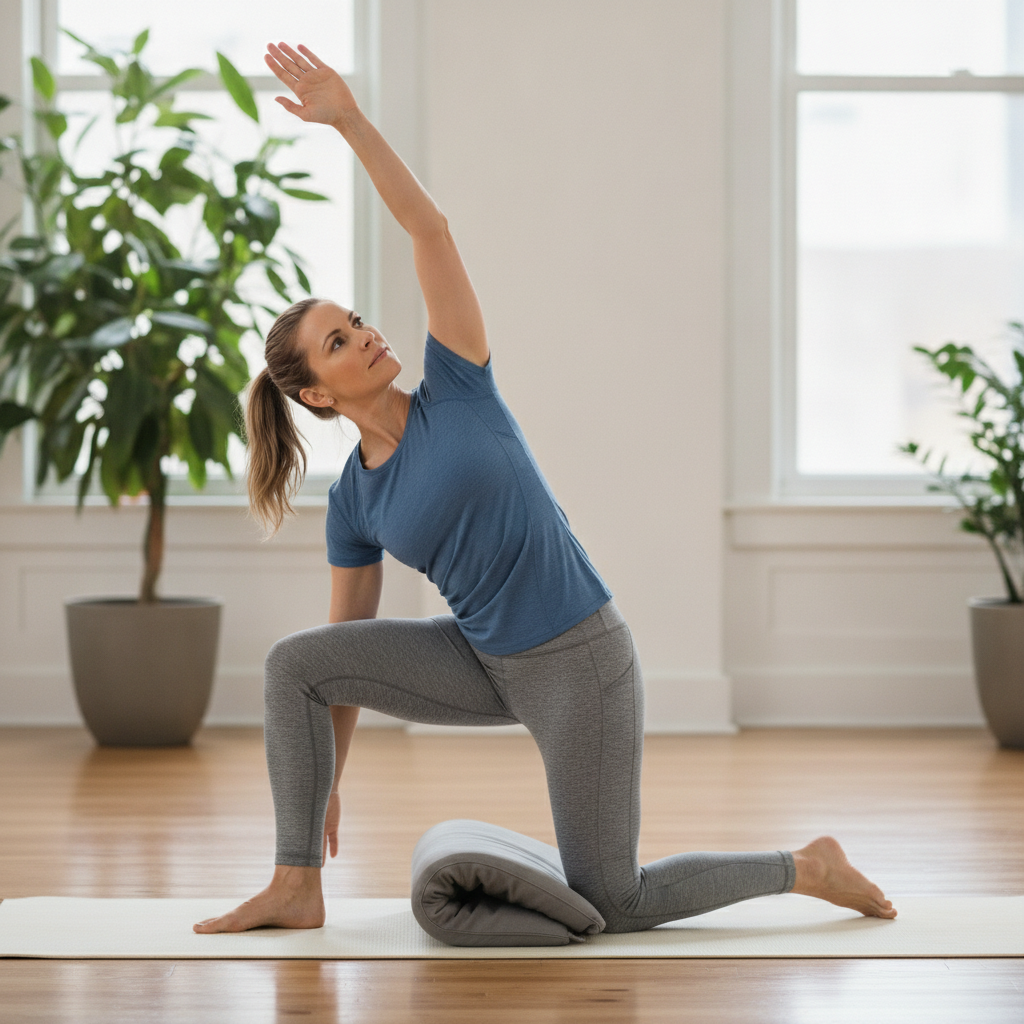
4. Kneeling hip flexor stretch with posterior pelvic tilt
- From a half-kneel, tuck your pelvis under (posterior tilt) before moving the hips forward until you feel a mild stretch in the front of the hip.
- Hold 30 seconds and repeat 2–3 times. Incorporate a gentle squeeze of the glute on the stretched side to enhance lengthening.
5. Dynamic movements and strengthening
- Leg swings (front-to-back): 10–15 controlled swings per side to restore hip flexion/extension rhythm.
- Glute bridges: 2–3 sets of 10–15 reps to strengthen hip extensors and counteract tight flexors.
Programming and frequency
Perform soft-tissue releases 3–5 times per week initially, paired with daily mobility and strengthening work. Short sessions (10–20 minutes) done consistently produce better results than infrequent long sessions.
Increase intensity gradually. If releases reduce stiffness but pain persists or worsens, reduce frequency and consult a clinician.
Precautions and red flags
- Stop immediately if you experience radiating leg pain, numbness, tingling, dizziness, or worsening neurological symptoms.
- Avoid aggressive pressure over abdominal organs or the front of the pelvis if you have recent surgery, pregnancy, or a known hernia.
- If you have osteoporosis, cancer, or an unstable spine, check with your physician before performing releases.
When to see a professional
See a physical therapist, osteopath, or physician if stiffness is severe, persistent beyond 4–6 weeks, associated with systemic symptoms (fever, unexplained weight loss), or accompanied by leg weakness or changing bowel/bladder function.
A trained clinician can perform targeted manual therapy, dry needling, and a progressive exercise plan tailored to your biomechanics and goals.
Daily mini-routine (5–10 minutes)
- 30–60 seconds gentle psoas ball release per side
- 2 x 30-second kneeling hip flexor stretches with posterior pelvic tilt
- 10 leg swings per side
- 2 sets of 10 glute bridges
Practical tips from clinical experience
As a clinician with over a decade of experience, I recommend combining releases with posture checks, regular breaks from sitting, and glute/hamstring strengthening. Small daily habits—standing meetings, micro-breaks to mobilize the hips—often produce meaningful reductions in low back stiffness.
Consistency is key. Short, frequent sessions targeting mobility and strength provide more durable relief than one-off treatments.
Conclusion
Hip flexor releases for lower back stiffness can be an effective component of a comprehensive self-care plan. When performed safely and combined with strengthening and movement retraining, these techniques often reduce stiffness, improve posture, and decrease low back discomfort.
If you are unsure which techniques are right for you, consult a licensed physical therapist or medical professional for a personalized assessment and treatment plan.