Why tight hip flexors contribute to lower back stiffness
The hip flexors are a group of muscles (including the psoas major, iliacus, and rectus femoris) that connect the pelvis and lumbar spine to the femur. When these muscles are short or overactive they tilt the pelvis forward, increasing lumbar lordosis and loading the lower back.
Biomechanically, tight hip flexors limit hip extension and force the lumbar spine to compensate during walking, standing, and bending. That compensation manifests as stiffness, ache, or recurring low back pain.
Benefits of hip flexor release for lower back stiffness
- Reduces anterior pelvic tilt and lumbar compression.
- Improves hip extension and gait mechanics.
- Decreases referred stiffness and pain in the lower back.
- Enhances functional movement—squatting, walking, and bending.
- Complements strengthening of glutes and core to stabilize the spine.
Principles of a safe, effective release routine
As a clinician with experience treating musculoskeletal pain, I recommend a progressive approach: warm-up, soft-tissue release, targeted stretching, mobility drills, then activation/strengthening. This order helps tissue tolerance and reduces the risk of aggravation.
Always monitor symptoms. Mild discomfort is normal, but sharp pain, radiating numbness, or worsening symptoms require immediate cessation and evaluation by a healthcare professional.
Step-by-step hip flexor release routine (10–20 minutes)
1. Warm-up (2–4 minutes)
Begin with light movement to increase blood flow: marching in place, gentle high knees, or a 2–3 minute brisk walk. This prepares tissues for more targeted work.
2. Soft-tissue release (3–6 minutes)
- Lacrosse ball or massage ball: Lie face-down and place a small ball slightly lateral to the belly button (over the iliacus/psoas region) or use a standing version with the ball against a wall. Apply gentle pressure and breathe deeply. Move the ball slowly in small circles for 30–60 seconds per point. Avoid compressing directly onto the lower abdomen or bones.
- Foam roller alternative: While a foam roller cannot reach the deep psoas, you can roll the front of the thigh (rectus femoris) to reduce anterior tension and complement deeper work.
3. Dynamic release with breathing (2 minutes)
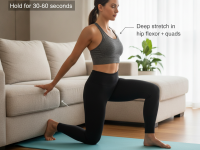
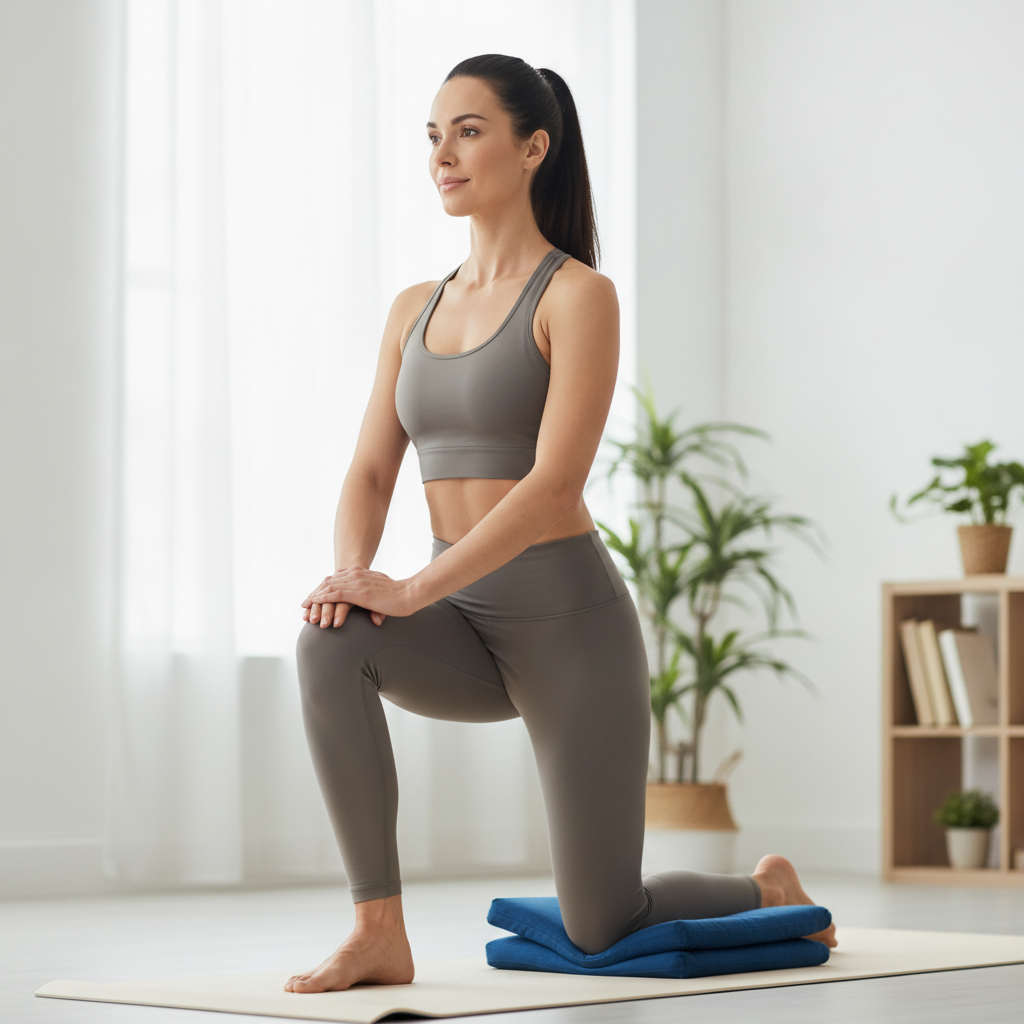
From a half-kneeling position (one knee down, other foot forward), focus on diaphragmatic breathing while gently drawing the navel toward the spine on exhale. A relaxed, long exhale helps the psoas relax. Repeat 6–8 breaths and shift pelvis forward slightly on the inhale/exhale cycle to feel softening.
4. Targeted stretch with posterior pelvic tilt (30–60 seconds each side)
- Half-kneeling hip flexor stretch: From half-kneel, tuck your pelvis under (posterior pelvic tilt) before you lean forward. This emphasizes the lengthening of the iliopsoas while protecting the lumbar spine. Hold for 30–60 seconds, breathe, and repeat 2–3 times per side.
- Standing quad/hip flexor stretch: Pull the foot toward the glute while maintaining a neutral or slightly posterior pelvic tilt. Avoid overarching the lower back.
5. Mobility drills (1–2 minutes)
- World’s Greatest Stretch variation: From a lunge, place both hands inside the front foot, rotate the torso toward the front knee, then reach the same hand up toward the ceiling to open the hip complex.
- Hip hinge practice: With a soft bend in the knees, hinge at the hips to teach the lumbar spine to move less and the hips more.
6. Activation and strengthening (2–4 minutes)
- Glute bridges: 2–3 sets of 8–12 reps, pause at top to feel glute contraction.
- Dead bug or bird-dog: 2 sets of 8–10 reps per side to train core control and reduce compensatory lumbar motion.
How often to perform hip flexor releases
Perform the routine 3–5 times per week when symptoms are present, then reduce to maintenance 1–2 times per week as mobility and pain improve. Short frequent sessions (10–15 minutes) are often more effective than occasional long sessions.
Precautions and contraindications
Do not attempt deep anterior abdominal or pelvic pressure if you have a recent abdominal surgery, hernia, pregnancy without clearance, or active infection. If you experience radiating leg pain, numbness, or weakness, stop the routine and seek medical assessment.
Consult a licensed physiotherapist or physician if you have osteoporosis, spinal stenosis, recent fractures, or severe spinal degeneration before beginning manual or deep-release techniques.
When to seek professional care
See a healthcare professional if stiffness is accompanied by fever, unexplained weight loss, recent trauma, progressive neurologic symptoms (numbness, tingling, foot drop), or if symptoms do not improve after 4–6 weeks of conservative care.
A physiotherapist can perform targeted manual therapy, guided psoas release if appropriate, and design a personalized rehabilitation program that balances release, mobility, and strengthening to prevent recurrence.
Evidence-based perspective
Clinical practice supports addressing hip muscle balance—reducing hip flexor tightness while strengthening posterior chain muscles—to improve lumbar mechanics and reduce low back symptoms. Combining myofascial release, stretching, and progressive strengthening is consistent with current rehabilitation principles for non-specific low back pain.
While individual response varies, many patients report reduced stiffness and improved function within weeks when the program is practiced consistently and combined with postural and activity adjustments.
Practical tips for long-term success
- Break prolonged sitting every 30–60 minutes with a brief walk or hip mobility drill.
- Integrate glute and core strengthening into weekly workouts to support the spine.
- Modify activities that reproduce symptoms—reduce deep lumbar extension and heavy anterior-loaded tasks until mobility improves.
- Track progress with pain and mobility measures (range of motion, ability to perform daily tasks) rather than single-session sensations.
Hip flexor releases for lower back stiffness are a practical, low-cost strategy to reduce lumbar strain when performed with proper technique and progression. When in doubt, consult a licensed physiotherapist or physician for individualized assessment and a safe, effective plan.