Introduction
Hip flexor releases for lower back stiffness can reduce pain, improve posture, and restore mobility when done correctly. If you sit for long periods or feel a constant ache in the front of your hips and lower back, targeted releases and mobility work can help break the cycle of stiffness.
Why tight hip flexors cause lower back stiffness
Anatomy and function
The hip flexors are a group of muscles—primarily the iliopsoas (psoas major and iliacus), rectus femoris, and sartorius—that lift your thigh toward your torso. These muscles attach near the lumbar spine and pelvis, so when they become short or overactive they pull on the lower back and alter pelvic position.
How tightness leads to pain
Tight hip flexors often create an anterior pelvic tilt, increasing lumbar lordosis and compressive forces on the lower spine. Over time this can contribute to stiffness, reduced tolerance to load, and muscular imbalance between the hip extensors and flexors.
Evidence and professional insight
Clinical observations and biomechanical studies support the link between hip flexor tightness and low back discomfort. As a clinician with over 10 years helping patients with hip and lumbar issues, I use a combination of manual release, self-myofascial techniques, stretching, and strengthening to get durable results.
Research into multimodal approaches—combining release and exercise—shows better outcomes than passive treatments alone. The goal is to restore length and control, not only temporary relief.
Safe hip flexor release techniques (step-by-step)
Below are evidence-informed methods you can safely try at home. Always move within a pain-free range and stop if sharp pain, numbness, or tingling occurs.
1. Foam rolling the rectus femoris and iliopsoas region
- Lie face down and place a foam roller under the front of your thigh (rectus femoris). Support yourself with forearms.
- Slowly roll from just above the knee toward the hip crease for 30–60 seconds per side.
- For iliopsoas, use a softer ball (lacrosse or therapy ball) placed just lateral to the navel while lying supine; gently press into the ball for 20–40 seconds, breathing deeply.
- Repeat 2–3 passes per side, avoiding direct pressure on bone and the lower abdomen.
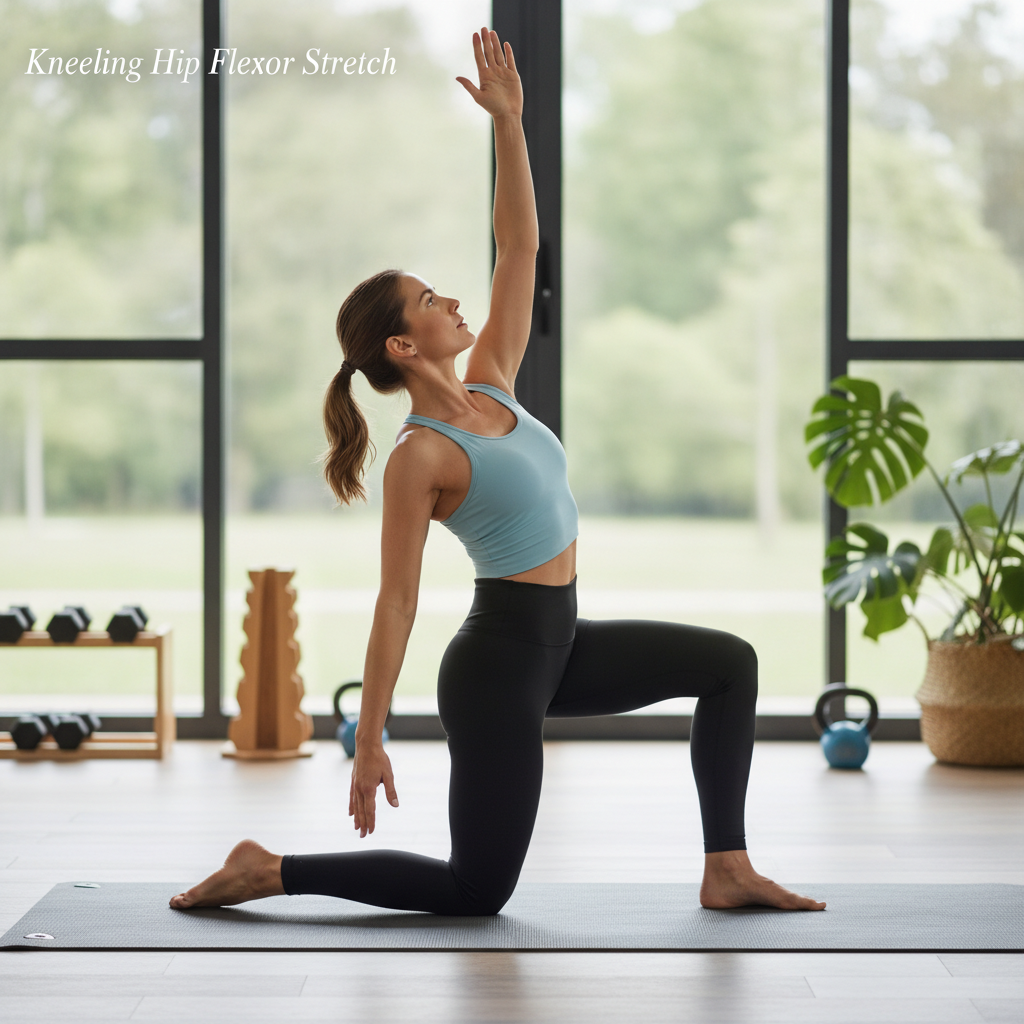
2. Kneeling hip flexor stretch with posterior pelvic tilt
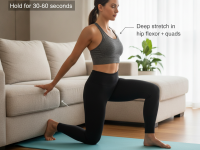
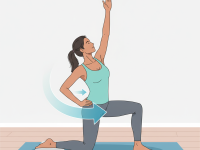
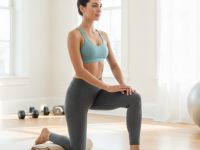
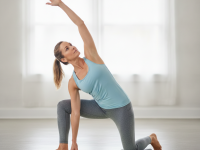
- Start in a half-kneeling position with one knee on the floor and the other foot flat in front.
- Tuck your tailbone and engage the glute on the kneeling side, then gently shift your hips forward until you feel a stretch in the front of the hip.
- Hold 30–45 seconds and repeat 2–3 times per side. Breathe slowly and avoid arching the lower back.
3. Trigger-point release with a ball (psoas-focused)
- Lie on your back with knees bent and place a small firm ball (massage ball) just medial to the anterior superior iliac spine (one hand-width below the belly button, slightly to the side).
- Apply gentle pressure and perform diaphragmatic breaths for 20–30 seconds until the tension softens.
- Move the ball slightly to find tender spots and spend 1–2 minutes per side, keeping pressure tolerable.
4. Active release and strengthening (hip extension focus)
- Glute bridges: lie on your back, knees bent, and lift hips while squeezing glutes. Perform 2–3 sets of 10–15 reps.
- Lunges and step-ups: integrate controlled hip extension and eccentric control to balance hip flexor length and strength.
- Combine releases with strengthening in the same session to reinforce new movement patterns.
Programming: frequency and progression
For most people, perform self-release and stretching once daily initially, then reduce to 2–3 times weekly as symptoms improve. Strengthening exercises should occur 2–3 times per week, focusing on glute and core activation to support the lumbar spine.
Progress by increasing range, time under tension, and functional integration into standing and walking tasks. Track symptoms and adjust intensity—slow, consistent work outperforms aggressive one-off sessions.
Modifications and special considerations
If you have hip replacement, advanced osteoarthritis, recent abdominal surgery, or a history of hernia, consult your surgeon or physical therapist before applying direct pressure or deep stretches. Pregnancy requires tailored modifications and guidance from a prenatal specialist.
Older adults may prefer gentler myofascial release and shorter hold times with a focus on strength and balance rather than aggressive lengthening.
When to seek professional help
If you experience persistent or worsening lower back pain, radiating leg pain, numbness, weakness, unexplained weight loss, fever, or bowel/bladder changes, seek medical evaluation promptly. A physical therapist or sports medicine physician can provide hands-on assessment, diagnostic imaging if needed, and a personalized treatment plan.
Takeaway
Hip flexor releases for lower back stiffness are a practical, evidence-informed strategy to reduce pain and restore mobility when combined with targeted strengthening and movement retraining. Start gently, prioritize pain-free range, and integrate glute and core training to build lasting support for your lumbar spine.
For persistent symptoms or complex medical histories, work with a licensed clinician to ensure safety and optimal results.