Hip flexor releases for lower back stiffness can quickly reduce pain and improve mobility when done correctly. If you sit for long periods, tight hip flexors — especially the psoas and iliacus — often pull on the lumbar spine, contributing to stiffness and discomfort.
Why hip flexor mobility matters for lower back health
Tight hip flexors influence pelvic tilt, spinal alignment, and movement patterns. Over time, this altered mechanics increases compressive forces on the lumbar discs and joints, which can present as localized stiffness or radiating pain.
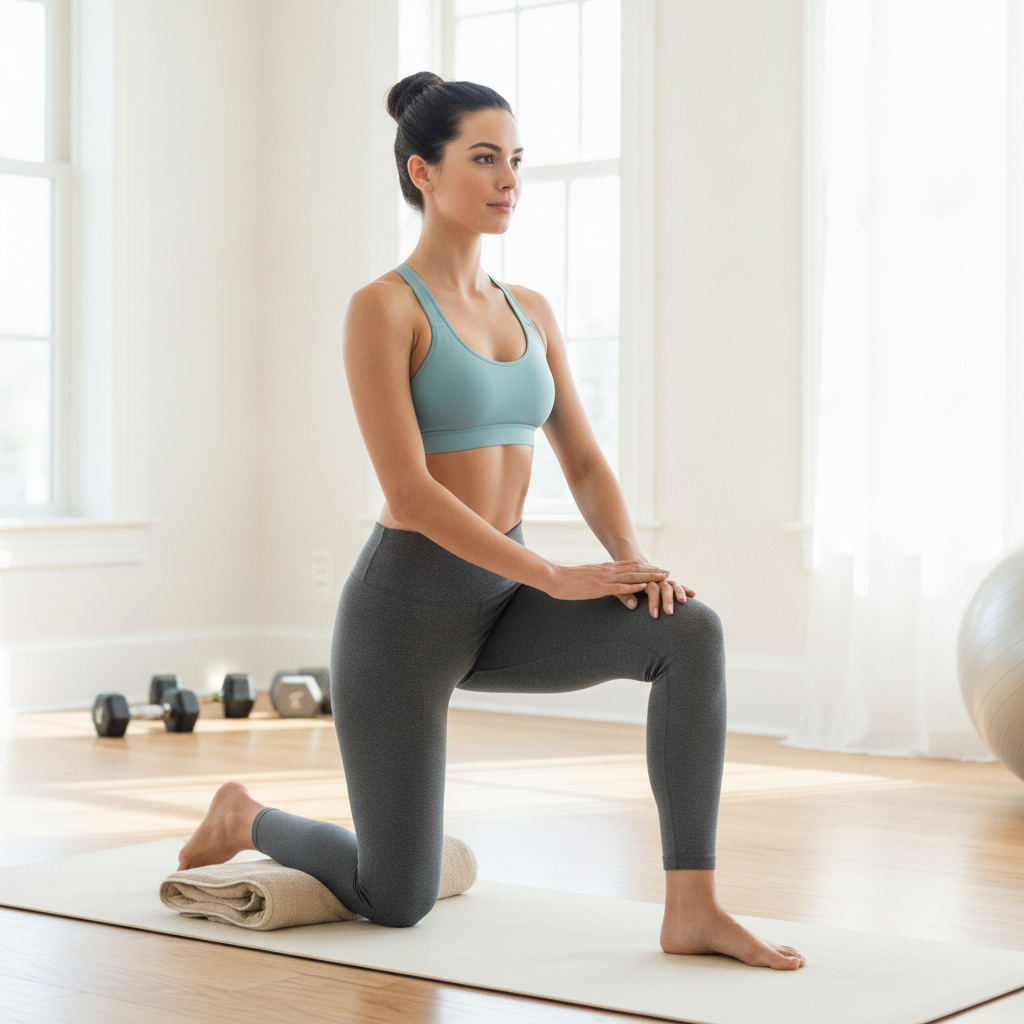
Understanding the anatomy helps: the primary hip flexors include the iliopsoas (psoas major and iliacus), rectus femoris, and sartorius. The psoas in particular links the lumbar spine to the femur, so it directly affects low back tension.
Evidence-based benefits of hip flexor release
Clinical research and physical therapy practice show that restoring hip flexor length and improving muscular balance reduces low back pain symptoms in many patients. Combining release techniques with strengthening and motor control training produces better outcomes than passive measures alone.
Guidelines from musculoskeletal care emphasize a multimodal approach: soft tissue work, targeted stretching, postural re-education, and progressive strengthening. The following practical techniques reflect that integrated approach.
Safety precautions and contraindications
Before beginning self-release or stretching, rule out red flags such as recent trauma, unexplained weight loss, fever, severe or progressive neurological deficits, or bowel/bladder changes. If these are present, seek urgent medical assessment.
People with acute herniated discs, severe osteoporosis, or recent abdominal surgery should consult a clinician or physiotherapist before trying deeper releases. Always move into stretches gradually and stop with sharp pain, numbness, or tingling.
Hip flexor release techniques (step-by-step)
1. Self-myofascial release with a foam roller
Target: rectus femoris and upper thigh fascia. Start with a medium-density foam roller to control pressure.
- How: Lie face down and place the roller just below the hip crease. Support your upper body on forearms and shift side to side slowly over any tender spots.
- Dosage: 1–2 minutes per side, pausing 20–30 seconds on tight points. Breathe deeply and avoid rolling directly over the low back.
2. Tennis ball or lacrosse ball psoas release (gentle)
Target: deeper psoas trigger points. This is a more advanced, focused technique — proceed carefully.
- How: Lie supine near the edge of a firm surface so the front of your hip is accessible. Place a ball under the lower abdomen (just medial to the ASIS) and apply light sustained pressure while breathing slowly.
- Dosage: 30–60 seconds per spot, up to 2 rounds per side. Increase pressure only to a tolerable discomfort, not sharp pain.
3. Couch stretch (deep hip flexor lengthening)
Target: iliopsoas and rectus femoris. This stretch offers both lengthening and gentle traction.
- How: Kneel facing away from a couch and place the top of one foot on the couch behind you. Tuck your pelvis slightly and lunge forward until you feel a stretch in the front of the hip.
- Dosage: Hold 30–60 seconds, repeat 2–3 times per side. Add gentle posterior pelvic tilt and diaphragmatic breathing to enhance release.
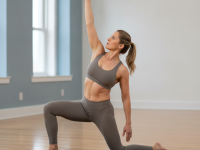
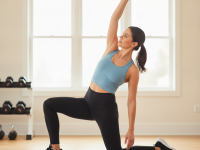
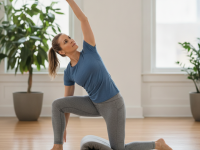
4. Kneeling dynamic lunge with thoracic rotation
Target: integrates hip flexor length with core and thoracic mobility to reduce compensations at the lumbar spine.
- How: From a kneeling lunge, shift your weight forward into end range hip extension while rotating the torso away from the front leg. Move slowly and repeat 8–10 times per side.
- Dosage: Perform 2 sets daily as part of a warm-up or mobility routine.
Activation and strengthening to prevent recurrence
Release without strengthening often leads to quick relapse. Target the glutes and deep core to restore balance and control at the pelvis.
- Glute bridge: 3 sets of 10–15 reps focusing on full hip extension and pelvic control.
- Single-leg Romanian deadlift (bodyweight): 2–3 sets of 8–12 reps per side to challenge posterior chain and balance.
- Dead bug or bird-dog: 2–3 sets of 8–12 reps to rebuild coordinated core-spine control.
Sample 10–12 minute routine for daily use
This sequence combines release, stretch, and activation to address hip flexor-related low back stiffness in a single session.
- Foam roll quads/hip flexors: 2 minutes total (1 minute per side).
- Couch stretch: 2 x 45 seconds per side with diaphragmatic breathing.
- Kneeling dynamic lunge with rotation: 2 sets of 8 reps per side.
- Glute bridges: 3 sets of 12 reps.
- Bird-dog: 2 sets of 10 controlled reps per side.
Progression and when to seek professional help
Begin with gentle releases and build tolerance over 2–4 weeks. If stiffness improves and you regain function, progress by increasing intensity and adding load to strengthening exercises.
Seek a physical therapist or sports medicine clinician if pain persists beyond 6 weeks, worsens, or is accompanied by neurological symptoms such as numbness or muscle weakness. A professional assessment can identify movement dysfunctions, sacroiliac or lumbar sources, and tailor an individualized program.
Practical tips for long-term maintenance
Reduce prolonged sitting by standing or walking every 30–45 minutes. Incorporate daily mobility breaks and prioritize glute and posterior chain strength in your regular routine.
Work ergonomically: adjust chair height, use lumbar support, and set screens to eye level to minimize compensatory anterior pelvic tilt. Consistent small changes often yield the biggest reductions in recurrent stiffness.
Final note on expectations
Many people experience meaningful reduction in lower back stiffness within days to weeks when hip flexor releases are combined with strengthening and movement retraining. Results vary based on the underlying cause and chronicity of symptoms.
Use the techniques above responsibly, progress gradually, and consult a trained clinician if you have complex medical issues or an unclear diagnosis. With a structured approach, hip flexor releases can be a reliable tool to restore comfort and function in the lower back.