Why tight hip flexors cause lower back stiffness
Tight hip flexors, especially the psoas major and iliacus, attach near the lumbar spine and pelvis. When these muscles are shortened from prolonged sitting or imbalance, they can pull the pelvis into an anterior tilt and increase compression on the lower back.
Over time this altered posture contributes to stiffness, reduced mobility, and compensatory muscle tension in the glutes and lumbar extensors. Addressing hip flexor tightness is often a key part of conservative management for non-specific lower back pain.
Principles of effective hip flexor release
Effective releases combine soft-tissue work, active stretching, breathing, and strengthening to restore balance. Manual techniques such as myofascial release or trigger-point work reduce tightness, while active stretches and strengthening address movement control and posture.
Frequency and consistency matter: short daily sessions (5–15 minutes) produce better results than occasional long sessions. Always prioritize pain-free movement and consult a clinician if symptoms include radicular pain, numbness, or weakness.
Warm-up and safety precautions
Begin with a gentle cardiovascular warm-up (5 minutes) to increase blood flow. Examples: brisk walking, light stationary cycling, or marching in place. Warm tissue responds better to release and stretching.
Red flags—stop and seek medical care if you experience sharp shooting pain down the leg, progressive weakness, bowel/bladder changes, unexplained fever, or recent trauma. Modify techniques during pregnancy or after abdominal/hip surgery—get clinician clearance first.
Self-release techniques (myofascial and trigger point)
Use a foam roller or massage ball to target the hip flexor and psoas region. Start gently and increase pressure only as tolerated. Hold tender spots for 20–30 seconds, breathing slowly.
- Foam roller anterior hip: Lie face down with a foam roller positioned under the front of the hip. Support yourself on forearms and roll slightly side-to-side for 30–60 seconds.
- Lacrosse/massage ball psoas release: Lie on your stomach near the pelvis crease and place a ball just lateral to the belly button. Apply gentle pressure, hold for 20–30 seconds on tender spots, then breathe and release. Do not place deep pressure directly on the abdomen—modify by using a bolster under the pelvis.
- Standing quadriceps/iliopsoas release: Stand against a wall and press the front of the hip into a tennis ball held between your hip and the wall. Pause on tight areas and breathe for 20–30 seconds.
Active stretching and mobility drills
Active stretches focus on lengthening the hip flexors while engaging the core and glutes to protect the lumbar spine. Hold each stretch for 30–45 seconds and repeat 2–3 times per side.
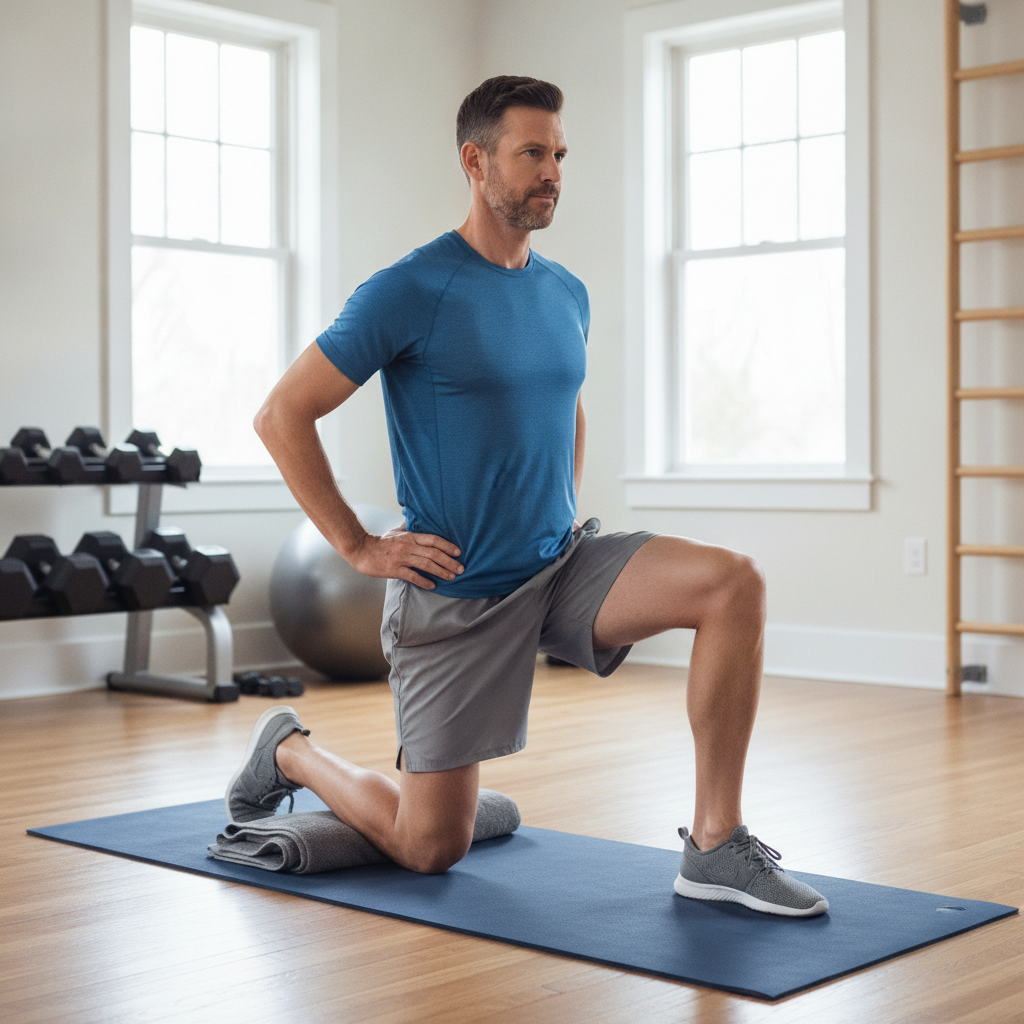
- Kneeling hip flexor stretch: Kneel on one knee with the other foot forward. Tuck the pelvis (posterior tilt) and squeeze the glute of the trailing leg while keeping the torso tall. Hold and breathe.
- Half-kneeling psoas stretch with posterior tilt: From a kneel, place the hands on the front thigh and actively tilt the pelvis backward before leaning slightly forward to feel length through the front hip.
- Dynamic hip flexor march: Standing, perform slow high-knee marches focusing on using the hip extensors and core to control motion—10–15 reps each side.
Strengthening to support release work
Strengthening the posterior chain (glutes, hamstrings) and core prevents recurrence by balancing forces across the pelvis. Perform these 2–3 times per week, 2–3 sets of 8–15 reps.
- Glute bridge: Lie on your back, knees bent, press through the heels, lift hips by engaging glutes and core, hold for 1–2 seconds, then lower.
- Single-leg Romanian deadlift (bodyweight): Hinge at the hip with a slight knee bend, keeping the spine neutral and the glute of the standing leg engaged.
- Dead bug: Supine core drill emphasizing anti-extension control to reduce lumbar strain during hip movements.
Sample 10-minute routine for daily practice
This short routine combines release, stretch, and activation. Perform 5–10 minutes each morning or after prolonged sitting.
- 2 minutes light warm-up (marching or walking)
- 1–2 minutes foam roll or ball release on each side (20–30 seconds per tender spot)
- 2 sets kneeling hip flexor stretch, 30–45 seconds each side
- 2 sets glute bridge, 10–15 reps
- 1 set 10 dynamic hip flexor marches
Progression and when to seek professional care
Progress by increasing hold times, adding load to strengthening exercises, and reducing reliance on passive release techniques. If you do not see gradual improvement over 4–6 weeks or if symptoms worsen, consult a physical therapist, sports medicine clinician, or your primary care provider.
Physical therapists can perform hands-on trigger point release, guided psoas techniques, and individualized exercise prescriptions that address movement patterns and biomechanics contributing to lower back stiffness.
Evidence and practical takeaways
Research supports a multimodal approach for non-specific lower back pain: manual therapy, targeted soft-tissue work, active stretching, and strengthening. Short, consistent sessions focused on correcting movement patterns yield better outcomes than occasional passive treatments alone.
Key takeaways: address hip flexor tightness with gentle release and active stretching, strengthen the posterior chain and core, practice regularly, and seek professional assessment for persistent or severe symptoms.
Quick precautions
- Avoid aggressive pressure or deep abdominal compression when self-releasing the psoas.
- Stop if you experience radiating pain, numbness, or sudden weakness.
- Modify techniques if pregnant or post-operative—consult a clinician first.
Integrating hip flexor releases for lower back stiffness into your routine can reduce pain, improve posture, and restore mobility when done safely and consistently. If unsure, a consultation with a licensed physical therapist will help tailor the approach to your needs.