Wrist strengthening for carpal tunnel prevention is a practical, evidence-informed strategy to lower your risk of median nerve irritation and build durable wrist function. This wrist strengthening for carpal tunnel prevention guide explains what to do, why it helps, and how to progress safely.
Why wrist strengthening helps prevent carpal tunnel syndrome
Carpal tunnel syndrome (CTS) occurs when the median nerve is compressed as it passes through the carpal tunnel at the wrist. Weak or imbalanced wrist and forearm muscles can increase tendon tension, alter wrist position, and contribute to repetitive strain.
Targeted strengthening improves muscular support around the wrist, promotes neutral wrist positioning, and reduces repetitive overload on flexor tendons. Combined with mobility work and ergonomic changes, exercise can reduce risk factors that lead to CTS.
Basic anatomy and mechanism
The carpal tunnel is formed by carpal bones and the transverse carpal ligament. Nine flexor tendons and the median nerve travel through this confined space. Swelling, tight tendons, poor wrist posture, or limited nerve mobility can increase pressure and symptoms.
Strengthening and flexibility work focuses on the forearm flexors and extensors, intrinsic hand muscles, and connective tissues that influence tunnel biomechanics. Nerve gliding helps the median nerve move freely through the tunnel.
Who benefits—and who should get checked first
People with repetitive hand use (typing, assembly work, musicians, caregivers) or weak grip and forearm endurance benefit from preventive wrist programs. Those with mild intermittent numbness, tingling, or persistent pain should consult a healthcare professional before beginning a program.
If you already have progressive weakness, frequent nighttime numbness, or obvious muscle wasting at the base of the thumb, see a physician or certified hand therapist. Some cases require medical treatment before exercises are safe or effective.
Key principles of an effective program
- Consistency: Do exercises 3–5 times per week to build strength and endurance.
- Balance: Combine strengthening, stretching, and nerve mobility work to address multiple contributors to CTS.
- Progression: Start with low resistance and gradually increase load to avoid overload.
- Ergonomics: Pair exercises with ergonomic improvements—neutral wrist posture, proper typing setup, and task variation.
Sample wrist strengthening routine (20–30 minutes)
Equipment: light dumbbell (1–5 kg / 2–10 lb), resistance band (theraband), soft putty or stress ball. Perform the following 3 times per week, adding one more session as tolerated.
Warm-up (3–5 minutes)
- Wrist circles: 10 slow circles each direction to increase blood flow.
- Finger flicks and gentle fist/extend cycles: 10–15 reps to mobilize fingers and tendons.
Strength exercises
- Wrist curls (flexion): Seated forearm supported, palm up, hold dumbbell and curl wrist up. 3 sets of 12–15 reps.
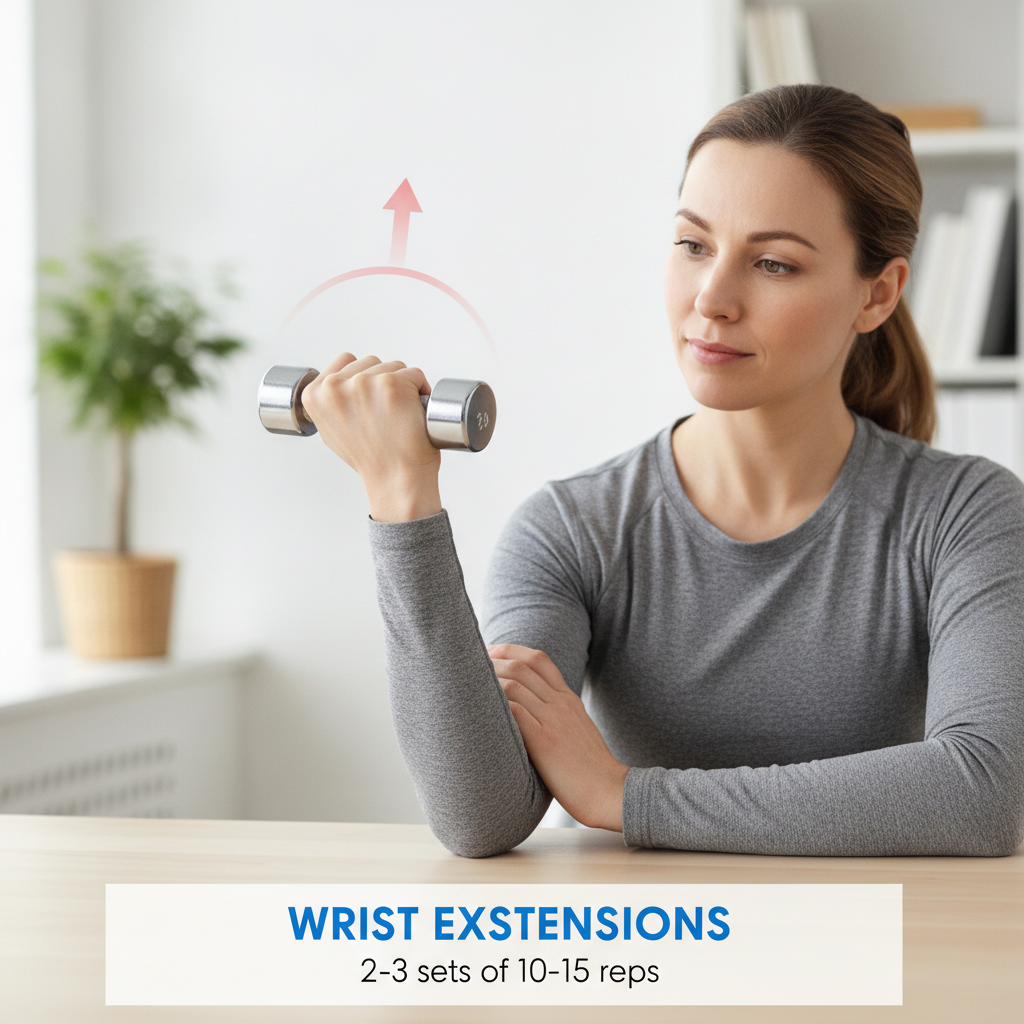
- Wrist extensions: Same setup palm down, lift back of hand. 3 sets of 12–15 reps.
- Radial/ulnar deviation: Hold light weight with thumb up, move wrist side-to-side. 2–3 sets of 10–12 reps each side.
- Grip strengthening: Squeeze soft putty or a therapy ball for 3 sets of 20–30 seconds.
- Finger abduction: Use a rubber band around fingers and open hand against resistance. 2–3 sets of 10–15 reps.
Endurance and functional holds
- Farmer carry (light): Hold light dumbbells at sides and walk 30–60 seconds, 2–3 rounds. This builds overall grip endurance and wrist stability.
- Isometric holds: Press palms together at chest level (prayer position) and hold 20–30 seconds to load intrinsic muscles.
Mobility and nerve gliding
- Wrist flexor stretch: Extend arm, palm up, gently pull fingers back with other hand for 20–30 seconds. Repeat 2–3 times.
- Wrist extensor stretch: Arm extended, palm down, gently pull fingers toward you for 20–30 seconds. Repeat 2–3 times.
- Median nerve glides: Start with elbow bent and wrist neutral; slowly straighten the elbow while extending the wrist and fingers, then return. 5–10 smooth repetitions.
Progression and load management
Increase resistance when you can complete target reps with good form and minimal fatigue. Typical progression: add 1–2 kg (2–5 lb) or move to a firmer theraband every 2–4 weeks. Prioritize control over heavy loads to avoid aggravation.
Track symptoms. Mild soreness is acceptable, but sharp pain, increasing numbness, or persistent swelling are signals to reduce intensity and seek professional advice.
Ergonomic and lifestyle tips to complement strengthening
Adjust workstation height to keep wrists neutral when typing. Use a light-touch typing technique and consider a split keyboard or padded wrist rest if helpful. Take frequent microbreaks (30–60 seconds every 20–30 minutes) for movement and stretching.
Address systemic contributors: maintain a healthy weight, control blood sugar if diabetic, and manage inflammatory conditions. Sleep with wrists in a neutral position—night splints can reduce nocturnal symptoms for some people.
When to consult a specialist
If symptoms persist despite a 6–8 week exercise and ergonomic program, see a hand specialist, neurologist, or certified hand therapist for evaluation. Diagnostic tests like nerve conduction studies may be recommended when clinical signs suggest significant median nerve compression.
Early consultation helps differentiate carpal tunnel from other causes of hand pain and ensures the right mix of conservative or procedural treatments when needed.
Evidence and professional perspective
Clinical guidelines and rehabilitation research support multimodal conservative care—exercise, nerve mobilization, splinting, and ergonomic modification—for early and mild CTS. Certified hand therapists and physiotherapists tailor programs to each person’s work and symptom profile for the best outcomes.
As an evidence-minded approach, combine strengthening and mobility work with professional guidance when symptoms are moderate or progressive.
Takeaway
Wrist strengthening for carpal tunnel prevention is a practical and low-cost strategy to reduce risk and improve wrist resilience. When paired with mobility, nerve gliding, and ergonomic changes, a consistent program supports long-term hand health.
Start gradually, monitor symptoms, and consult a healthcare professional if numbness, weakness, or pain worsens. With the right approach, most people can reduce risk and stay active in work and hobbies.