Benefits of nasal breathing vs mouth breathing matter for everyday health, sleep quality, and long-term oral development. Choosing nose breathing supports filtration, humidification, and production of beneficial gases that mouth breathing cannot replicate.
As a healthcare consultant with more than a decade of experience in respiratory health and patient education, this article explains the physiological differences, clinical implications, and practical steps to foster healthier breathing habits.
Why nasal breathing matters
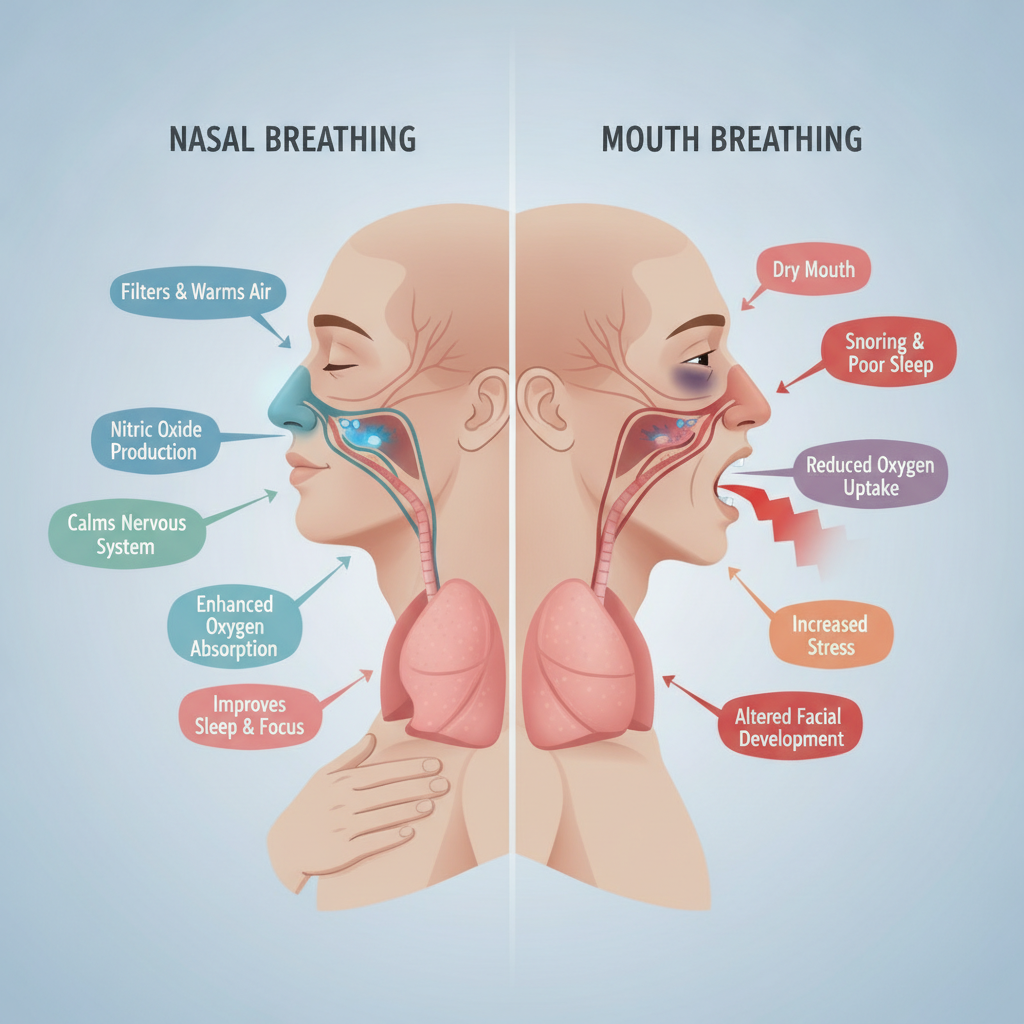
Nose breathing is not simply a cultural preference — it is an important physiological filter and regulator. The nasal passages warm, humidify, and filter inhaled air, reducing the burden of pathogens, allergens, and particulate matter reaching the lower airway.
Nasal passages also create airflow patterns that improve oxygen exchange and support optimal carbon dioxide balance, which influences circulation, pH, and tissue oxygen delivery.
Physiological mechanisms
The nose contains mucous membranes and cilia that trap particles and move them toward the throat for safe removal. Nasal turbinates increase surface area to warm and humidify air, protecting bronchi and lungs from cold, dry air.
Nasal breathing promotes diaphragmatic breathing and slower respiratory rates, which improve tidal volume and oxygen uptake compared with shallow mouth breathing.
Nitric oxide: a unique nasal advantage
One of the most important scientific discoveries supporting nasal breathing is the production of nitric oxide (NO) in the paranasal sinuses. Nitric oxide is a vasodilator and antimicrobial molecule that aids oxygen uptake in the lungs and helps kill certain bacteria and viruses.
Nose-to-lung delivery of nitric oxide boosts pulmonary blood flow and enhances oxygenation. Mouth breathing bypasses this natural source of NO, reducing these protective effects.
Health benefits of nasal breathing
Switching to habitual nasal breathing can have measurable benefits across multiple domains of health. Below are the key advantages supported by physiology and clinical observations.
Improved oxygenation and endurance
Nasal breathing encourages deeper, slower breaths and better CO2 retention, which helps maintain efficient oxygen delivery to tissues. Athletes and those practicing breathwork often notice improved stamina and reduced breathlessness when training with nasal-only breathing.
Better sleep and reduced snoring
Nasal breathing helps maintain stable airway mechanics during sleep. People who breathe through the nose are less likely to experience loud snoring and some forms of sleep-disordered breathing compared with habitual mouth breathers.
Enhanced oral health
Mouth breathing dries oral tissues and reduces saliva, increasing the risk of gingivitis, dental caries, and halitosis. Nose breathing preserves saliva function, which protects teeth and maintains oral microbial balance.
Facial growth and pediatric development
In children, chronic mouth breathing is associated with altered jaw development, narrow palates, and dental malocclusion. Encouraging nasal breathing in childhood supports appropriate facial growth and dental arch development.
Risks and consequences of chronic mouth breathing
Mouth breathing may provide short-term relief during nasal congestion, but long-term reliance carries several harms. Common consequences include dry mouth, increased infections, periodontal disease, and disturbed sleep.
Chronic mouth breathing can also contribute to altered posture, speech changes, and decreased exercise tolerance. In children, it may be linked to attention difficulties and behavioral issues related to poor sleep quality.
How to transition to nasal breathing: practical steps
Transitioning from mouth to nose breathing is usually straightforward but requires consistent practice. Use gradual, patient-centered steps to make the change sustainable.
Daily habits and environmental changes
- Practice conscious nose breathing while awake: set reminders to check breathing during the day.
- Improve nasal hygiene: use saline rinses to reduce congestion and maintain mucosal health.
- Address allergens and irritants: reduce exposure to dust, smoke, and strong fragrances that provoke nasal inflammation.
- Maintain good oral posture: keep the lips closed and the tongue resting on the roof of the mouth (palate) when possible.
Breathing exercises and techniques
Begin with simple exercises: inhale slowly through the nose for a count of four, pause slightly, then exhale through the nose for a count of six. This encourages diaphragmatic breathing and CO2 tolerance.
Techniques such as the Buteyko method and guided diaphragmatic breathing can help re-train unconscious breathing patterns. Yoga-based practices like alternate-nostril breathing can improve nasal airflow awareness but should be learned with proper guidance.
Nighttime strategies
If mouth breathing occurs during sleep, try positional changes (sleeping on the side), nasal saline before bed, or addressing allergies. Some adults use gentle mouth tape to keep lips closed at night, but only after ensuring the nose is passable and under clinician guidance.
When to seek professional help
Persistent nasal obstruction, frequent snoring, daytime sleepiness, or chronic mouth breathing in children warrants evaluation. An otolaryngologist (ENT), sleep specialist, dentist, or orthodontist can identify structural issues such as deviated septum, enlarged adenoids, or nasal polyps.
Medical or surgical treatment may be necessary to restore adequate nasal airflow. For sleep-disordered breathing, a sleep study (polysomnography) may be recommended to evaluate for obstructive sleep apnea.
Precautions and contraindications
Not everyone should attempt aggressive mouth taping or forced nasal breathing without evaluation. Individuals with severe nasal obstruction, significant cardiopulmonary disease, or certain neurological conditions should consult their provider first.
Children with chronic mouth breathing should be assessed early because early intervention can prevent long-term functional and structural consequences.
Conclusion
Nasal breathing offers clear physiological and clinical advantages over mouth breathing: filtration, humidification, nitric oxide benefits, better oral health, and improved sleep. Small, consistent habit changes and targeted interventions can help most people breathe better through their nose.
If you experience persistent nasal blockage or sleep-related symptoms, consult an ENT, sleep specialist, or dentist for personalized assessment and treatment. Improving the way you breathe can yield meaningful gains in health, sleep, and daily performance.