Bioavailable calcium sources for vegan athletes are essential for maintaining bone strength, muscle contraction, nerve signaling, and long-term performance. Vegan athletes can meet their calcium needs through a strategic mix of low-oxalate plant foods, fortified products, and targeted supplements when appropriate.
Why calcium matters for vegan athletes
Calcium plays a central role in bone mineral density, muscle function, and recovery after training. Athletes put greater repetitive load on bones, so ensuring adequate calcium — alongside vitamin D, protein, and energy — helps reduce long-term risk of stress fractures and bone loss.
Most adult recommended intakes fall roughly between 1,000 and 1,300 mg/day depending on age and sex. Individual needs vary by training load, menstrual status, and overall energy availability, so personalization is important.
Top bioavailable calcium sources
Not all plant calcium is absorbed equally. Bioavailability depends on food matrix and inhibitors like oxalates and phytates. Below are practical, evidence-based options that deliver calcium with good absorption potential.
Low-oxalate leafy greens
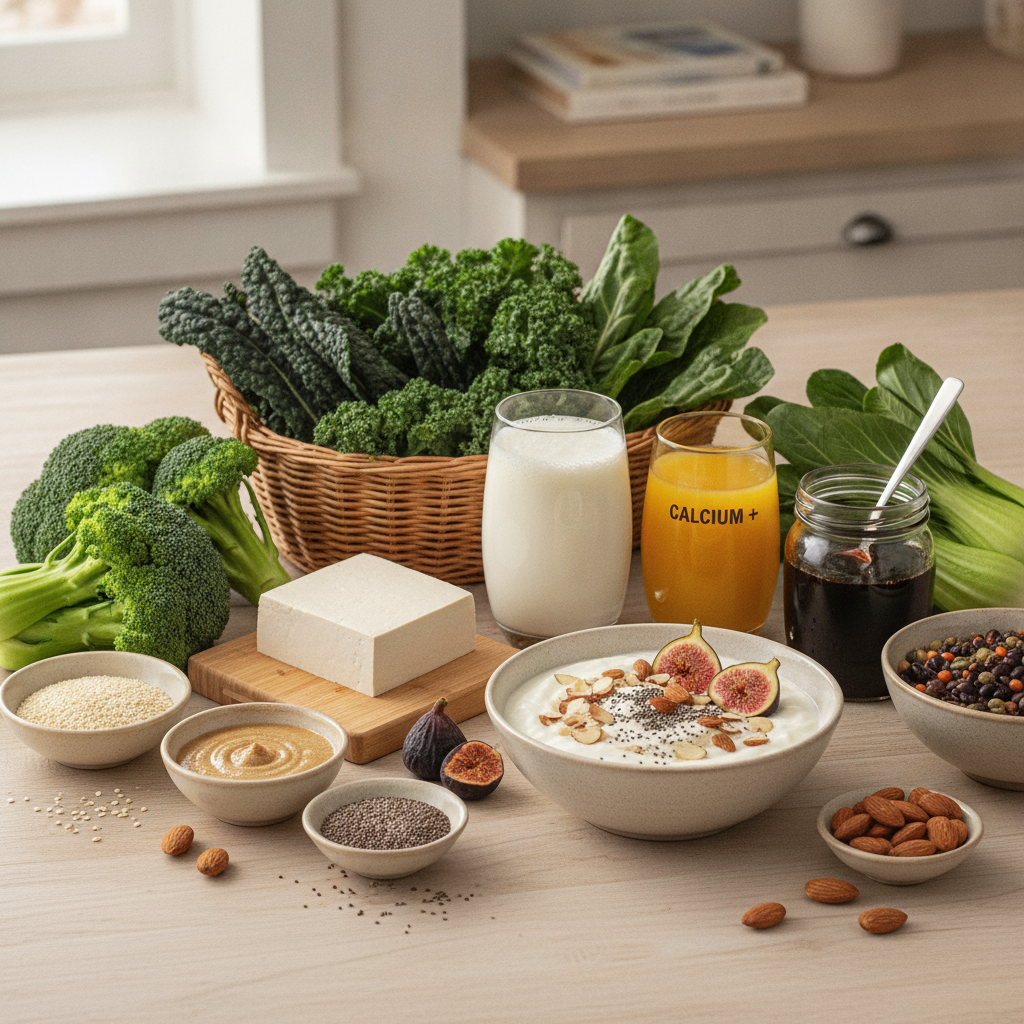
- Kale, bok choy, collard greens, and turnip greens — these greens are low in oxalates and provide calcium that the body can absorb relatively well.
- Tip: Steam or lightly sauté greens to preserve nutrients and improve palatability.
Calcium-set tofu and tempeh
- Tofu pressed with calcium sulfate can be a concentrated source of bioavailable calcium; amounts vary by product, so check labels.
- Tempeh also contains calcium and offers added protein and fermented benefits that may improve mineral availability.
Fortified plant milks and juices
- Commercially fortified soy, almond, oat, and rice milks frequently supply 20–30% of the daily value per cup (often ~250–350 mg calcium). Fortified orange juice can be another useful option.
- Check labels for calcium amount and choose versions with added vitamin D for synergy in absorption.
Seeds, nuts, and beans
- Chia seeds, sesame seeds (tahini), almonds, white beans, and black beans are practical sources. While some contain phytates, methods such as soaking, sprouting, and fermenting reduce inhibitors and improve uptake.
- Use seeds and nuts in smoothies, porridges, salads, and baking to boost calcium without excess calories.
Other plant options
- Blackstrap molasses, dried figs, and some fortified cereals offer useful contributions to daily intake.
- A varied diet combining these items makes it realistic for vegan athletes to reach their calcium goals without relying solely on supplements.
Maximizing calcium absorption
Food context and lifestyle influence how much calcium your body can use. Use these practical strategies to improve absorption.
- Pair calcium-rich foods with vitamin D sources or ensure adequate vitamin D status through sunlight, fortified foods, or supplementation.
- Aim for sufficient magnesium and vitamin K2 through whole foods (leafy greens, nuts, seeds) as they play supporting roles in bone health.
- Reduce known inhibitors around calcium-rich meals: limit large doses of oxalate-heavy foods (e.g., spinach) as your primary source, and consider soaking/sprouting legumes and seeds to lower phytates.
- Space calcium supplements in doses of 300–500 mg if total supplemental intake exceeds that per serving, because absorption declines when single doses are large.
Supplement guidance for vegan athletes
Supplements can fill gaps but should be used thoughtfully. Many vegan athletes benefit from fortified foods first and supplements second.
- Calcium citrate is better absorbed for people with lower stomach acid; calcium carbonate is effective when taken with food. Pick a form that fits your tolerance and schedule.
- Do not exceed recommended upper limits without medical supervision. Excessive calcium can interfere with absorption of iron and other minerals and may have health risks.
- If you take iron supplements, separate calcium and iron dosing by at least two hours to avoid interaction.
Monitoring bone health and testing
Serum calcium is tightly regulated and is not a good indicator of dietary calcium status. If you have risk factors — low energy availability, amenorrhea, previous stress fractures, or a family history of osteoporosis — discuss evaluation with a clinician.
Practical tests include 25(OH) vitamin D, dietary assessment with a registered dietitian, and bone density scanning (DEXA) when clinically indicated. Regular monitoring helps tailor nutrition and training recommendations.
Sample daily approach for a vegan athlete
This sample shows how to combine foods for balanced intake without exact quantities for every athlete. Personalize portions based on energy needs.
- Breakfast: Fortified oat milk smoothie with chia seeds, banana, and fortified plant protein powder.
- Lunch: Stir-fry with tofu (calcium-set) and bok choy over quinoa plus a side of edamame.
- Snack: Almonds or tahini on whole-grain toast, plus dried figs.
- Dinner: White bean chili with kale and baked sweet potato.
- Optional: If intake remains low, consider a calcium supplement split into two doses and ensure vitamin D adequacy.
Practical tips and final considerations
Track intake from fortified foods and naturally calcium-rich plant items, and prioritize variety. Work with a sports dietitian or medical provider who understands vegan performance nutrition for individualized plans.
Remember: calcium is one piece of bone health. Ensure adequate calories, protein, vitamin D, resistance training, and recovery to support long-term skeletal health and athletic performance.
References and trustworthy sources
For evidence-based guidance, consult resources such as the NIH Office of Dietary Supplements and the Academy of Nutrition and Dietetics. A registered dietitian experienced in sports nutrition can translate these recommendations into a practical plan for your training goals.