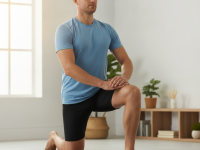
If you live with chronic knee pain, you’re not alone. Ankle mobility can play a surprising role in how your knee feels during daily activities. Ankle mobility drills for chronic knee pain are simple, practical exercises you can start today to improve ankle range of motion and reduce knee stress.
As a clinician with extensive experience in musculoskeletal rehab and a medical writer focused on evidence-informed care, I’ve seen how small changes at the ankle can translate into meaningful relief at the knee. This article outlines why ankle mobility matters, practical drills you can perform safely, and how to progress while respecting your body’s limits.
Why ankle mobility matters for knee health
The ankle and knee work together in every step. When ankle dorsiflexion is limited, the shin must move differently to get the foot to the ground. That altered pattern can transfer stress to the knee joint, potentially aggravating patellofemoral pain, osteoarthritis symptoms, or other knee conditions. Improving ankle mobility helps restore more natural knee tracking during walking, squatting, and stairs.
Research in sports medicine and physical therapy consistently links restricted ankle motion with compensations higher up the leg. By improving ankle ROM, you often reduce compensatory knee motions, improve gait symmetry, and support better shock absorption. These effects contribute to better function and potentially less knee pain over time.
Key principles of ankle mobility work for knee pain
Effective ankle mobility work for knee pain follows a few core principles. Start with safety: address any sharp pain, swelling, or instability before starting drills. Move slowly, with controlled movements, and build up volume gradually. Prioritize technique over depth of ROM and listen to your body to avoid aggravation.
Incorporate a mix of gentle joint mobilization, calf muscle flexibility, and controlled dorsiflexion movements. Aim for consistency—short sessions most days of the week beat long, infrequent workouts. Over time, these small, regular gains can reduce knee strain and improve function.
Start with safety and assessment
Before beginning, confirm you have no red flags such as acute injury, significant swelling, or instability. If you have a history of knee surgery, gout flares, or inflammatory arthritis, consult your clinician before starting a new mobility routine. If pain worsens during drills, stop and seek guidance from a physical therapist or qualified clinician.
Common issues linked to knee pain and ankle mobility
- Limited dorsiflexion (inability to bring the knee over the toes comfortably during a squat or step).
- Calf tightness or soleus/gastrocnemius stiffness reducing ankle ROM.
- Altered foot mechanics such as overpronation or rigid arches that affect knee alignment.
- Muscle imbalances around the shin, calf, and hip altering gait mechanics.
Recommended drills (step-by-step)
Use these drills as a simple, progressive routine. Start with a gentle warm-up (5–10 minutes of light activity such as marching in place or walking), then perform the following exercises with controlled movements. Aim for 1–3 sets of 8–12 repetitions per drill, 3–5 days per week. If you feel pain beyond mild discomfort, ease off and revisit technique or consult a professional.
1) Ankle circles
Sit or stand with the leg supported. Move the ankle in a slow circle, tracing a full range of motion. Do 8–12 circles in each direction, then switch to the other foot. This drill warms the joint, enhances mobility, and can be done multiple times daily if tolerated.
2) Wall knee-to-wall dorsiflexion stretch
Stand about a hand’s width from a wall with the front foot planted. Keep the heel down and gently bend the knee toward the wall while the back heel remains on the ground. If the knee can touch the wall without lifting the heel, you’ve progressed the movement. Hold for 15–30 seconds and repeat 2–3 times per side. This drill targets ankle dorsiflexion in a functional stance.
3) Standing calf raise with controlled lowering
Stand on a stable surface, with both feet about hip-width apart. Raise onto the toes, then slowly lower the heel below the step level if using a step. Focus on a slow, controlled descent to target the calf muscles and improve ankle strength and endurance. Perform 2–3 sets of 8–12 reps. If the knee bothers you, reduce the range of motion or skip the lowering portion.
4) Half-kneeling dorsiflexion stretch
Kneel with one knee on the ground and the other foot flat in front. Keep the front heel down and gently press the hips forward to feel a stretch behind the ankle. You can deepen the stretch by placing a small wedge under the knee or by moving the pelvis forward while maintaining upright posture. Hold 20–30 seconds, repeat 2–3 times per side. This position emphasizes a gradual increase in ankle dorsiflexion while loading the knee in a controlled way.
5) Plantarflexion assisted by a resistance band
Anchor a resistance band behind you at ankle height. Sit with leg extended and loop the band around the forefoot. Point the toes away from you to create plantarflexion against the band’s light resistance. Return to a neutral position slowly. Do 2–3 sets of 10–15 reps. This drill improves plantarflexion control and complements dorsiflexion work.
Progression and safety
As ROM improves, increase the challenge gradually. Options include adding a small resistance band to dorsiflexion or plantarflexion drills, performing a longer hold in the stretch, or performing the wall stretch with a closer stance to the wall. If pain starts to rise or if the knee becomes unstable, scale back and revisit technique or consult a clinician for a personalized progression plan.
Pair ankle mobility work with general knee-friendly conditioning, such as low-impact cardio (stationary biking, swimming) and hip-strengthening routines. A well-rounded program supports improved knee function and reduces the risk of recurrence.
When to seek professional care
If chronic knee pain persists despite consistent ankle mobility work, or if you notice swelling, redness, warmth, fever, or severe instability, seek professional assessment. A physical therapist can tailor a program to your specific knee condition, provide manual therapy if needed, and ensure exercises are appropriate for your current stage of healing.
In some cases, knee pain is driven by factors beyond ankle mobility, such as meniscal injury, ligament strain, or hip dysfunction. A clinician can help differentiate these conditions and guide you toward a safe, effective plan.
Frequently asked questions
Are ankle mobility drills safe for knee osteoarthritis?
Yes, when performed with proper technique and at a tolerable intensity. Start gently, avoid sharp pain, and progress gradually. If you have OA, focus on controlled ROM without forcing the joint, and coordinate with your clinician to ensure the program aligns with your overall care plan.
How long does it take to see improvements?
Consistent practice for 4–6 weeks often yields noticeable improvements in ankle ROM and early functional benefits. Individual results vary based on baseline mobility, pain levels, and adherence. Ongoing, moderate maintenance yields the best long-term outcomes.
How many days per week should I train?
3–5 days per week is a practical range for most people. Short daily sessions can be effective, especially when focus is on form and consistency rather than maximal ROM. If you’re new to exercise, start with 2–3 days per week and build up gradually.
Bottom line
By integrating structured ankle mobility drills for chronic knee pain into your routine, you can address a common, modifiable contributor to knee discomfort. The goal is a steady, safe improvement in ankle range of motion, better knee tracking, and enhanced daily function. Combine these drills with symptom-appropriate strength work and professional guidance when needed to support lasting knee health.
A high-resolution, clean clinical-style hero image showing a person performing an ankle mobility drill on a simple yoga mat in a bright, minimal home gym. The subject is seated or kneeling with one leg forward, focusing attention on ankle movement. The background is softly blurred to emphasize the ankle and knee mechanics, with subtle overlay icons illustrating joints (ankle, knee). The color palette should be calming neutrals (bluish-gray, soft white) with warm lighting, and the person wears comfortable athletic wear. Include a small, unobtrusive caption area at the bottom for the article title.
An infographic-style image illustrating 5 ankle mobility drills for knee health. Use clean vector illustrations of a person performing each drill: 1) ankle circles, 2) wall knee-to-wall dorsiflexion stretch, 3) standing calf raise with controlled lowering, 4) half-kneeling dorsiflexion stretch, 5) plantarflexion with resistance band. Include simple arrows showing range of motion, brief cue labels (e.g., “keep heel down,” “gentle stretch,” “slow drop”), and a soft color palette (teal, light gray, and white). The layout should be organized in a vertical flow or grid, with ample white space and legible typography suitable for sharing on social media.