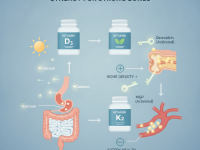
This comprehensive guide will delve into why Vitamin D needs fat for absorption, identify the best healthy fats to pair it with, and offer practical strategies to enhance your nutrient uptake.
Understanding Vitamin D: A Crucial Fat-Soluble Nutrient
Before exploring its absorption, it’s essential to grasp the significance of Vitamin D. Unlike many other vitamins, Vitamin D acts more like a hormone, influencing over 200 genes in your body. It plays a pivotal role in bone health, immune function, and even mood regulation.
Why Vitamin D is Essential for Your Body
Vitamin D is perhaps best known for its role in regulating calcium and phosphate levels, which are critical for maintaining strong bones and teeth. Without sufficient Vitamin D, your body cannot absorb calcium effectively, leading to conditions like osteoporosis in adults and rickets in children. Beyond skeletal health, research consistently highlights its importance for:
- Boosting the immune system and reducing susceptibility to infections.
- Supporting muscle function and reducing the risk of falls in older adults.
- Potentially lowering the risk of certain chronic diseases, including some cancers and autoimmune conditions.
- Improving mood and potentially alleviating symptoms of depression.
The Fat-Soluble Nature of Vitamin D
The key to understanding Vitamin D absorption lies in its classification: it’s a fat-soluble vitamin, alongside vitamins A, E, and K. This means that, unlike water-soluble vitamins (like Vitamin C and B vitamins), Vitamin D does not dissolve in water. Instead, it requires dietary fats for its digestion, absorption, and transport throughout the body.
When you consume Vitamin D from food or supplements, it needs to be dissolved in fat to be successfully carried from your digestive tract into your bloodstream. Without adequate fat present in your meal, a significant portion of the Vitamin D you consume may pass through your system unabsorbed, diminishing its potential health benefits.
The Science Behind Vitamin D Absorption and Dietary Fats
The journey of Vitamin D from your plate to your cells is a fascinating process that heavily relies on the presence of fats. Understanding this mechanism underscores why prioritizing healthy fats is non-negotiable for optimal absorption.
How Fats Facilitate Vitamin D Uptake
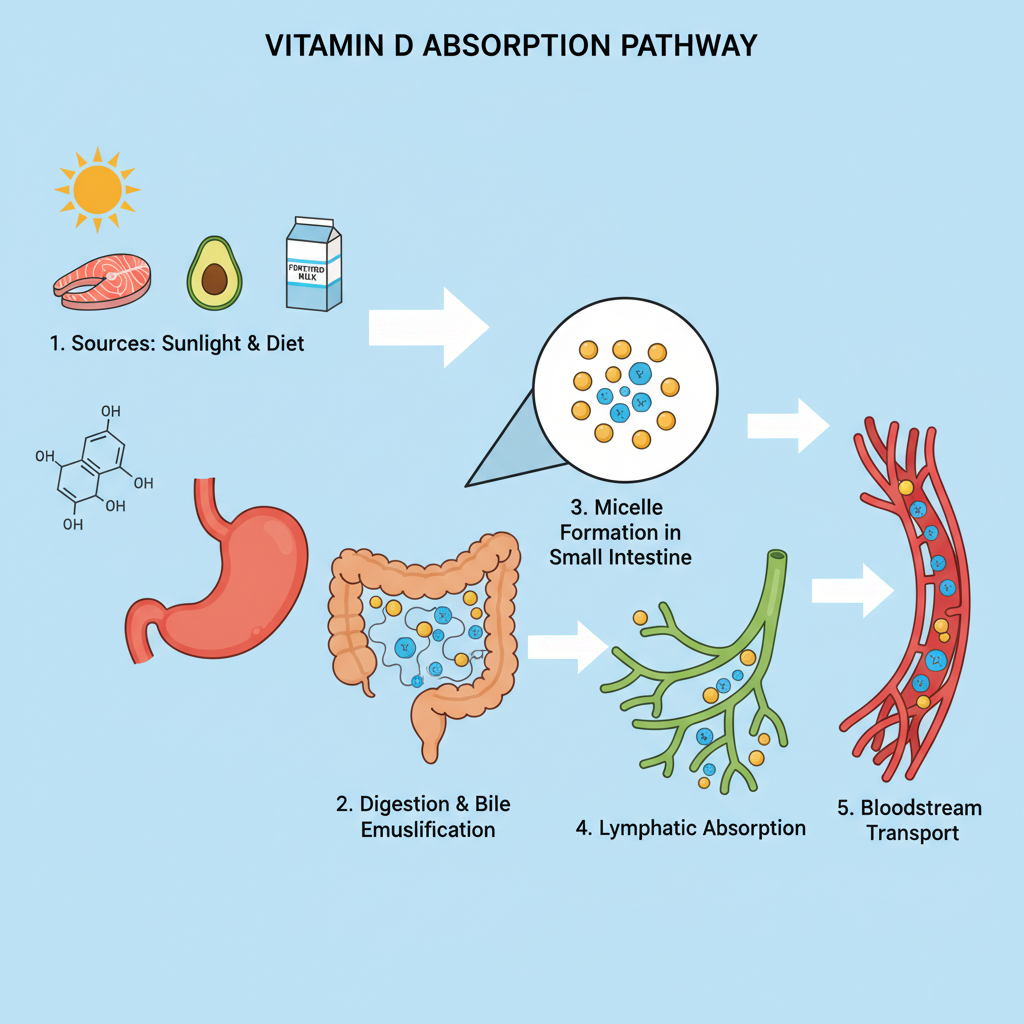
When you consume foods or supplements containing Vitamin D along with dietary fats, your digestive system gets to work. The fats stimulate the release of bile from your gallbladder. Bile acts like a detergent, emulsifying fats into tiny droplets, which increases their surface area.
These emulsified fats then combine with Vitamin D and other fat-soluble nutrients to form structures called micelles. Micelles are crucial because they are small enough to be absorbed by the cells lining your small intestine. Without these fatty micelles, Vitamin D would struggle to cross the intestinal barrier effectively.
The Role of Chylomicrons and the Lymphatic System
Once inside the intestinal cells, Vitamin D is packaged along with other fats into even larger lipoproteins called chylomicrons. These chylomicrons are then released into the lymphatic system, a network of vessels that runs parallel to your bloodstream. From the lymphatic system, chylomicrons eventually enter the bloodstream, carrying Vitamin D to the liver for further processing and then to various tissues and organs throughout the body.
This entire process highlights that a smooth and efficient fat digestion pathway is directly linked to how much Vitamin D your body can actually utilize. Therefore, the type and amount of fat you consume with your Vitamin D source make a substantial difference.
Identifying the Best Healthy Fats for Vitamin D Absorption
Not all fats are created equal when it comes to supporting your health. To optimize Vitamin D absorption, focus on incorporating unsaturated fats, particularly monounsaturated and polyunsaturated fats, into your diet. While some saturated fats from quality sources can be part of a balanced diet, the emphasis should be on healthier options.
Monounsaturated Fats (MUFAs): Avocados, Olive Oil, Nuts
Monounsaturated fats are known for their heart-healthy benefits and are excellent companions for Vitamin D. They are readily available and easy to incorporate into daily meals.
- Avocados: Rich in MUFAs and incredibly versatile. Add slices to salads, sandwiches, or blend into smoothies.
- Olive Oil: Extra virgin olive oil is a cornerstone of the Mediterranean diet. Use it for salad dressings, drizzling over cooked vegetables, or light sautéing.
- Nuts: Almonds, cashews, pecans, and hazelnuts are packed with MUFAs. A small handful with your Vitamin D supplement or a Vitamin D-rich meal can make a difference.
Polyunsaturated Fats (PUFAs): Omega-3 Rich Foods (Fatty Fish, Seeds)
Polyunsaturated fats, especially omega-3 fatty acids, offer significant health advantages beyond just aiding absorption. They are vital for brain function, reducing inflammation, and cardiovascular health.
- Fatty Fish: Salmon, mackerel, sardines, and tuna are not only excellent sources of omega-3s but also naturally contain Vitamin D. This makes them a perfect food pairing for dual benefits.
- Flaxseeds and Chia Seeds: These tiny seeds are powerhouse sources of plant-based omega-3s. Sprinkle them on oatmeal, yogurt, or blend them into shakes.
- Walnuts: Another good source of plant-based omega-3s, walnuts make a great snack or addition to salads.
Saturated Fats (in moderation and from healthy sources)
While the focus should be on unsaturated fats, some saturated fats are naturally present in Vitamin D-rich foods like fatty dairy and some animal products. In moderation, and from high-quality sources, these can contribute to absorption. However, prioritize sources that also offer other nutrients and avoid excessive intake of unhealthy saturated and trans fats found in processed foods.
Practical Strategies to Enhance Your Vitamin D Intake
Knowledge is power, but application is key. Here are actionable tips to ensure you’re maximizing your Vitamin D absorption daily.
Pairing Vitamin D Rich Foods with Healthy Fats
Make a conscious effort to combine your Vitamin D sources with healthy fats. For example:
- Enjoy grilled salmon (Vitamin D, omega-3s) with a side of avocado salad dressed with olive oil.
- If consuming fortified milk or yogurt, pair it with a handful of nuts or seeds.
- Scramble eggs (some Vitamin D) with spinach and a drizzle of olive oil, or include a slice of avocado.
- Add mushrooms (some Vitamin D, especially UV-exposed) to stir-fries cooked with a healthy oil.
Optimizing Vitamin D Supplement Absorption
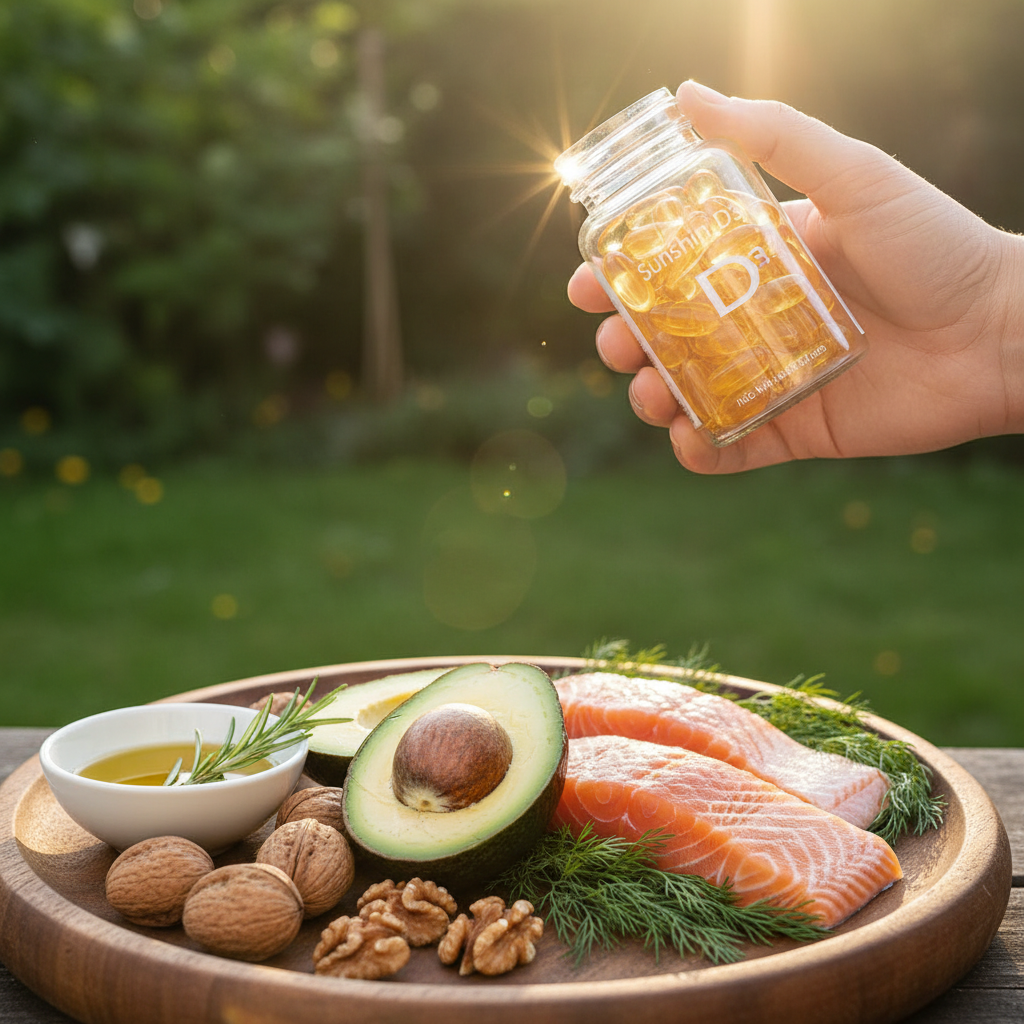
If you take a Vitamin D supplement, the timing and what you consume with it are crucial. Always take your Vitamin D supplement with your largest meal of the day or with a meal that contains healthy fats. A spoonful of nut butter, a few almonds, or even a fish oil capsule alongside your supplement can significantly improve its absorption. Many high-quality Vitamin D supplements are already formulated with an oil base (like olive oil or sunflower oil) to aid absorption, but taking them with food still offers additional benefits.
Beyond Diet: Sunlight Exposure and Other Factors
While diet is critical for absorption, remember that sunlight remains the primary natural source of Vitamin D. Aim for regular, sensible sun exposure, especially during peak hours, depending on your skin type, location, and season. However, dietary intake and absorption are particularly important in regions with limited sunlight or for individuals with darker skin tones, who require more sun exposure to produce sufficient Vitamin D.
Other factors that can affect Vitamin D levels include age (older adults produce less Vitamin D from sun exposure), obesity (Vitamin D can get sequestered in fat cells), and certain medical conditions or medications that impair fat absorption.
Addressing Common Misconceptions and FAQs
Let’s clarify some frequent questions regarding Vitamin D and fat absorption.
Do All Fats Help Vitamin D Absorption?
While most fats will technically facilitate some absorption due to their role in micelle formation, the *type* of fat matters for overall health. Prioritizing healthy monounsaturated and polyunsaturated fats is beneficial not just for Vitamin D, but for cardiovascular health and inflammation reduction. Unhealthy fats, like trans fats and excessive saturated fats from highly processed foods, should be limited regardless of Vitamin D considerations.
Can I Absorb Vitamin D Without Any Fat?
Your body’s ability to absorb Vitamin D without any fat is significantly impaired. While a tiny amount might still get through, the efficiency is drastically reduced. This means you would need to consume much larger quantities of Vitamin D to achieve the same beneficial effect if you consume it without fats.
How Much Fat Is Needed?
You don’t need a large amount of fat to aid Vitamin D absorption. Even a modest amount—around 5-10 grams of healthy fat per meal—is typically sufficient to stimulate bile production and facilitate the formation of micelles. This could be as simple as a few slices of avocado, a drizzle of olive oil, or a handful of nuts with your Vitamin D source.
The journey to optimal health is paved with informed choices. By consciously integrating healthy fats into your diet, you’re not just savoring delicious foods; you’re actively enhancing your body’s ability to absorb and utilize the vital “sunshine vitamin.” Prioritize this synergy, and you’ll be well on your way to stronger bones, a robust immune system, and an overall healthier, more vibrant life. As always, consult with a healthcare professional or registered dietitian for personalized advice.