The Hidden Link: How Cookware Impacts Your Hormones
Our hormones act as messengers, regulating nearly every function in the body, from metabolism and mood to fertility and sleep. When these delicate systems are disrupted, it can lead to a cascade of health issues. Unfortunately, many conventional cookware materials can leach chemicals into your food, acting as endocrine-disrupting chemicals (EDCs) that interfere with hormonal balance.
Understanding Endocrine-Disrupting Chemicals (EDCs) in Cookware
EDCs are substances that mimic, block, or interfere with the body’s natural hormones. Even in minute amounts, these chemicals can have profound effects, potentially contributing to:
- Thyroid dysfunction
- Reproductive issues (infertility, PCOS, endometriosis)
- Metabolic disorders (obesity, insulin resistance)
- Mood disturbances
- Immune system suppression
The heat of cooking can exacerbate the leaching of these chemicals from your pans directly into the meals you prepare for yourself and your family.
The Pervasive Problem: PFAS, PFOA, and PTFE
Perhaps the most well-known culprits in conventional non-stick cookware are per- and polyfluoroalkyl substances (PFAS), which include PFOA (perfluorooctanoic acid) and PTFE (polytetrafluoroethylene), often marketed under brand names like Teflon.
- PFOA has been linked to various health concerns, including kidney disease, thyroid disease, and reproductive issues, and has largely been phased out in manufacturing.
- PTFE, while generally stable at lower temperatures, can break down and release harmful fumes when overheated (above 500°F/260°C), potentially causing “Teflon flu” in humans and being fatal to birds. While manufacturers claim PTFE itself is inert, the concern lies with its manufacturing process and degradation products.
These “forever chemicals” persist in the environment and in our bodies, accumulating over time and posing a long-term risk to hormonal health.
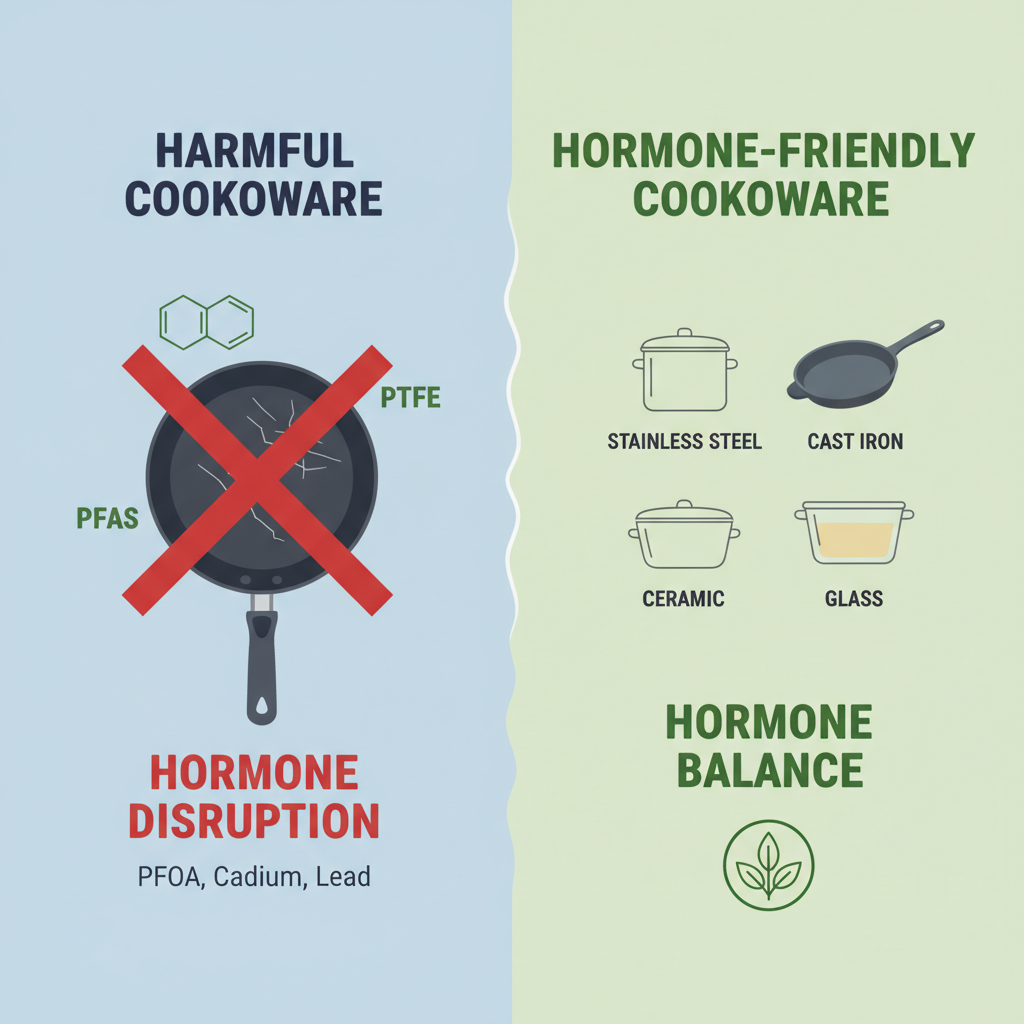
The Best Non-Toxic Cookware Materials for Hormonal Health
Transitioning to safer cookware doesn’t mean sacrificing cooking performance. Many excellent, durable, and truly non-toxic options are available that support your health without compromising your culinary adventures.
1. Stainless Steel: The Versatile Workhorse
High-quality stainless steel (look for 18/8 or 18/10 grades) is an excellent choice for hormonal health. It’s durable, non-reactive, and does not leach significant amounts of chemicals into food, especially when new and properly cared for. It’s ideal for almost any cooking task.
- Pros: Highly durable, non-reactive, easy to clean, widely available, relatively affordable, excellent heat retention in multi-ply versions.
- Cons: Can stick if not properly preheated or oiled; lower grades might contain more nickel (though usually negligible amounts leach).
- Tips for Hormonal Health: Choose reputable brands. Avoid scouring with abrasive pads that can scratch the surface.
2. Cast Iron: A Time-Tested Treasure
Seasoned cast iron is a classic for good reason. It’s naturally non-stick when well-seasoned, incredibly durable, and can even fortify your food with small, beneficial amounts of dietary iron (a plus for many, especially women). It’s completely free of synthetic coatings and EDCs.
- Pros: Extremely durable (lasts generations), excellent heat retention and even cooking, naturally non-stick when seasoned, adds dietary iron.
- Cons: Heavy, requires specific seasoning and cleaning care, can rust if not maintained.
- Tips for Hormonal Health: Ensure it’s well-seasoned to maintain its non-stick properties and prevent rust. Avoid cooking highly acidic foods for long periods, as this can strip seasoning and increase iron leaching.
3. Ceramic (100% Ceramic & Ceramic-Coated): Modern Non-Stick Solutions
When we talk about ceramic cookware, it’s important to distinguish between 100% ceramic and ceramic-coated. Both can be excellent non-toxic options.
- 100% Ceramic: Made from natural clay, sand, and minerals, then fired at high temperatures. It’s completely inert and free of heavy metals or synthetic coatings. Great for slow cooking and baking.
- Ceramic-Coated: Typically aluminum or stainless steel with a ceramic-based non-stick coating derived from sand (silica). These are a much safer alternative to traditional PTFE non-stick, as they are free from PFAS, PFOA, lead, and cadmium.
- Pros: Excellent non-stick properties (ceramic-coated), even heat distribution, easy to clean, aesthetically pleasing, generally lightweight (ceramic-coated).
- Cons: 100% ceramic can be brittle; ceramic coatings are less durable than traditional non-stick over time and can scratch or chip if not cared for properly, reducing non-stick properties.
- Tips for Hormonal Health: Look for brands explicitly stating “free of PFAS, PFOA, lead, and cadmium.” Use silicone or wooden utensils to prevent scratching the coating. Avoid high heat to prolong the life of the non-stick surface.
4. Glass: Pure and Inert
Glass bakeware and stovetop pots are an excellent non-toxic choice, particularly for baking, roasting, and storage. Glass is completely non-reactive and inert, ensuring no chemicals leach into your food.
- Pros: Completely non-reactive, non-toxic, doesn’t absorb odors or flavors, easy to clean, oven and microwave safe.
- Cons: Can break easily, not ideal for high-heat stovetop searing, poor heat conduction compared to metals.
- Tips for Hormonal Health: Use for baking, roasting, and storage. Opt for borosilicate glass for better thermal shock resistance if using on the stovetop.
5. Carbon Steel: The Chef’s Choice
Often considered a hybrid between cast iron and stainless steel, carbon steel offers excellent heat control, durability, and natural non-stick properties when seasoned. It’s lighter than cast iron and heats up faster, making it a favorite among professional chefs. Like cast iron, it’s free from synthetic coatings.
- Pros: Excellent heat control, quickly heats up, naturally non-stick when seasoned, lighter than cast iron, very durable.
- Cons: Requires seasoning and specific care similar to cast iron, can rust if not maintained.
- Tips for Hormonal Health: Maintain proper seasoning to ensure non-stick properties and protect the metal.
Cookware Materials to Approach with Caution
While the focus is on what to choose, it’s equally important to be aware of materials that pose a higher risk:
- Traditional Non-Stick (PTFE/Teflon): As discussed, the chemicals involved in their manufacture (PFOA) and the potential for off-gassing at high temperatures (PTFE) make them less ideal for hormonal health.
- Uncoated Aluminum: While aluminum is abundant, uncoated aluminum can leach into food, especially with acidic ingredients. High exposure to aluminum has been a subject of health concern, although its direct impact on hormones is still debated. Anodized aluminum is safer, but stainless steel or cast iron are generally preferred.
- Copper (Unlined): While beautiful, unlined copper can leach copper into food, which in excess can be toxic. Lined copper (e.g., with stainless steel) is generally safe but check for scratches in the lining.
Beyond the Pan: Holistic Tips for a Hormone-Healthy Kitchen
Choosing non-toxic cookware is a cornerstone, but a holistic approach to your kitchen can further support hormonal balance:
- Ditch the Plastic: Reduce plastic food storage and use glass or stainless steel containers instead, especially for warm foods. Plastics contain phthalates and BPA, potent EDCs.
- Mind Your Utensils: Pair your non-toxic pans with non-toxic utensils like wood, bamboo, or silicone to avoid scratching surfaces or introducing microplastics.
- Proper Cleaning: Follow manufacturer instructions for cleaning to prolong the life of your cookware and prevent damage that could lead to chemical exposure.
- Replace Old Pans: If your non-stick pan is scratched, peeling, or visibly damaged, it’s time to replace it. A damaged coating is more likely to leach unwanted chemicals.
- Ventilation is Key: Always ensure good ventilation in your kitchen while cooking, regardless of your cookware type, to remove any fumes or particulate matter.
Making the Switch: Your Journey to a Healthier Kitchen
Investing in non-toxic cookware for hormonal health is an empowering step towards a cleaner diet and a healthier lifestyle. You don’t need to overhaul your entire kitchen overnight. Start by replacing your most frequently used or oldest pans with safer alternatives. By making informed choices about your cooking tools, you are actively reducing your exposure to endocrine disruptors and supporting your body’s delicate hormonal harmony, one delicious, chemical-free meal at a time.