Living with Attention-Deficit/Hyperactivity Disorder often means contending with a unique set of challenges that can significantly increase cognitive load. From working memory deficits to executive dysfunction, the ADHD brain processes information differently, making structured approaches to mental management invaluable. By understanding and implementing targeted strategies, you can transform daily overwhelm into manageable mental bandwidth.
What is Cognitive Load and Why is it Different for ADHD Brains?
Cognitive load refers to the total amount of mental effort being used in your working memory at any given time. Think of your working memory as a mental workspace where you hold and manipulate information. When this workspace becomes too crowded, performance suffers, leading to errors, frustration, and an inability to complete tasks.

For adults with ADHD, the capacity of this mental workspace often feels smaller, and it’s more easily overwhelmed. Several factors contribute to this heightened cognitive load:
- Working Memory Deficits: Difficulty holding multiple pieces of information in mind simultaneously, making complex tasks feel impossible.
- Executive Function Challenges: Impairments in planning, prioritizing, initiating tasks, and self-regulation mean more mental energy is expended on these basic functions.
- Distractibility: Both external stimuli and internal thoughts can easily pull attention away, adding extraneous information to an already strained working memory.
- Emotional Dysregulation: Intense emotions or the stress of feeling overwhelmed can consume significant cognitive resources, leaving less for productive work.
- Hyperfocus and Task Switching: While hyperfocus can be an asset, abrupt transitions between tasks can be incredibly draining, demanding a significant cognitive shift.
The cumulative effect is a constant state of mental fatigue, overwhelm, and underperformance, even on seemingly simple tasks. Learning to manage this load is key to thriving with ADHD.
Practical Strategies for Cognitive Load Management for ADHD Adults
Successfully managing cognitive load involves a multi-pronged approach, focusing on reducing incoming information, organizing existing information, and optimizing your mental resources. Here are actionable strategies you can start implementing today.
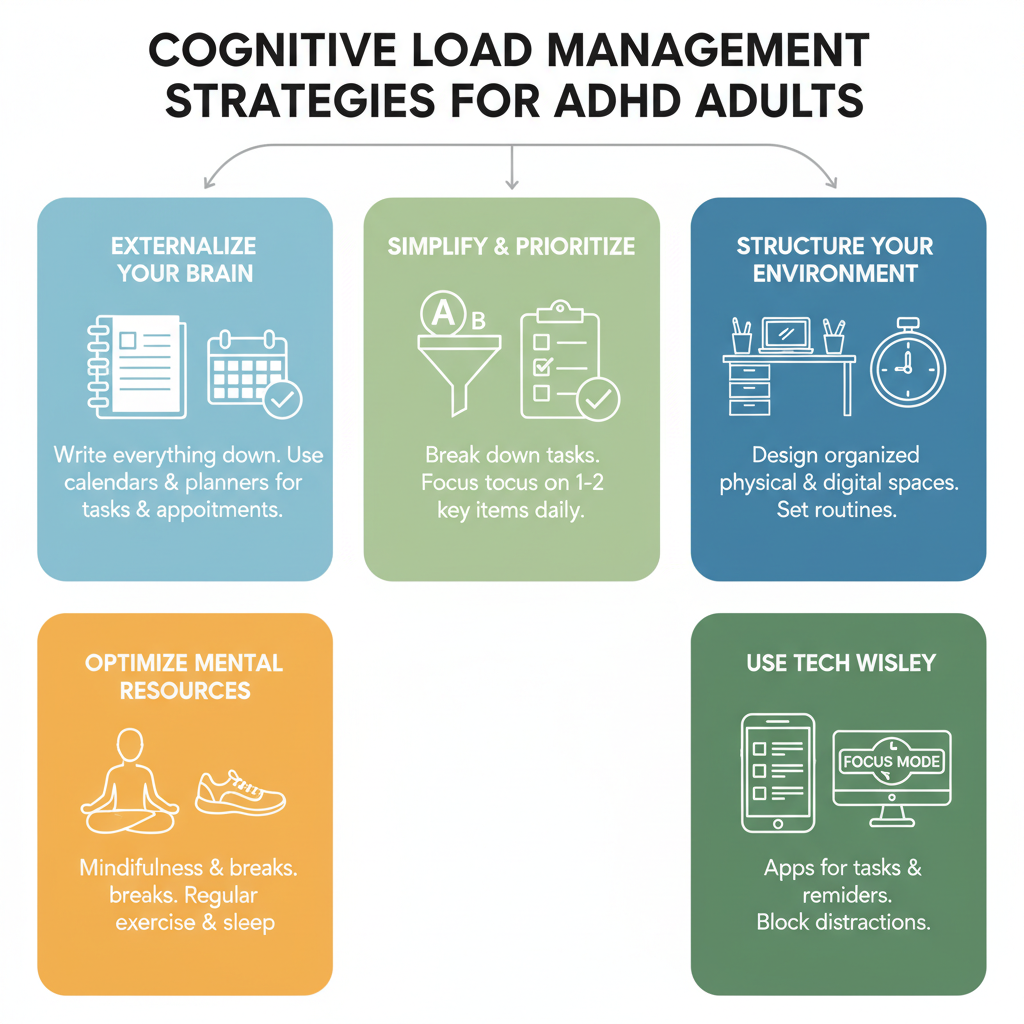
Externalize Your Brain
One of the most effective ways to reduce cognitive load is to offload information from your working memory into reliable external systems. This frees up mental space for processing and problem-solving.
- Comprehensive To-Do Lists: Use a single, trusted system (a notebook, digital app like Todoist or Things, or a bullet journal) to capture ALL tasks, ideas, and commitments. Get everything out of your head.
- Detailed Note-Taking: Whether in meetings, during conversations, or brainstorming, write things down. Don’t rely on your memory for specifics. Use templates for recurring tasks or projects.
- Set Reminders and Alarms: Delegate the “remembering” to your phone, smart speaker, or calendar. Use alarms for appointments, medication, breaks, and even task transitions.
- Visual Organizers: Whiteboards, corkboards, and clear storage containers can help externalize mental clutter by making your environment a visual reminder of what needs to be done or where things belong.
Simplify and Prioritize
Reducing the number of demands on your attention is crucial. Not everything is equally important or urgent.
- The “One Thing” Principle: Before starting any task, ask yourself, “What is the single most important thing I need to do right now?” Focus solely on that.
- Break Down Tasks: Large, complex tasks are overwhelming. Break them into smaller, manageable steps. Each step should be clear and achievable, reducing the mental effort needed to figure out “how to start.”
- Prioritization Frameworks: Use tools like the Eisenhower Matrix (Urgent/Important) or the “ABCD” method to categorize tasks. Eliminate or delegate tasks that fall into the “not urgent, not important” quadrant.
- Minimize Options: Reduce choices where possible. For example, choose your outfit the night before, meal plan for the week, or limit the number of apps on your home screen.
Structure Your Environment and Routine
A predictable, organized environment and routine can significantly reduce the mental effort required to navigate daily life.
- Designated Workspaces: Create a specific, clutter-free area for focused work. Ensure it’s stocked with necessary supplies to avoid constant searching.
- Minimize Distractions: Identify and eliminate common distractions. This might mean turning off notifications, closing unnecessary browser tabs, using noise-canceling headphones, or physically moving to a quieter space.
- Consistent Routines: Establish predictable daily routines for morning, work, and evening. Automating decisions reduces mental fatigue. For example, a consistent morning routine means you don’t have to think about what to do next.
- Time Blocking: Schedule specific blocks of time for focused work, breaks, communication, and personal tasks. Treat these blocks like appointments you cannot miss.
Optimize Your Mental Resources
Managing cognitive load isn’t just about external tools; it’s also about maintaining your internal resources.
- Regular Breaks (The Pomodoro Technique): Work in focused bursts (e.g., 25 minutes) followed by short breaks (5 minutes). This prevents mental fatigue and improves sustained attention.
- Mindfulness and Meditation: Practices that train your attention can help you notice when your mind is getting overwhelmed and gently guide it back to the present moment, reducing mental chatter.
- Physical Activity and Nutrition: Regular exercise and a balanced diet are critical for brain health, energy levels, and mood regulation, all of which impact cognitive function.
- Adequate Sleep: Chronic sleep deprivation severely impairs working memory, attention, and executive function. Prioritize 7-9 hours of quality sleep.
- Delegate and Ask for Help: Recognize when you have too much on your plate. Don’t be afraid to delegate tasks or ask for support from colleagues, family, or friends.
Embrace Technology Wisely
Technology can be both a blessing and a curse for the ADHD brain. Use it strategically to support your cognitive load management efforts.
- Task Managers and Digital Calendars: Tools like Google Calendar, Outlook Calendar, or dedicated apps can help you schedule tasks, set reminders, and keep track of appointments in one place.
- Focus and Website Blocker Apps: Apps like Freedom, Cold Turkey, or Forest can help you block distracting websites and apps during designated focus times.
- Speech-to-Text Software: If writing is a bottleneck, dictate your thoughts or notes. This can bypass executive function hurdles related to getting ideas onto paper.
Self-Compassion and Professional Support
Implementing these strategies is an ongoing process, not a one-time fix. There will be days when things feel overwhelming despite your best efforts. Practice self-compassion and acknowledge your progress.
- Be Patient: It takes time to build new habits and systems. Experiment to find what works best for your unique ADHD brain.
- Celebrate Small Wins: Acknowledge when you successfully use a strategy, no matter how small the achievement. Positive reinforcement encourages continued effort.
- Seek Professional Support: An ADHD coach or therapist specializing in executive function can provide personalized strategies, accountability, and support in developing effective cognitive load management techniques. Medication, if appropriate, can also significantly improve underlying executive functions.
By actively applying these principles of cognitive load management, adults with ADHD can significantly reduce feelings of overwhelm, improve their focus, and enhance their overall quality of life. It’s about creating systems and habits that support your brain, rather than constantly fighting against its natural tendencies.