Why Healthy Home Cooking Matters for New Cooks
As a new home cook, choosing to focus on healthy recipes from the outset sets you up for long-term success. Beyond the immediate satisfaction of a tasty meal, cooking at home offers numerous benefits:
- Cost Savings: Eating out frequently can drain your wallet. Home-cooked meals are significantly more budget-friendly.
- Nutritional Control: You dictate every ingredient, ensuring you avoid excessive sugar, salt, unhealthy fats, and artificial additives often found in processed foods or restaurant dishes.
- Skill Development: Each meal you prepare builds your confidence and expands your culinary repertoire, making future cooking even easier.
- Mindful Eating: The process of cooking connects you more deeply with your food, fostering a greater appreciation for what you eat.
- Reduced Food Waste: Planning and preparing your own meals helps you utilize ingredients efficiently, minimizing waste.
Your Starter Kit: Essential Kitchen Tools for the Beginner Cook
You don’t need a gourmet kitchen filled with gadgets to prepare amazing healthy meals. Start with these fundamental tools, and you’ll be well-equipped for most beginner-friendly recipes:

- Sharp Chef’s Knife: Invest in one good-quality, sharp knife for chopping, slicing, and dicing.
- Cutting Board: A sturdy, non-slip cutting board is crucial for safety and efficiency.
- Large Sheet Pan: Perfect for roasting vegetables, chicken, and fish with minimal cleanup.
- Large Skillet or Frying Pan: Essential for sautéing, searing, and stir-frying.
- Medium Pot with Lid: For boiling grains, pasta, steaming vegetables, or making simple soups.
- Measuring Cups and Spoons: Accuracy is important, especially when you’re starting out.
- Spatula, Tongs, Whisk: Basic utensils for stirring, flipping, and mixing.
- Mixing Bowls: A couple of different sizes will come in handy.
Stocking Your Healthy Pantry: Beginner-Friendly Staples
A well-stocked pantry is the secret weapon of any home cook. Focus on versatile, long-lasting ingredients that form the backbone of many healthy meals:
Grains & Legumes:
- Brown rice, quinoa, whole wheat pasta (for complex carbohydrates)
- Oats (for breakfast and baking)
- Canned beans (black beans, chickpeas, kidney beans – excellent plant-based protein)
- Lentils (dried or canned, for soups and stews)
Proteins:
- Chicken breasts or thighs (versatile and lean)
- Eggs (quick protein source)
- Canned tuna or salmon (convenient and rich in omega-3s)
- Greek yogurt (protein-packed snack or breakfast)
- Firm tofu (plant-based option for stir-fries and scrambles)
Fats & Oils:
- Olive oil (for cooking and dressing)
- Avocado oil (for higher heat cooking)
- Nut butters (peanut, almond – for snacks and breakfast)
Canned & Jarred Goods:
- Diced tomatoes, tomato paste (base for sauces)
- Low-sodium broths (chicken, vegetable)
- Vinegars (apple cider, balsamic, white wine)
- Mustard (Dijon, yellow)
Spices & Seasonings:
- Salt, black pepper (the essentials!)
- Garlic powder, onion powder
- Dried herbs (oregano, basil, thyme, rosemary)
- Cumin, paprika, chili powder (for flavor depth)
Fresh Produce (Focus on versatile basics):
- Onions, garlic (flavor foundations)
- Carrots, celery (aromats and crunch)
- Leafy greens (spinach, kale, mixed greens for salads)
- Seasonal fruits and vegetables (for variety and freshness)
Mastering the Basics: Simple Cooking Techniques for Novices
Don’t be intimidated by fancy culinary terms. Most healthy meals for new home cooks rely on a few fundamental techniques:
- Chopping & Dicing: Practice makes perfect! Learn basic knife skills for vegetables, crucial for even cooking.
- Sautéing: Cooking food quickly in a small amount of fat over medium-high heat. Great for vegetables, eggs, and lean proteins.
- Roasting: Cooking food in the oven, usually at a high temperature, to achieve tender interiors and nicely browned exteriors. Perfect for vegetables and proteins on a sheet pan.
- Boiling & Simmering: Boiling involves cooking in vigorously bubbling liquid; simmering is cooking in liquid just below boiling point. Essential for grains, pasta, and soups.
- Baking: Cooking with dry heat in an oven, often used for fish, chicken, and sometimes vegetables.
Your First Steps: Easy & Delicious Healthy Meal Ideas
Here are some beginner-friendly healthy meals for new home cooks, designed for ease, nutrition, and deliciousness:
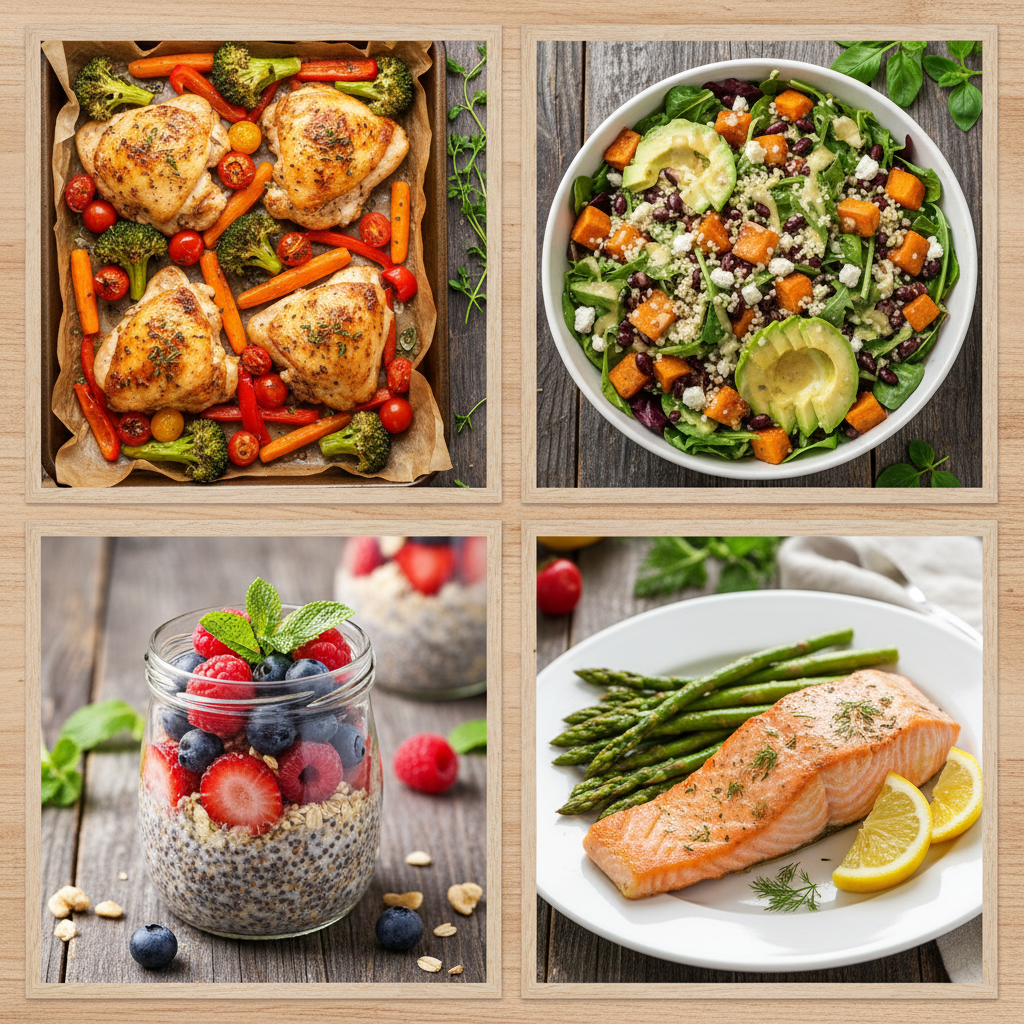
Energizing Breakfasts
Overnight Oats
A no-cook, make-ahead breakfast perfect for busy mornings.
- Ingredients: 1/2 cup rolled oats, 1 cup milk (dairy or non-dairy), 1 tablespoon chia seeds, 1/2 cup fruit (berries, sliced banana), 1 tablespoon nuts or seeds, a drizzle of honey or maple syrup (optional).
- Method: In a jar or container, combine oats, milk, and chia seeds. Stir well. Top with fruit and nuts. Cover and refrigerate overnight. Enjoy cold in the morning.
Scrambled Eggs with Spinach & Whole-Wheat Toast
A quick, protein-packed breakfast.
- Ingredients: 2 eggs, a handful of fresh spinach, 1 tablespoon olive oil or butter, salt and pepper to taste, 1 slice whole-wheat toast.
- Method: Heat oil/butter in a small skillet over medium heat. Add spinach and cook until wilted (about 1 minute). Whisk eggs with salt and pepper in a bowl. Pour eggs into the skillet. Stir gently with a spatula until cooked to your desired consistency. Serve with whole-wheat toast.
Greek Yogurt Parfait
Layered goodness with protein and fiber.
- Ingredients: 1 cup plain Greek yogurt, 1/2 cup mixed berries, 2 tablespoons granola, 1 teaspoon honey (optional).
- Method: In a glass, layer half the yogurt, half the berries, and half the granola. Repeat layers. Drizzle with honey if desired.
Quick & Satisfying Lunches
Power Salad with Grilled Chicken or Chickpeas
Customizable and packed with nutrients.
- Ingredients: Large bowl of mixed greens, 1/2 cup cooked chicken breast (sliced) or 1/2 cup rinsed chickpeas, 1/4 cup chopped cucumber, 1/4 cup cherry tomatoes (halved), 1/4 cup shredded carrots, 2 tablespoons olive oil, 1 tablespoon apple cider vinegar, salt and pepper.
- Method: Combine all salad ingredients in a bowl. Whisk olive oil, vinegar, salt, and pepper for a simple dressing. Drizzle over salad and toss to combine.
Whole Wheat Veggie & Hummus Wraps
Easy to assemble and portable.
- Ingredients: 1 large whole wheat tortilla, 2 tablespoons hummus, 1/4 cup shredded carrots, 1/4 cup sliced bell peppers, a handful of spinach, 2 slices of turkey or a few slices of avocado (optional).
- Method: Lay the tortilla flat. Spread hummus evenly. Layer spinach, carrots, bell peppers, and any optional fillings. Roll up tightly and cut in half.
Simple & Wholesome Dinners
Sheet Pan Lemon Herb Chicken and Veggies
Minimal cleanup and maximum flavor. One of the best healthy meals for new home cooks.
- Ingredients: 1 lb boneless, skinless chicken breasts or thighs (cut into 1-inch pieces), 2 cups mixed vegetables (broccoli florets, bell pepper strips, zucchini chunks, cherry tomatoes), 2 tablespoons olive oil, 1 teaspoon dried oregano, 1/2 teaspoon garlic powder, salt and pepper, 1 lemon (sliced).
- Method: Preheat oven to 400°F (200°C). On a large sheet pan, toss chicken and vegetables with olive oil, oregano, garlic powder, salt, and pepper. Spread in a single layer. Arrange lemon slices over the top. Roast for 20-25 minutes, or until chicken is cooked through and vegetables are tender-crisp.
One-Pot Pasta Primavera
A creamy, veggie-packed pasta dish with easy cleanup.
- Ingredients: 8 oz whole wheat pasta (e.g., penne or rotini), 3 cups vegetable broth, 1 cup chopped mixed vegetables (broccoli, bell peppers, zucchini, peas), 1/2 cup milk (dairy or non-dairy), 1/4 cup grated Parmesan cheese (optional), 1 tablespoon olive oil, 1 clove garlic (minced), salt and pepper.
- Method: In a large pot or deep skillet, combine uncooked pasta, vegetable broth, and olive oil. Bring to a boil, then reduce heat to medium-low and simmer, stirring occasionally, until pasta is almost al dente (about 8-10 minutes). Add the chopped vegetables and minced garlic. Continue to simmer, stirring, until vegetables are tender and pasta is cooked, adding milk if needed for creaminess (about 5-7 more minutes). Stir in Parmesan cheese if using, and season with salt and pepper to taste.
Baked Salmon with Roasted Asparagus
Elegant, healthy, and incredibly simple.
- Ingredients: 2 salmon fillets, 1 bunch asparagus (ends trimmed), 1 tablespoon olive oil, 1/2 lemon (sliced), salt and pepper.
- Method: Preheat oven to 400°F (200°C). Place salmon fillets and asparagus on a baking sheet. Drizzle with olive oil, season with salt and pepper. Top salmon with lemon slices. Bake for 12-15 minutes, or until salmon is cooked through and flakes easily, and asparagus is tender-crisp.
Hearty Lentil Soup
Comforting, nutritious, and budget-friendly.
- Ingredients: 1 tablespoon olive oil, 1 onion (chopped), 2 carrots (diced), 2 celery stalks (diced), 2 cloves garlic (minced), 1 cup brown or green lentils (rinsed), 6 cups vegetable broth, 1 (14.5 oz) can diced tomatoes (undrained), 1 teaspoon dried thyme, salt and pepper.
- Method: Heat olive oil in a large pot or Dutch oven over medium heat. Add onion, carrots, and celery; cook until softened (5-7 minutes). Add garlic and cook for another minute. Stir in rinsed lentils, vegetable broth, diced tomatoes, and thyme. Bring to a boil, then reduce heat to low, cover, and simmer for 30-40 minutes, or until lentils are tender. Season with salt and pepper to taste.
Healthy Snacks & Sides
- Fruit and Nut Butter: Sliced apple with peanut butter, banana with almond butter.
- Veggies and Hummus: Carrot sticks, cucumber slices, bell pepper strips with store-bought or homemade hummus.
- Simple Side Salad: A handful of mixed greens with a light vinaigrette.
Tips for Success on Your Healthy Cooking Journey
Starting a new habit can have its challenges, but these tips will help you stay motivated and make your cooking journey enjoyable:
- Start Small: Don’t try to cook every meal from scratch every day. Begin with one new recipe a week, or focus on just dinners.
- Don’t Be Afraid of Mistakes: Every chef has had a culinary mishap. Learn from it, laugh it off, and try again.
- Taste As You Go: Seasoning is key! Taste your food during cooking and adjust salt, pepper, and spices as needed.
- Meal Prep a Little: Even a small amount of meal prep can save you time. Chop veggies for the week, cook a batch of quinoa, or make extra soup.
- Embrace Spices and Herbs: They are your best friends for adding flavor without extra calories or unhealthy fats.
- Keep It Simple: Focus on whole, unprocessed ingredients. Healthy cooking doesn’t need to be complicated.
- Find Your Inspiration: Explore cookbooks, cooking blogs, or cooking shows. The more excited you are, the more you’ll cook.
Making Healthy Eating a Sustainable Habit
The goal isn’t just to cook a few healthy meals; it’s to integrate healthy eating into your lifestyle. As you become more comfortable in the kitchen, you’ll naturally gravitate towards nutritious choices. Listen to your body, celebrate your successes, and remember that every healthy meal you prepare is an investment in your well-being.
With these straightforward recipes and practical tips, you are now well-equipped to start preparing incredible healthy meals for new home cooks. Your kitchen awaits – happy cooking!