A strong grip is more than just about lifting heavy objects; it’s a cornerstone of functional fitness that impacts everything from opening jars to preventing falls. As we age, natural muscle loss can affect our hand and forearm strength, but targeted exercises can effectively counteract this decline.
Why Grip Strength Matters for Seniors
Grip strength is a powerful indicator of overall health and an essential component of an active senior lifestyle. Its importance extends far beyond what many might initially realize, impacting independence, safety, and quality of life.

Preventing Falls and Injuries
A stronger grip directly translates to better balance and stability. When you have a firm grasp, you are better equipped to catch yourself if you stumble, hold onto railings more securely, and use walking aids effectively. This significantly reduces the risk of falls, a leading cause of injury among older adults.
Enhancing Daily Activities
Think about the multitude of tasks you perform daily that rely on your grip. Opening stubborn jars, carrying groceries, lifting grandchildren, holding a pen, or even turning a doorknob all require adequate hand and forearm strength. Improved grip makes these activities effortless, reducing frustration and fatigue.
Maintaining Independence and Quality of Life
The ability to perform daily tasks without assistance is fundamental to maintaining independence. Stronger grip allows seniors to continue enjoying hobbies like gardening, knitting, cooking, and engaging in social activities that require fine motor skills. This contributes to a higher quality of life and sustained autonomy.
Getting Started Safely: Important Considerations
Before embarking on any new exercise regimen, especially when focusing on specific muscle groups, it’s crucial to prioritize safety. Seniors should take a mindful approach to ensure exercises are beneficial and free from risk.
Consult Your Doctor First
Always speak with your physician or a physical therapist before starting any new exercise program. This is particularly important if you have pre-existing conditions like arthritis, carpal tunnel syndrome, or any hand or wrist pain. A medical professional can provide personalized advice and ensure the exercises are appropriate for your specific health status.
Listen to Your Body
Pain is your body’s way of telling you something is wrong. If you feel any sharp pain during an exercise, stop immediately. Discomfort is normal when building muscle, but pain is not. Adjust the intensity or rest if needed.
Start Slow and Progress Gradually
Begin with light resistance and fewer repetitions, gradually increasing as your strength improves. Overdoing it too soon can lead to injury or discouragement. Consistency with moderate effort is far more effective than sporadic bursts of intense activity.
Top Exercises to Improve Grip Strength for Seniors
Incorporating a variety of grip strengthening exercises will target different muscles in the hands and forearms, leading to comprehensive improvements. Aim to perform these exercises 2-3 times per week, allowing a day of rest in between sessions.
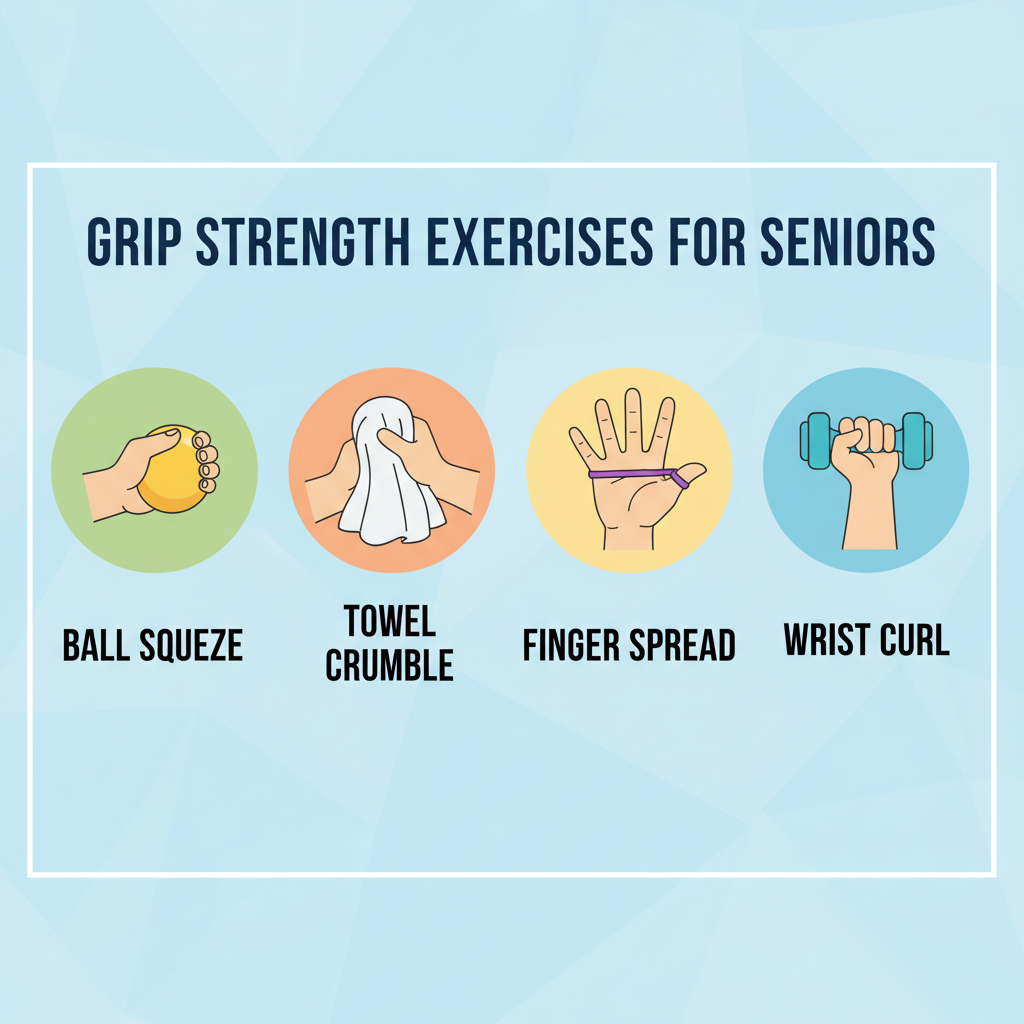
1. Squeeze Ball (or Stress Ball)
- Hold a soft rubber ball, tennis ball, or stress ball in the palm of your hand.
- Squeeze the ball as hard as you can for 3-5 seconds.
- Relax your hand for a few seconds.
- Repeat 10-15 times per hand.
- This is excellent for overall hand strength and stress relief.
2. Towel Scrunch/Curl
- Place a small towel flat on a table.
- Rest your forearm on the table with your hand hanging over the edge, palm down, on the towel.
- Using only your fingers, scrunch the towel towards you, gathering it into a ball.
- Once you’ve gathered the whole towel, smooth it out and repeat.
- Perform 5-10 repetitions per hand. This helps with finger dexterity and intrinsic hand muscle strength.
3. Finger Extensions with a Rubber Band
- Place a rubber band around all five fingers, keeping your palm open.
- Slowly spread your fingers apart, stretching the rubber band.
- Hold for 2-3 seconds, then slowly bring your fingers back together.
- Repeat 10-15 times per hand.
- This exercise targets the extensor muscles, balancing the strength of your grip.
4. Wrist Curls (with light weights or soup cans)
- Sit in a chair, resting your forearm on your thigh, palm facing up, holding a light dumbbell (1-3 lbs) or a can of soup.
- Let your wrist hang over your knee.
- Slowly curl the weight upwards, bending only at the wrist.
- Lower the weight back down in a controlled manner.
- Perform 10-15 repetitions per hand. This builds forearm strength vital for gripping.
5. Reverse Wrist Curls
- Similar to wrist curls, but start with your palm facing down.
- Rest your forearm on your thigh, holding the weight.
- Lift the weight by extending your wrist upwards, then slowly lower it.
- Perform 10-15 repetitions per hand. This targets the opposing forearm muscles, ensuring balanced strength.
6. Pinch Grips
- Hold a few small, flat objects (e.g., coins, marbles, clothes pegs) between your thumb and fingertips, focusing on maintaining a firm pinch.
- Alternatively, you can pinch two small weights together, holding them for 15-30 seconds.
- Release and repeat 3-5 times.
- This is excellent for improving the strength needed for fine motor tasks like buttoning shirts or picking up small items.
7. Farmer’s Walk (with light weights)
- Hold a light dumbbell or a sturdy grocery bag filled with a manageable weight in each hand.
- Stand tall with good posture, shoulders back.
- Walk slowly and deliberately for 30-60 seconds, maintaining a strong, consistent grip.
- Rest and repeat 2-3 times.
- This full-body exercise significantly improves grip endurance and overall core stability.
Integrating Grip Strength into Daily Life
Beyond structured exercises, look for opportunities to naturally engage your grip throughout the day. When carrying groceries, try to carry bags in your hands instead of using a cart for short distances. Practice opening jars and bottles yourself, even if they’re a bit tight. Use hand tools in the garden, or hold onto railings firmly when navigating stairs.
Everyday activities can become mini-workouts. Consciously engaging your grip during routine tasks can reinforce the benefits of your dedicated exercises and make strength building a seamless part of your lifestyle. This constant engagement helps maintain muscle memory and functional strength.
Consistency and Progression: The Keys to Success
Like any fitness goal, improving grip strength requires consistency. Regular practice, even for just 10-15 minutes a few times a week, will yield noticeable results over time. As your strength improves, you can gradually increase the resistance, the number of repetitions, or the duration of your holds.
Keep a small stress ball or a hand gripper nearby as a visual reminder. Consider tracking your progress, perhaps by noting how many repetitions you can do or how long you can hold a weight. Seeing your improvements can be a great motivator to continue your journey toward stronger, more capable hands.
Conclusion
Investing time in exercises to improve grip strength in seniors is an investment in your independence, safety, and overall well-being. From preventing falls to simplifying daily routines, the benefits are extensive and profound. By incorporating these simple yet effective exercises into your routine, you can strengthen your hands, maintain your dexterity, and embrace a more active and confident senior lifestyle. Start today, listen to your body, and enjoy the lasting impact of a stronger grip.