This in-depth guide will explore the root causes of valgus collapse, provide practical self-assessment tips, and equip you with a comprehensive arsenal of exercises and strategies to strengthen key muscles, improve mobility, and refine your squat technique for safer, more powerful lifts.
What Exactly Is Valgus Collapse During Squats?
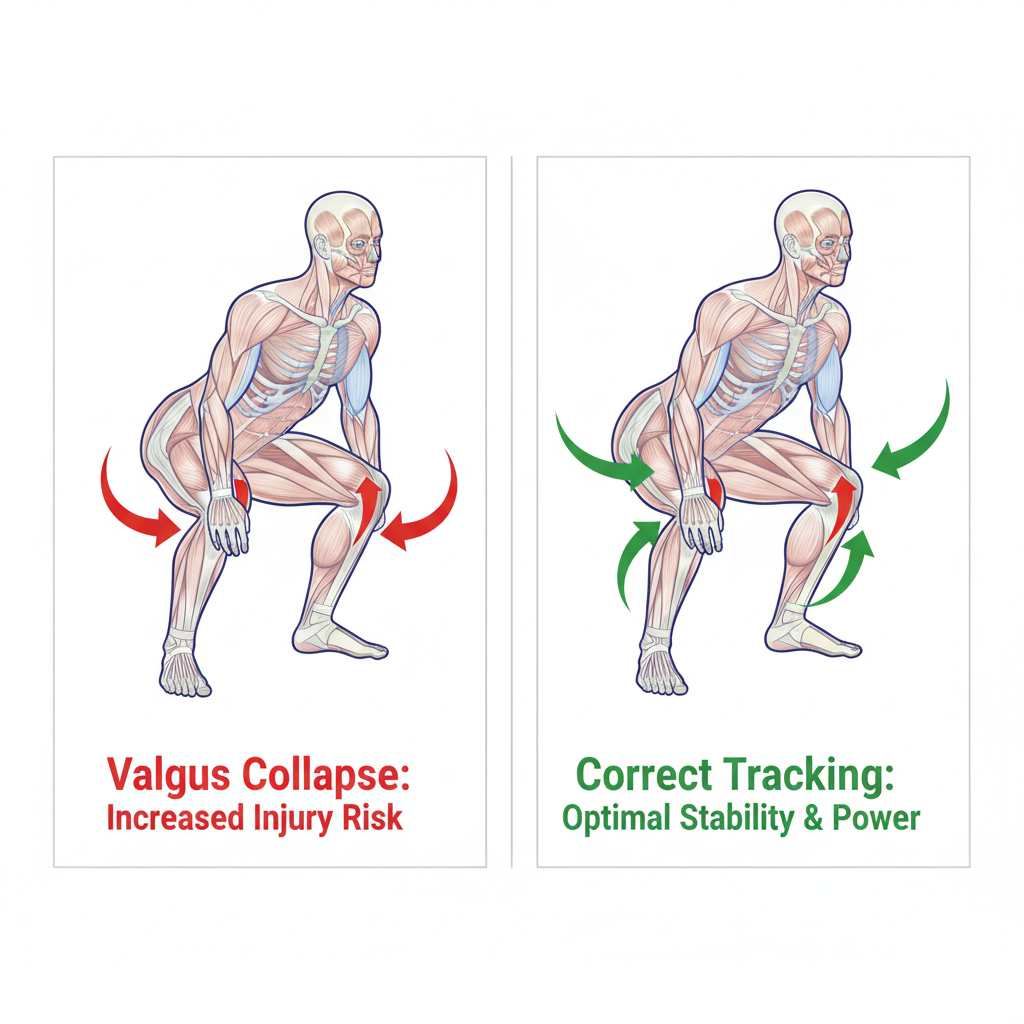
Valgus collapse refers to the inward movement of the knees towards the midline of the body during a squatting motion. Instead of tracking directly over the toes, the knees buckle inward, creating a ‘knock-kneed’ appearance at the bottom of the squat or during the ascent.
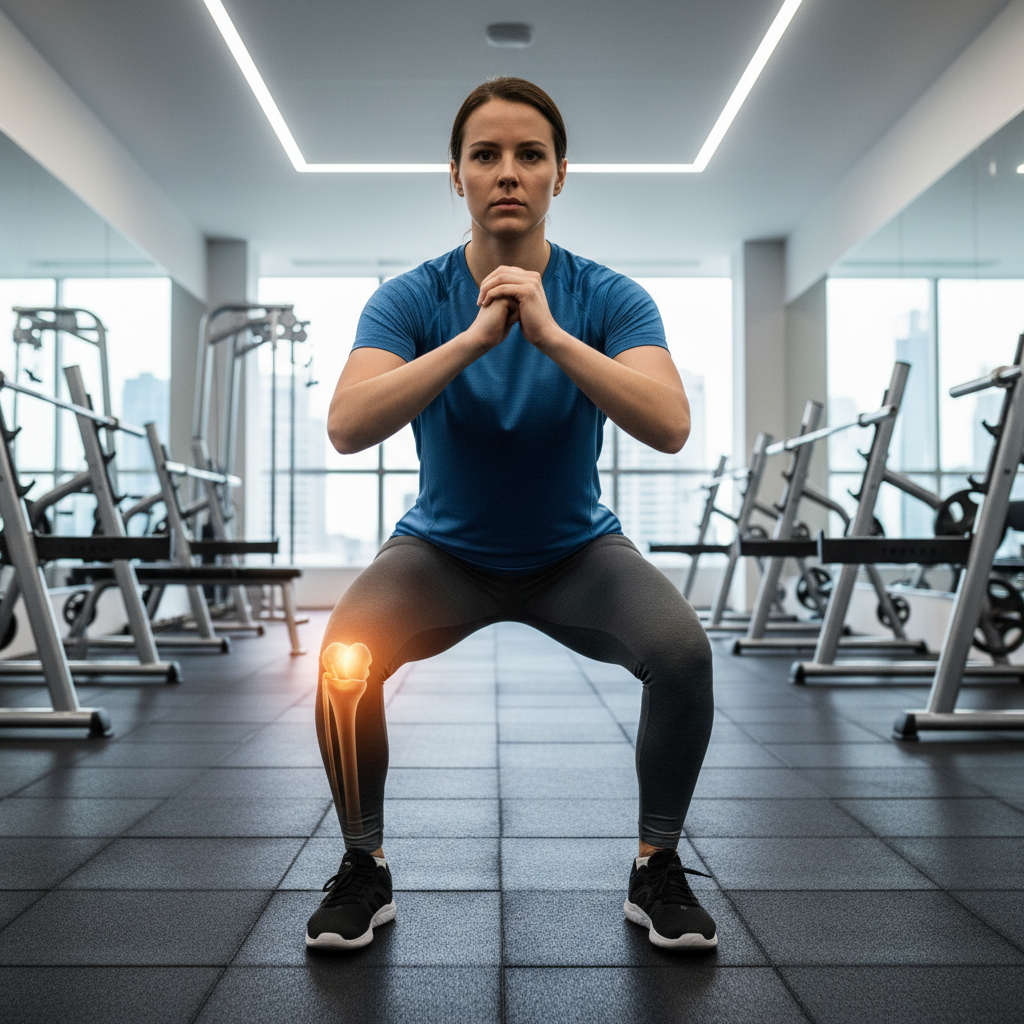
This deviation from optimal knee alignment can occur in varying degrees, from a subtle inward shift to a dramatic collapse. While minor valgus movement might seem innocuous, it indicates underlying imbalances that can be detrimental over time.
The Biomechanics Behind Knee Caving
Optimal squat mechanics dictate that the knees should track in line with the middle of the foot throughout the movement. This alignment ensures that forces are distributed evenly across the knee joint and surrounding structures. When valgus collapse occurs, the femur (thigh bone) internally rotates and adducts (moves towards the midline), while the tibia (shin bone) often externally rotates relative to the femur. This creates a twisting, shearing force on the knee joint, which is highly undesirable.
Why Correcting Valgus Collapse Is Crucial
Ignoring valgus collapse can lead to a host of problems. The altered biomechanics place excessive stress on the medial (inner) structures of the knee, including the medial collateral ligament (MCL) and the patellofemoral joint (kneecap). Common injuries associated with persistent valgus collapse include:
- Patellofemoral pain syndrome (runner’s knee)
- Meniscus tears
- ACL tears (especially in dynamic, high-impact movements)
- IT band syndrome
- General knee instability and pain
Beyond injury risk, valgus collapse also compromises power output and efficiency. By losing proper alignment, you diminish your ability to recruit the glutes and hamstrings effectively, ultimately limiting your strength and potential gains.
Identifying Valgus Collapse: Are Your Knees Caving In?
Self-assessment is the first step in addressing this issue. You can often spot valgus collapse yourself, or with the help of a friend or video recording.
Visual Cues and Common Sensations
- Mirror Test: Perform a few bodyweight squats facing a mirror. Pay close attention to your knees as you descend and ascend. Do they drift inward?
- Video Analysis: Record yourself squatting from the front. Play it back in slow motion to observe your knee tracking. This is often the most accurate method.
- Sensations: Do you feel a pinch or discomfort on the inside of your knee? Does your outside thigh or hip feel overly tight or weak?
- Foot Arch Collapse: Sometimes, valgus collapse is linked to excessive pronation (flattening) of the foot arch, which can also be observed.
Root Causes of Valgus Collapse: A Deeper Dive
Valgus collapse is rarely due to a single factor. It’s often a multifactorial problem stemming from a combination of muscle imbalances, mobility restrictions, and poor motor control. Understanding these underlying causes is key to truly correcting valgus collapse in squats.
Weak Glute Medius and Maximus
The gluteus medius, a smaller glute muscle on the side of your hip, plays a critical role in hip abduction (moving the leg away from the body) and external rotation, which helps to stabilize the knee and prevent inward collapse. The gluteus maximus, your largest glute muscle, is crucial for hip extension and external rotation, providing powerful hip drive and stability. Weakness in these muscles often means other, less appropriate muscles take over, leading to compensatory movements like knee caving.
Overactive Adductors
Conversely, the adductor muscles on the inner thigh, which pull the legs towards the midline, can become overactive or tight. When these muscles overpower the glutes, they pull the knees inward, contributing to valgus collapse.
Limited Ankle Dorsiflexion
Ankle dorsiflexion is the ability to bring your shins forward over your feet. Insufficient dorsiflexion restricts your ability to move your weight forward in a squat, forcing your torso to lean excessively or your knees to compensate by caving inward to maintain balance and depth.
Hip Mobility Restrictions
Tightness in the hip flexors or internal rotators can limit your hips’ ability to achieve the necessary external rotation and abduction during a squat, pushing the knees inward as a compensation.
Poor Core Stability
A strong and stable core provides a solid foundation for all compound movements, including squats. When the core is weak, the body seeks stability elsewhere, often at the expense of proper knee alignment.
Inadequate Motor Control and Awareness
Sometimes, even with sufficient strength and mobility, individuals may lack the proprioception (body awareness) or motor control to consciously keep their knees out during a squat. This is often a matter of practicing proper movement patterns until they become second nature.
Comprehensive Strategies for Correcting Valgus Collapse in Squats
Addressing valgus collapse requires a holistic approach that combines strengthening weak muscles, improving mobility, and refining movement patterns. Here’s how to do it:
Strengthening the Glutes: Your First Line of Defense
Prioritize exercises that activate and strengthen your gluteus medius and maximus. Focus on feeling the contraction in your glutes, not just moving the weight.
- Glute Bridges and Hip Thrusts: Excellent for glute maximus activation. Focus on a strong squeeze at the top.
- Banded Abductions (Clamshells, Banded Walks): Target the glute medius directly. Use a resistance band around your knees or ankles.
- Single-Leg RDLs: Improve glute strength, stability, and balance.
Targeting Hip Abductor Strength and Control
Beyond the glute medius, other hip abductors contribute to knee stability.
- Side-Lying Leg Raises: Simple yet effective for isolating hip abductors.
- Cable Hip Abductions: Provide consistent tension through the range of motion.
Mobilizing the Ankles and Hips
Improved range of motion in these joints can significantly alleviate compensatory knee movements.
- Ankle Dorsiflexion Drills:
- Knee-to-Wall Drill: Place your foot a few inches from a wall and try to touch your knee to the wall without lifting your heel. Gradually increase distance.
- Calf Stretches: Target gastrocnemius and soleus.
- Hip Mobility Drills:
- Pigeon Stretch: Targets hip external rotators and deep glutes.
- 90/90 Stretch: Improves internal and external rotation of the hips.
- Spiderman Lunges with Thoracic Rotation: Enhances hip flexor mobility and thoracic spine rotation.
Releasing Overactive Adductors
Loosening tight adductors can help restore balance between inner and outer thigh muscles.
- Foam Rolling Adductors: Lie on your stomach and place the foam roller along your inner thigh. Roll slowly, pausing on tender spots.
- Adductor Stretches: Butterfly stretch, seated straddle stretch.
Enhancing Core Stability
A strong core acts as an anchor for powerful lower body movements.
- Planks and Side Planks: Build full-body core stability.
- Bird-Dog: Improves core stability and anti-rotation.
- Pallof Press: Excellent for anti-rotational core strength.
Improving Motor Control and Squat Technique
Consciously practicing proper knee tracking is vital.
- Band Around Knees Squats: Place a resistance band just above your knees. As you squat, actively push your knees out against the band. This provides an external cue and strengthens the glute medius.
- Box Squats: Can help control depth and focus on pushing the knees out.
- Goblet Squats: Holding a weight in front of you can help keep your torso upright, allowing for better knee tracking.
- Conscious Cueing: Continuously remind yourself to “knees out” or “spread the floor with your feet.”
Progressing Safely and Consistently
Start Light and Master Form
When implementing these corrective strategies, always prioritize perfect form over heavy weight. Begin with bodyweight or light loads, ensuring your knees track correctly throughout the entire range of motion before increasing the intensity.
Incorporate Corrective Drills Consistently
Integrate mobility drills and glute activation exercises into your warm-up routine before every lower body session. Perform strengthening exercises 2-3 times per week, allowing for adequate recovery.
Listen to Your Body
Pay attention to any pain or discomfort. If an exercise exacerbates your knee valgus or causes pain, stop and re-evaluate your form or choose an alternative exercise.
When to Seek Professional Guidance
If you struggle to correct valgus collapse despite consistent effort, or if you experience persistent pain, consult a qualified healthcare professional. A physical therapist, sports medicine doctor, or experienced strength coach can provide a personalized assessment and tailored corrective program.
By systematically addressing the root causes and consistently applying these strategies, you can effectively correct valgus collapse in squats. This commitment to proper form will not only enhance your squatting performance but also safeguard your knees for a lifetime of healthy movement and powerful lifts.