Understanding Piriformis Syndrome: More Than Just a Pain in the Butt
Piriformis syndrome is a neuromuscular disorder characterized by pain, tingling, or numbness in the buttocks and down the back of the leg. This occurs when the piriformis muscle, a small muscle located deep in the buttock, goes into spasm or becomes tight, irritating the nearby sciatic nerve. Because the sciatic nerve often passes either underneath or sometimes even through the piriformis muscle, any inflammation or tightness in this muscle can compress the nerve, mimicking the symptoms of sciatica.
Causes can range from prolonged sitting, repetitive activities like running or cycling, direct trauma to the buttock, or even anatomical variations. The pain can be debilitating, impacting daily activities and quality of life. Understanding the underlying mechanics is the first step toward effective management.
The Crucial Role of Stretching in Piriformis Syndrome Management
Stretching is a cornerstone of piriformis syndrome treatment. Its primary goal is to release tension in the piriformis muscle and surrounding hip external rotators, thereby reducing pressure on the sciatic nerve. Regular, gentle stretching improves muscle flexibility, increases blood flow to the affected area, and can prevent future flare-ups.
When performed correctly, these exercises can significantly decrease pain and improve your range of motion. However, it’s crucial to approach stretching with patience and listen to your body, as overstretching or incorrect technique can exacerbate symptoms. The aim is gentle lengthening, not forceful stretching.
Essential Stretching Routines for Piriformis Syndrome Relief
Here are several effective stretches specifically designed to target the piriformis muscle and surrounding structures. Incorporate these into your daily routine for optimal results.
The Supine Piriformis Stretch (Figure-Four Stretch)
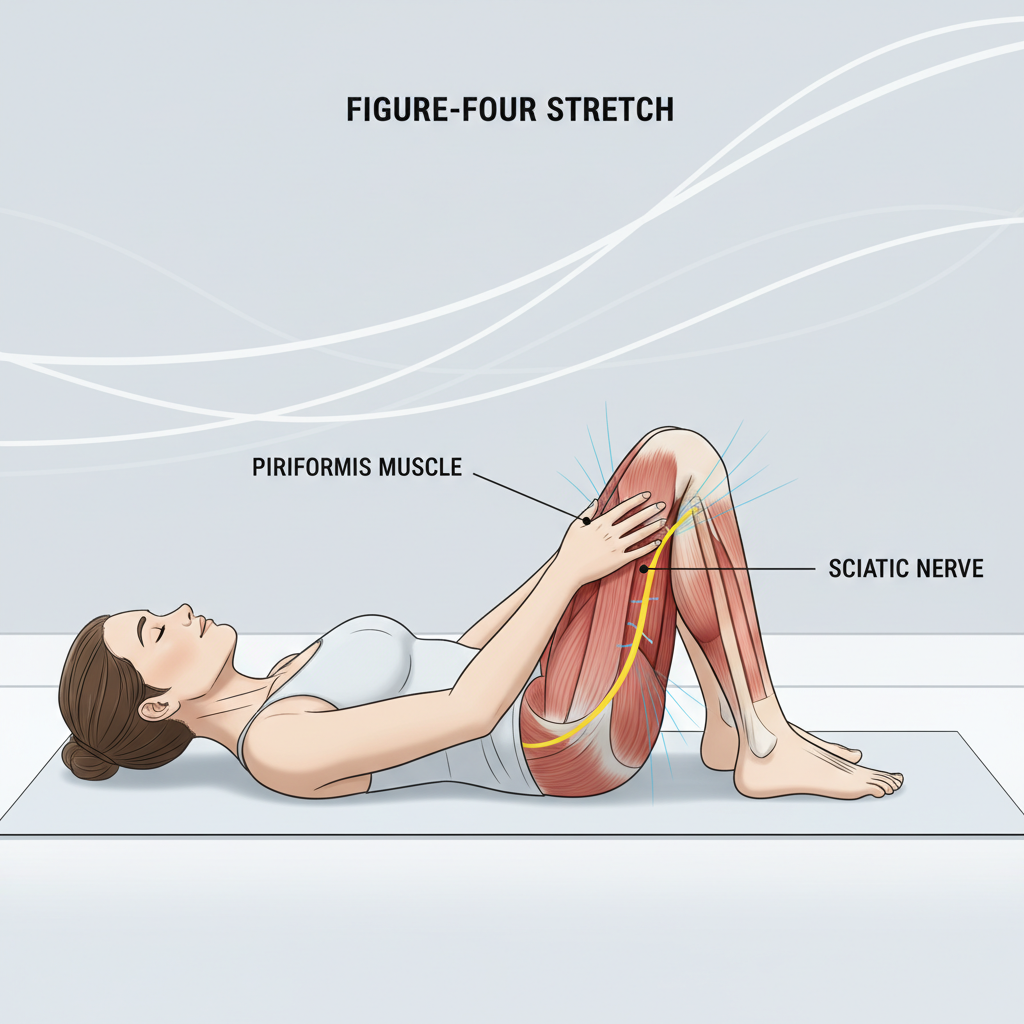
This is one of the most common and effective stretches for the piriformis. Lie on your back with both knees bent and feet flat on the floor. Cross one ankle over the opposite knee, forming a “figure-four” shape. Gently grasp the thigh of the leg that is still on the floor and pull it towards your chest until you feel a stretch in the buttock of the crossed leg. Hold for 20-30 seconds, then release. Repeat 2-3 times on each side.
- Benefits: Directly targets the piriformis muscle and hip external rotators.
- Tips: Keep your head and shoulders relaxed on the floor. Avoid arching your lower back.
Seated Piriformis Stretch
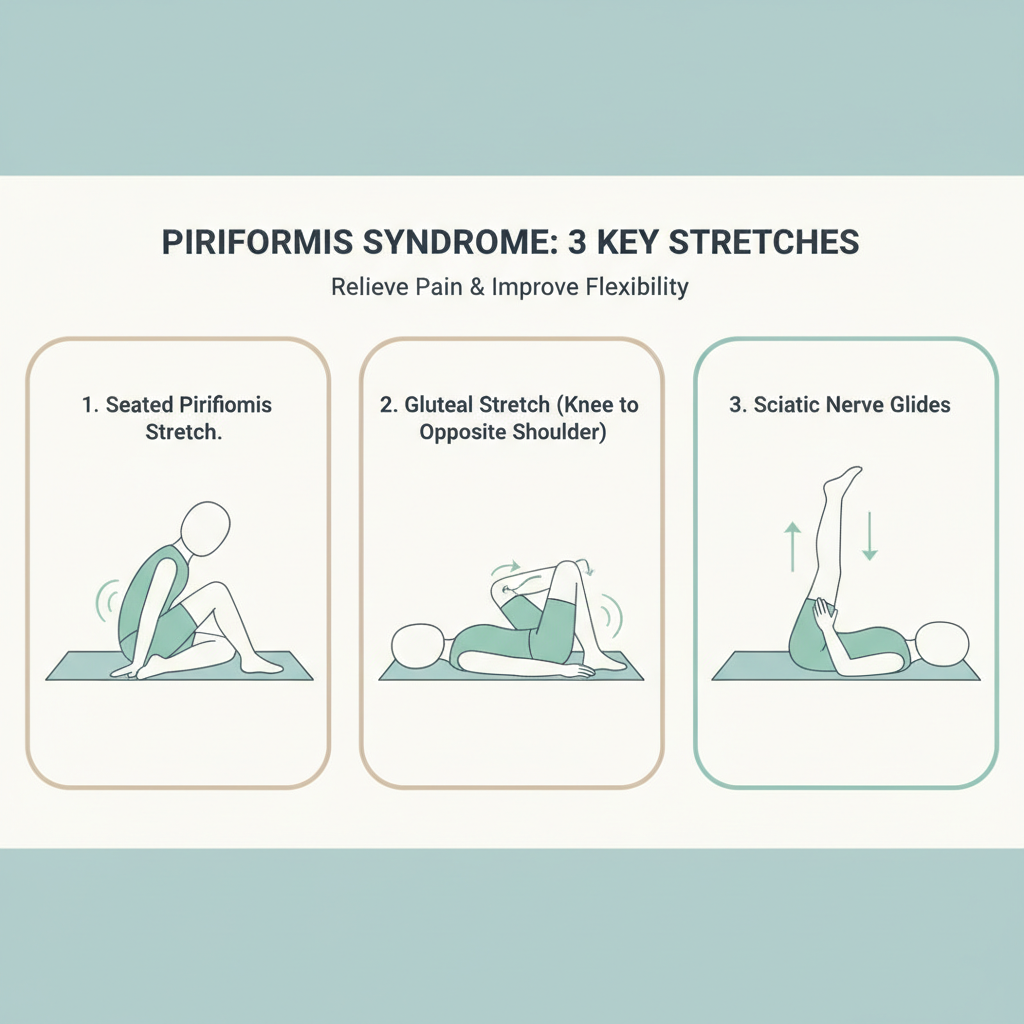
Sit upright in a chair with both feet flat on the floor. Cross the affected leg over the opposite knee, resting your ankle on your thigh (similar to the figure-four position). Lean forward from your hips, keeping your back straight, until you feel a gentle stretch in the buttock. Hold for 20-30 seconds, then return to the starting position. Repeat 2-3 times on each side.
- Benefits: Convenient for office workers or those with limited mobility on the floor.
- Tips: Ensure your back remains straight; avoid rounding your spine to prevent lower back strain.
Gluteal Stretch (Knee to Opposite Shoulder)
Lie on your back with both legs extended. Bend one knee and bring it towards your chest. Then, gently pull your knee across your body towards the opposite shoulder. You should feel a stretch deep in your gluteal area and piriformis. Hold for 20-30 seconds, then slowly release. Repeat 2-3 times on each side.
- Benefits: Excellent for stretching the gluteus medius and piriformis.
- Tips: Only pull as far as comfortable; avoid any sharp pain.
External Rotator Stretch (Standing or Seated)
While seated, cross your ankle over the opposite knee. Gently press down on the crossed knee while keeping your back straight. You’ll feel a stretch in the outer hip and glute. For a standing variation, stand facing a wall or sturdy surface, place one foot forward and turn it out slightly, then gently lean into the stretch, allowing your hip to open. Hold for 20-30 seconds, 2-3 times per side.
- Benefits: Improves external hip rotation and piriformis flexibility.
- Tips: Maintain good posture and control the depth of the stretch.
Hip Flexor Stretch
While not a direct piriformis stretch, tight hip flexors can contribute to pelvic tilt and increased strain on the piriformis. Kneel on one knee (the leg you want to stretch) with the other foot flat on the floor in front of you. Gently push your hips forward, keeping your torso upright, until you feel a stretch in the front of your hip. Hold for 20-30 seconds, 2-3 times on each side.
- Benefits: Balances muscle groups around the hip, indirectly relieving piriformis tension.
- Tips: Keep your core engaged and avoid arching your lower back.
Hamstring Stretch (Gentle)
Tight hamstrings can also affect pelvic alignment and put extra strain on the lower back and glutes, indirectly affecting the piriformis. Lie on your back with one leg extended. Loop a towel or strap around the ball of your other foot. Gently pull the leg up towards the ceiling, keeping the knee slightly bent if necessary, until you feel a stretch in the back of your thigh. Hold for 20-30 seconds, 2-3 times on each side.
- Benefits: Improves overall lower body flexibility, reducing compensatory stress.
- Tips: Do not bounce; perform a slow, sustained stretch.
Sciatic Nerve Glides (Nerve Flossing)
This isn’t a traditional muscle stretch but helps improve the mobility of the sciatic nerve itself, which can be irritated in piriformis syndrome. Sit on a chair with good posture. Extend one leg forward with your heel on the floor and toes pointed up. Gently lean back, tucking your chin to your chest, while simultaneously pointing your toes down. Then, reverse the movement by sitting upright, lifting your chin, and pulling your toes up. Perform 10-15 gentle glides, 2-3 sets per side.
- Benefits: Mobilizes the sciatic nerve, reducing sensitivity and impingement.
- Tips: This should never be painful. If you feel increased discomfort, ease off.
Best Practices for Effective Stretching
To maximize the benefits of your stretching routine and prevent injury, follow these guidelines:
Listen to Your Body
Never stretch into pain. You should feel a gentle pull, not sharp or stabbing discomfort. If you feel pain, ease off the stretch immediately.
Consistency is Key
Regular stretching is more effective than infrequent, intense sessions. Aim for at least once daily, or even twice, especially during acute flare-ups. Consistency builds long-term flexibility.
Hold and Breathe
Hold each stretch for 20-30 seconds. This allows the muscle fibers time to lengthen. Breathe deeply and slowly throughout the stretch to promote relaxation and increase oxygen flow to the muscles.
Warm-Up First
Before stretching, perform a light warm-up for 5-10 minutes, such as walking or cycling. This increases blood flow to your muscles, making them more pliable and less prone to injury.
Combine with Strengthening
While stretching is vital, strengthening the surrounding gluteal muscles and core is equally important for long-term stability and preventing recurrence. Consult a physical therapist for appropriate strengthening exercises.
When to Seek Professional Help
While stretching can provide significant relief, it’s essential to know when to consult a healthcare professional. If your pain is severe, persistent, worsens with stretching, or is accompanied by numbness, weakness, or loss of bladder/bowel control, seek immediate medical attention. A doctor or physical therapist can provide an accurate diagnosis, rule out other conditions (like true sciatica from a herniated disc), and develop a personalized treatment plan that may include physical therapy, medication, or other interventions.
Conclusion
Stretching routines for piriformis syndrome are a powerful tool in your pain management arsenal. By consistently performing these targeted exercises, you can release muscle tension, decompress the sciatic nerve, and regain comfort and mobility. Remember to listen to your body, maintain consistency, and don’t hesitate to seek professional guidance for a comprehensive approach to overcoming piriformis syndrome.