Low-oxalate greens for kidney stone prevention are a practical and flavorful way to lower urinary oxalate without sacrificing nutrients. As a health consultant with over a decade of experience advising people at risk for calcium oxalate stones, I focus on practical food swaps and meal strategies that support long-term kidney health.
Why oxalate matters for kidney stones
Oxalate is a naturally occurring compound in many plant foods that can bind with calcium in the urine to form calcium oxalate stones, the most common type of kidney stone. Reducing high-oxalate foods can lower urinary oxalate and reduce the risk of stone formation, particularly in people with a history of calcium oxalate stones.
However, dietary advice is personalized: hydration, adequate dietary calcium, and sodium control are equally important. This article focuses on low oxalate vegetables and practical tips to include them safely and deliciously.
Low-oxalate greens and vegetables to choose
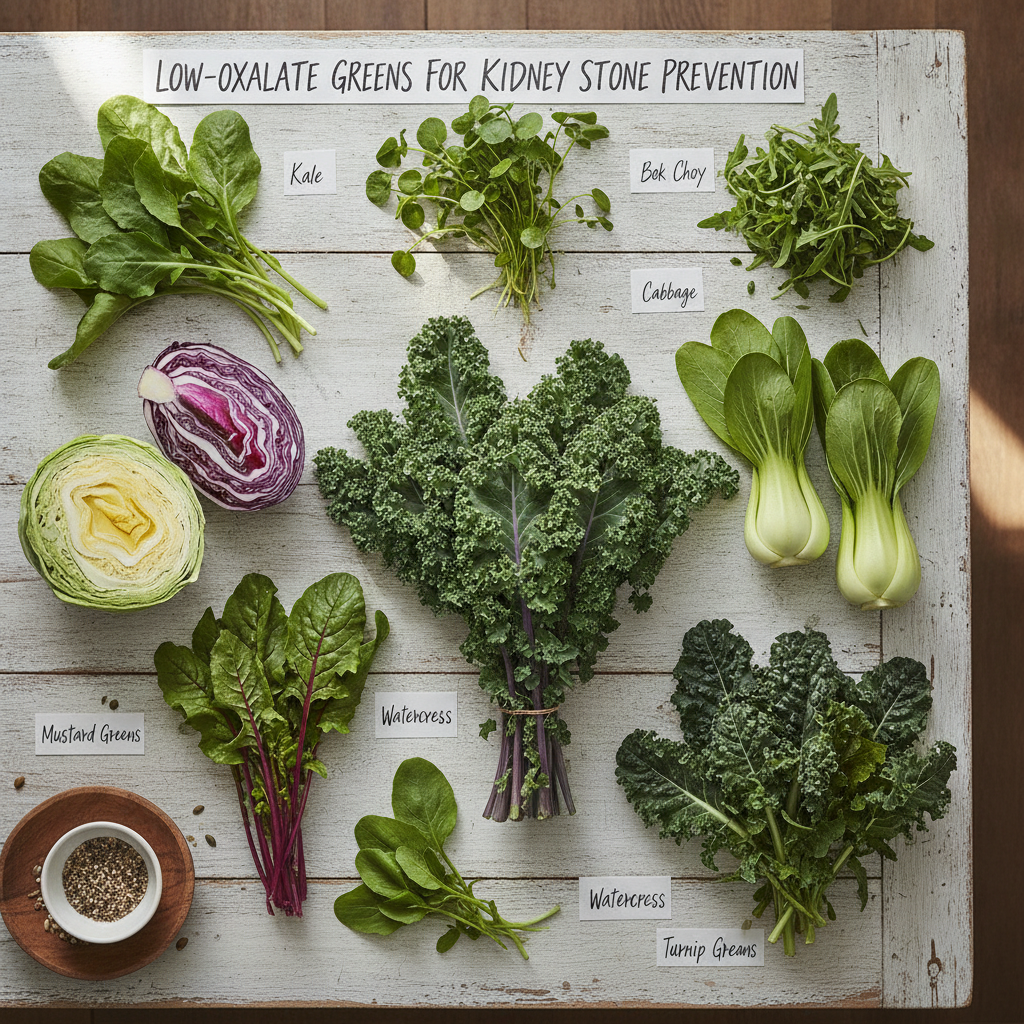
Not all greens are created equal. Some leafy vegetables are consistently low in oxalate and excellent choices for people aiming to reduce dietary oxalate. Choose these regularly as part of a kidney-friendly diet.
- Romaine and iceberg lettuce — Very low in oxalate and highly versatile for salads and wraps.
- Cabbage (green or red) — Low oxalate, crunchy, and great raw or cooked in stir-fries and slaws.
- Bok choy — Mild flavor, low oxalate, and excellent steamed, sautéed, or in soups.
- Broccoli and broccoli rabe — Low-to-moderate oxalate; rich in fiber and vitamin C, suitable steamed or roasted.
- Cauliflower — Low oxalate and a good neutral base for many dishes.
- Kale (especially curly) — Generally low to moderate in oxalate compared with spinach; use in moderation and vary preparation methods.
- Watercress and arugula — Lower-oxalate peppery greens that add flavor to salads and sandwiches.
Greens to limit or avoid
Certain leafy greens are high in oxalate and are best limited if you’re managing calcium oxalate stones. These include spinach, Swiss chard, beet greens, and purslane. Occasional small servings may be acceptable, but frequent large portions increase urinary oxalate.
How cooking and portioning reduce oxalate
Cooking methods affect oxalate content. Boiling vegetables in water can reduce soluble oxalate because some leaches into the cooking water, which should be discarded. Steaming retains more nutrients but removes less oxalate.
Practical tips: for higher-oxalate greens you plan to eat occasionally, blanch and discard the water to lower oxalate content. For low-oxalate greens, quick sautéing, steaming, or eating raw preserves nutrients while keeping oxalate intake low.
Meal strategies that protect against stones
Dietary oxalate is only one piece of the puzzle. Combine these strategies for stronger prevention:
- Aim for adequate fluid intake to produce at least 2–2.5 liters of urine per day; higher urine volume dilutes urinary minerals and lowers stone risk.
- Pair calcium-rich foods (e.g., low-fat dairy or fortified alternatives) with oxalate-containing meals. Dietary calcium binds oxalate in the gut and reduces absorption into the bloodstream.
- Limit sodium intake. High sodium increases urinary calcium excretion, which can increase stone risk.
- Keep protein intake balanced. Excess animal protein can increase urinary calcium and lower urine citrate, a natural stone inhibitor.
- Avoid excessive vitamin C supplements (high-dose ascorbic acid can increase oxalate production).
Portion guidance and daily oxalate targets
Exact oxalate recommendations vary, but many clinicians advise keeping daily dietary oxalate in a moderate range. Many experts suggest aiming for roughly 50–100 mg of oxalate per day for people with recurrent calcium oxalate stones, though individual targets should be set with your care team.
Using low-oxalate greens as the base of meals makes it easier to stay within these limits. For example, a large salad with romaine, cabbage, chicken, and a calcium-containing dressing or side (yogurt or cheese) is both kidney-friendly and satisfying.
Practical meal and snack ideas
Here are simple, kidney-friendly combinations that emphasize low-oxalate greens:
- Romaine lettuce salad with grilled salmon, cucumber, tomatoes, and a yogurt-based dressing (serve with a glass of milk or calcium-fortified beverage).
- Stir-fried bok choy and broccoli with tofu or lean chicken, served over brown rice.
- Coleslaw made with shredded cabbage, apples, and a light vinaigrette as a side dish.
- Steamed kale or wilted arugula as a side to roast meats, keeping portions moderate.
- Vegetable-packed omelet with low-oxalate greens like spinach substitute (use kale sparingly) and a side of cottage cheese.
When to consult a healthcare professional
If you have had one or more kidney stones, recurrent urinary symptoms, or a family history of stones, consult your primary care provider, nephrologist, or a registered dietitian with expertise in kidney stone prevention. They can order a 24-hour urine test to measure urinary calcium, oxalate, citrate, sodium, and volume to personalize dietary advice.
Medication or tailored dietary plans may be recommended based on underlying risk factors, stone composition, and urine chemistry. Self-directed changes without evaluation are not a substitute for professional care in recurrent stone formers.
Summary: practical takeaways
Choosing low-oxalate greens for kidney stone prevention helps reduce dietary oxalate while preserving nutrient density and variety. Focus on lettuce, cabbage, bok choy, broccoli, cauliflower, and moderate kale or arugula.
Combine these food choices with adequate fluid intake, normal dietary calcium, reduced sodium, and professional follow-up when needed. With simple swaps and mindful cooking, you can enjoy leafy greens and significantly reduce stone risk.
About the author
With more than 10 years advising people on kidney health and nutrition, I provide evidence-based, practical dietary guidance to reduce stone risk while maintaining enjoyable eating patterns. For personalized recommendations, consult your healthcare team or a registered dietitian experienced in kidney stone prevention.