Vitamin K2 and D3 synergy for bone density: what clinicians and patients need to know
Vitamin K2 and D3 synergy for bone density is increasingly recognized as a key nutritional strategy to support skeletal health. Combining vitamin D3’s role in calcium absorption with vitamin K2’s role in directing calcium into bone offers a physiologic partnership that may improve bone mineralization and reduce fracture risk.
Why the combination matters
Vitamin D3 (cholecalciferol) increases intestinal absorption of calcium and helps maintain serum calcium levels. Without adequate vitamin D3, dietary calcium is poorly absorbed and calcium homeostasis is compromised.
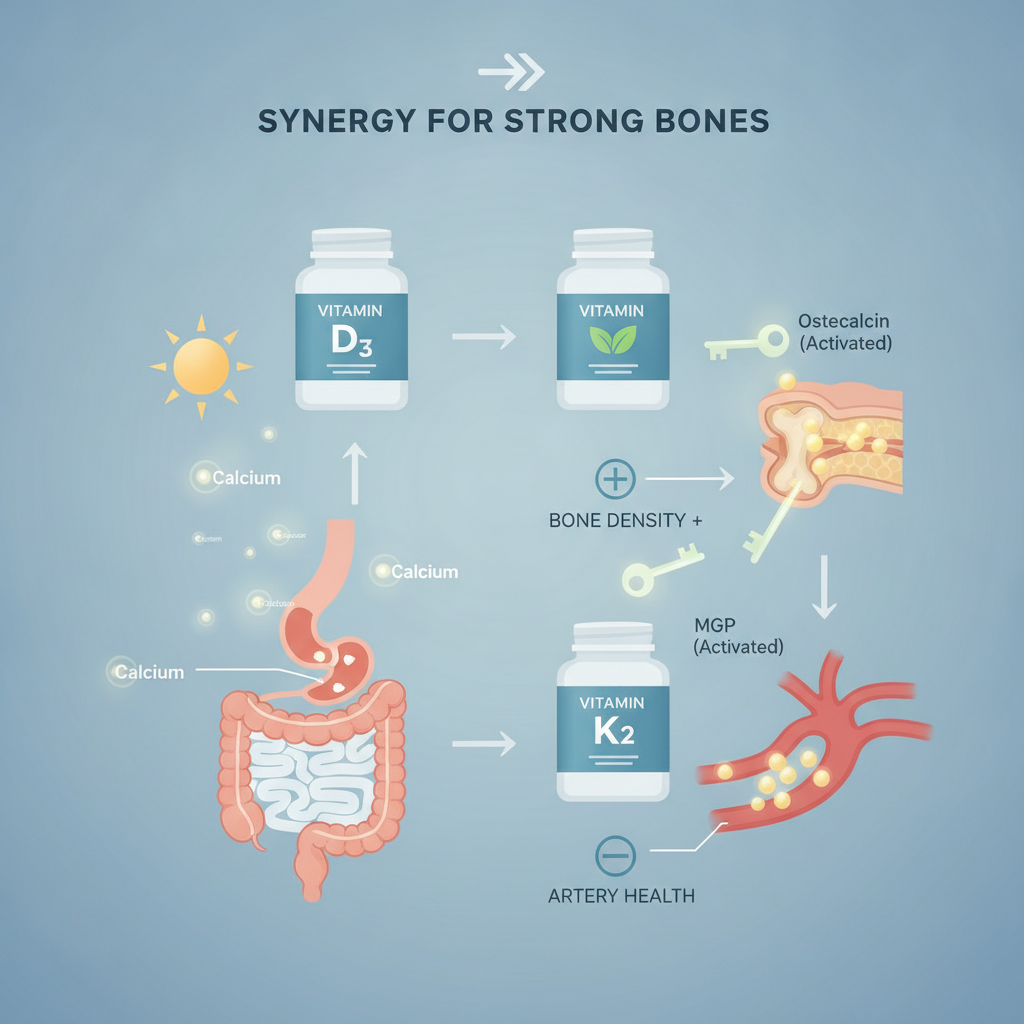
Vitamin K2 (menaquinone, commonly MK-4 and MK-7) activates vitamin K–dependent proteins such as osteocalcin and matrix Gla protein. These proteins help bind calcium into the bone matrix and inhibit unwanted vascular calcification.
Complementary actions
- Vitamin D3 improves calcium uptake from the gut and supports bone remodeling signaling.
- Vitamin K2 ensures the calcium delivered by vitamin D3 is incorporated into bone rather than deposited in soft tissues or arteries.
- Together they support bone mineral density (BMD), bone quality, and potentially reduce fracture risk more than either nutrient alone.
Evidence overview: what the research shows
Randomized controlled trials and meta-analyses have examined K2 and D3, both separately and in combination. Studies suggest vitamin K2 improves carboxylation of osteocalcin and may increase BMD in certain populations. Some clinical trials—particularly with MK-4 and MK-7—showed reductions in fracture incidence and improvements in bone markers.
Research on combined supplementation indicates additive or synergistic effects in bone turnover markers and osteocalcin activation. While evidence is promising, the body of high-quality long-term trials comparing combination therapy to placebo or single-nutrient therapy remains limited. Current clinical guidance often supports co-supplementation for people at risk of osteoporosis, when indicated by clinical assessment.
Practical dosing and formulations
Appropriate dosing depends on clinical context, baseline levels, and regional guidelines. Common approaches used in clinical trials and guidelines include:
- Vitamin D3: typical maintenance dosing ranges from 800 to 2,000 IU/day for adults; higher doses are used short-term to correct deficiency under medical supervision. Aim for a 25(OH)D level in the target range advised by your clinician (commonly 30–50 ng/mL).
- Vitamin K2: MK-7 at 90–200 mcg/day is commonly used in supplements and studies for bone benefits. MK-4 has also been studied, sometimes at much higher pharmacologic doses (e.g., 45 mg/day) in specific protocols, but such high-dose MK-4 should only be used under physician guidance.
When choosing a supplement, consider bioavailable forms: vitamin D3 is generally preferred over D2, and MK-7 has a longer half-life than MK-4, allowing once-daily dosing. Look for third-party tested products to ensure quality and purity.
Who may benefit most
Populations that often benefit from attention to vitamin D3 and K2 status include older adults, postmenopausal women, people with established osteoporosis or osteopenia, those with limited sun exposure, and individuals with dietary insufficiency.
Patients with malabsorption syndromes, bariatric surgery history, or chronic kidney disease should have individualized assessment and monitoring when considering supplementation.
Safety, interactions, and monitoring
Both vitamins are generally safe when used within recommended ranges, but there are important precautions.
Key safety points
- Anticoagulant interaction: Vitamin K (including K2) can counteract warfarin and other vitamin K antagonists. Patients on anticoagulation should not start or change vitamin K intake without close coordination with their prescribing clinician.
- Vitamin D toxicity: Long-term excessively high doses of vitamin D (commonly >10,000 IU/day for prolonged periods) can cause hypercalcemia. Monitoring serum 25(OH)D and calcium is advised when using higher doses.
- No formal upper limit for K2 has been established, but high-dose K2 therapies used in some studies require medical oversight.
Monitoring often includes serum 25-hydroxyvitamin D, serum calcium, and periodic bone density assessment (DEXA) for those at fracture risk. Bone turnover markers and osteocalcin carboxylation status can be informative in specialized settings.
Dietary sources and lifestyle integration
Diet can provide both nutrients: vitamin D3 is synthesized in skin with sun exposure and found in fatty fish, fortified foods, and some eggs. Vitamin K2 is abundant in fermented foods (natto is exceptionally rich), certain cheeses, and animal products such as liver and egg yolk.
Lifestyle measures that support bone health include regular weight-bearing and resistance exercise, smoking cessation, limiting excessive alcohol, and ensuring adequate dietary protein and overall nutrient sufficiency.
Clinical considerations and next steps
Before starting combined K2/D3 supplementation, assess baseline vitamin D status and review medical history for anticoagulant use or conditions affecting calcium metabolism. Discuss goals—prevention versus treatment of osteoporosis—and consider baseline and follow-up DEXA scans when indicated.
For many patients at risk of bone loss, a strategy that includes vitamin D3 plus vitamin K2 (MK-7) alongside calcium as needed, exercise, and other bone-supportive measures is rational and evidence-informed. Individualization and medical oversight are critical for safety and optimal outcomes.
Conclusion
Vitamin K2 and D3 synergy for bone density leverages complementary physiology: vitamin D3 increases calcium availability while vitamin K2 directs that calcium into the bone matrix. Emerging clinical evidence supports benefits for bone markers, BMD, and fracture risk in certain populations.
When used appropriately—with attention to dosing, interactions (especially anticoagulants), and monitoring—the combination can be a valuable component of a comprehensive bone health strategy. Consult a healthcare professional to develop a personalized plan based on clinical risk and laboratory assessment.