Identifying hidden sugars in “healthy” foods is a crucial skill for anyone trying to reduce added sugar while keeping nutrient-rich choices. Identifying hidden sugars in “healthy” foods helps you avoid the nutrition “health halo” that can disguise high sugar content in seemingly wholesome products.
Why hidden sugars matter
Many packaged products labeled as natural, low-fat, or organic still contain substantial added sugars. These hidden sugars can increase daily calorie intake, spike blood glucose, and undermine weight and metabolic goals despite otherwise healthy ingredients.
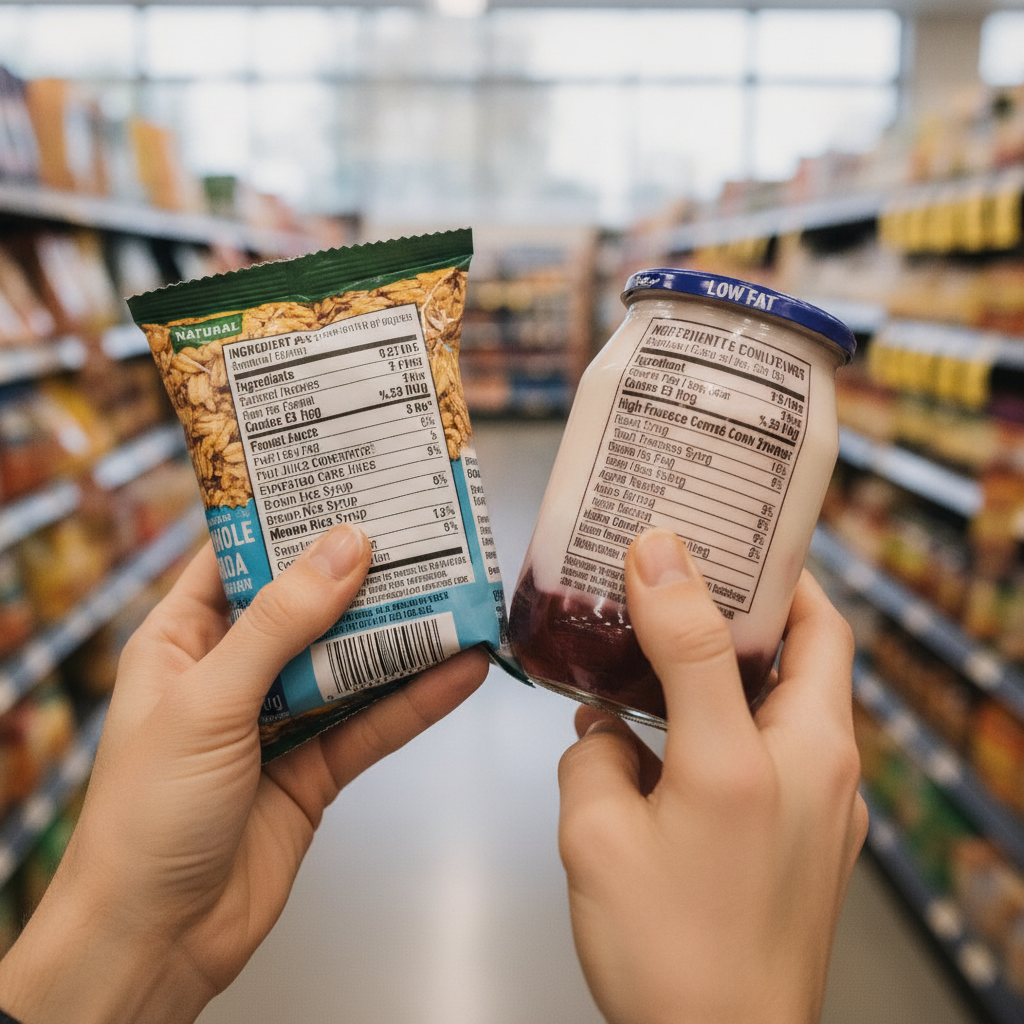
International and national bodies emphasize limits on added sugar: the World Health Organization suggests keeping free sugars to less than 10% of daily energy intake, with a conditional recommendation to aim for under 5% (about 25 g/6 teaspoons daily). The American Heart Association recommends no more than 25 g for women and 36 g for men. Being able to spot added sugar helps you follow these guidance points in real-world shopping.
Common places to find hidden sugars
Hidden sugars are often found where you least expect them: in products marketed as wholesome, convenient, or reduced-fat. Here are frequent culprits to watch:
- Flavored yogurts and kefir: fruit preparations and syrups can double the sugar vs plain yogurt.
- Granola and muesli: marketed as whole-grain health foods yet often sweetened with syrups, honey, or brown sugar.
- Protein and snack bars: sugar and sugar alcohols are added for palatability and shelf life.
- Smoothies and cold-pressed juices: fruit content and fruit juice concentrates can equal multiple servings of fruit in sugar.
- Condiments and dressings: ketchup, BBQ sauce, and many vinaigrettes rely on sweeteners for flavor balance.
- Breads, cereals, and packaged oats: sugar or maltodextrin can be included to improve texture and taste.
- Dried fruit and fruit snacks: concentration of natural sugars and added syrup make portions calorie-dense.
Health halo examples
Labels saying organic, natural, gluten-free, or fat-free can create a false sense of healthfulness. These claims don’t limit added sugar. A fat-free cookie or granola bar can still contain high levels of added sugar to preserve taste and mouthfeel.
How to read labels to uncover hidden sugars
Learning to read the Nutrition Facts panel and ingredient list is the most reliable method to identify added sugars. Start with the facts panel and then confirm with the ingredient list for specific sweeteners.
- Check “Added Sugars” grams under Total Sugars if present — this tells you directly how much was added during processing.
- Compare serving sizes to how much you actually consume; many packaged portions contain more than one serving.
- Look at the ingredient list: ingredients are listed by weight. If a sugar or syrup appears near the top, the product is likely high in added sugar.
Quick math: grams to teaspoons
Use a simple conversion to visualize quantity: 4 grams of sugar ≈ 1 teaspoon. A 24 g added sugar content equals about 6 teaspoons. This helps contextualize labels and compare products quickly while shopping.
Top sugar aliases to watch for
Manufacturers use many names for sweeteners. Here are common aliases that indicate added sugar:
- High-fructose corn syrup, corn syrup, corn syrup solids
- Sucrose, cane sugar, evaporated cane juice
- Fructose, glucose, dextrose, maltose
- Maltodextrin, rice syrup, barley malt
- Fruit juice concentrate (often used as a sweetener)
- Agave nectar, honey, molasses (natural but still adds sugar and calories)
Be cautious with sugar alcohols (e.g., sorbitol, xylitol) and non-nutritive sweeteners — they affect digestion and may influence taste preferences for sweetness even if they contribute fewer calories.
Practical swaps and smart shopping habits
Simple swaps can cut added sugar without sacrificing satisfaction. Choose plain Greek yogurt and mix in fresh or frozen berries. Replace flavored granola with a small portion of raw oats, nuts, and seeds. Make homemade dressings with olive oil, vinegar, and herbs instead of bottled sweetened varieties.
When buying packaged items, compare labels across brands and pick the product with the lowest added sugar per comparable serving. Prioritize whole, minimally processed foods like whole fruits, plain dairy, beans, lean proteins, and whole grains.
Meal and snack examples
- Breakfast: plain oats topped with banana and cinnamon instead of pre-sweetened instant oats.
- Snack: apple with natural peanut butter rather than fruit snack or granola bar.
- Lunch: mixed greens with grilled chicken and a vinaigrette you make at home rather than pre-made sweet dressings.
When to be extra cautious
People managing diabetes, prediabetes, weight loss, or dental issues should be more vigilant about added sugars and total sugar intake. Athletes and highly active people may tolerate higher carbohydrate intake, but the source matters: whole foods and minimally processed carbs are preferable for recovery compared with sugary processed snacks.
Children’s products often contain surprisingly high sugars; read labels and limit juice and sweetened dairy drinks. Simple reductions early in life shape taste preferences toward less sweetness.
Final takeaway
Identifying hidden sugars in “healthy” foods requires habit change: checking labels, learning sugar aliases, and prioritizing whole foods. Small, consistent swaps can lower added sugar intake and support long-term metabolic and oral health.
As a health consultant with over a decade of experience helping clients reduce sugar intake, I recommend starting with one category (yogurt, cereal, or condiments) and applying the label-check and swap strategy for four weeks. That focused approach makes change sustainable and measurable.