Restorative yoga for nervous system regulation is a gentle, evidence-informed practice that helps shift the autonomic nervous system toward rest and repair. This article explains how restorative yoga works, provides an accessible practice plan, and outlines safety and modifications so you can use it confidently to reduce stress and improve resilience.
How restorative yoga calms the nervous system
Restorative yoga emphasizes long holds, supported postures, and minimal muscular engagement to promote parasympathetic activation. By reducing physical effort and pairing postures with slow, diaphragmatic breathing, practitioners often experience decreased sympathetic arousal and improved heart rate variability (HRV).
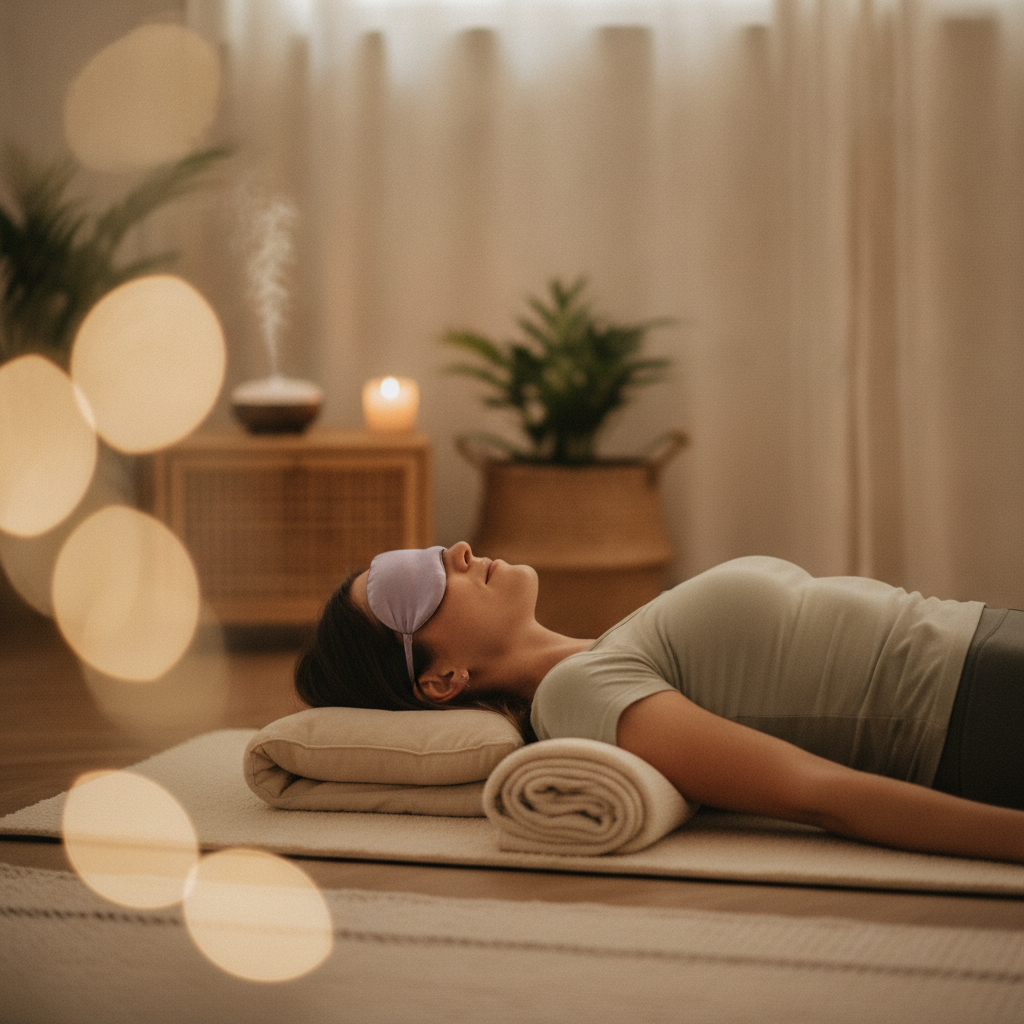
Techniques commonly used in restorative practice—such as props, breath awareness, and mindful attention—engage the vagus nerve and the body’s natural relaxation response. These changes support nervous system regulation and can complement other stress-management strategies.
Parasympathetic activation and the vagus nerve
Restorative poses encourage diaphragmatic breathing and safe compression or elongation of tissues, which can stimulate vagal afferents. This promotes feelings of safety and reduces the fight-or-flight response by increasing parasympathetic tone.
Breathwork, attention, and co-regulation
Slow, extended exhalations and gentle breath counting reduce respiratory rate and lower cortisol in many people. Pairing restorative postures with guided breathwork or a calm teacher voice fosters co-regulation, useful for people recovering from heightened stress or trauma.
Neuroscience and polyvagal-informed practice
Polyvagal-informed restorative yoga pays attention to felt safety and choice. Practices that prioritize autonomy, titration, and interoceptive awareness are more likely to help the nervous system down-regulate without overwhelming the practitioner.
Evidence summary (what research says)
Clinical research on restorative yoga specifically is growing; studies of restorative-style practices and slow yoga show benefits for stress, anxiety, sleep, and markers like HRV and cortisol. While effect sizes vary, the overall evidence supports restorative approaches as a low-risk, adjunctive strategy for nervous system regulation.
Restorative yoga is not a substitute for medical or psychiatric care, but it can be a useful component of a holistic plan for stress-related conditions, chronic pain, insomnia, and anxiety when used alongside professional guidance.
Practical restorative sequence for nervous system regulation (20–40 minutes)
This simple sequence requires a yoga mat, two to three folded blankets, a bolster or firm pillow, and optional blocks. Hold each supported pose for 5–12 minutes depending on comfort and time.
1. Settling and breath (2–5 minutes)
- Find a comfortable seated or reclined position with head supported. Begin diaphragmatic breathing: inhale to a count of 4, exhale to a count of 6–8.
- Scan the body with soft attention; allow muscles to release into the props.
2. Supported Child’s Pose (Balasana) — 5–10 minutes
- Kneel, bring hips toward heels, and place a bolster or folded blanket lengthwise under the torso. Turn head to either side or rest forehead on a block.
- Let the chest and shoulders soften; breathe into the back body to encourage parasympathetic tone.
3. Supported Reclining Bound Angle (Supta Baddha Konasana) — 8–12 minutes
- Sit with soles of feet together, knees apart. Recline onto a bolster or blankets under the spine with an extra blanket under the head if needed. Allow legs to fall open and supported.
- Place hands over the heart and belly or at the sides. Maintain slow exhalations and conscious softening.
4. Legs-Up-The-Wall (Viparita Karani) or Legs on Chair — 8–12 minutes
- If available, lie on your back with legs vertical against a wall or draped over a chair seat. Support the head with a small pillow.
- This inversion promotes venous return and a gentle shift toward parasympathetic dominance; keep breathing long and even.
5. Supported Savasana (Final relaxation) — 5–10 minutes
- Lie fully supported with a bolster under knees and a blanket under head. Use an eye pillow if desired.
- Allow awareness to settle into breath and bodily sensations. When ready, slowly reorient with gentle movements and a seated pause before standing.
Trauma-informed and safety considerations
Offer choices, emphasize the ability to modify or exit a pose, and avoid prolonged eye contact or forced relaxation for people with trauma histories. Keep cues invitational (e.g., “If it feels safe, you may…”) and provide upright or shorter-hold alternatives.
Contraindications include unstable cardiovascular conditions, recent surgery, uncontrolled hypertension, retinal detachment risk, and acute injury. Pregnant people can practice many restorative poses with modifications; consult a prenatal care provider for personalized guidance.
How often and how to measure progress
Start with 10–20 minutes three times per week, progressing to daily 20–30 minute sessions if tolerated. Consistency matters more than intensity for nervous system regulation.
Track subjective measures—sleep quality, anxiety levels, perceived stress—and objective markers like resting heart rate or HRV if available. Small, steady improvements indicate positive nervous system adaptation.
When to seek professional help
If symptoms of anxiety, panic, insomnia, or dysregulation persist or worsen despite self-care, consult a primary care provider, mental health professional, or physical therapist. Restorative yoga is a supportive tool but may need to be integrated with therapy or medical treatment for complex conditions.
Conclusion
Restorative yoga for nervous system regulation is a low-intensity, high-impact approach to promote rest, safety, and recovery. With attention to safety, choice, and gradual progression, it can be a powerful addition to a comprehensive plan for managing stress and supporting well-being.