Iron absorption hacks for plant-based eaters can be a game changer for energy, athletic performance, and overall health. If you follow vegan or vegetarian patterns, understanding how to maximize non-heme iron absorption is essential for long-term wellness. This article provides evidence-based, practical strategies to boost iron uptake from plant foods and reduce common obstacles, all through careful food choices, cooking methods, and meal planning.
Why iron matters for plant-based eaters
Iron is a critical mineral needed for oxygen transport, energy production, and immune function. People who rely on plant-based sources typically consume non-heme iron, which is less readily absorbed than heme iron from animal products. Because of this, iron status should be monitored more attentively in vegan and vegetarian diets, especially for menstruating individuals, pregnant people, athletes, and those with certain digestive conditions.
Most adults require about 8 mg of iron per day, while premenopausal women often need more due to menstrual losses. On plant-based diets, meeting these needs can be achieved with diverse iron-rich foods and absorption-enhancing practices. With thoughtful planning, plant-based eaters can maintain healthy iron levels without relying on supplements in every case, though some individuals may benefit from medical guidance or testing.
Understanding iron in a plant-based diet
Plant foods provide non-heme iron, whose absorption is influenced by other dietary components. Factors such as phytates in grains and legumes, polyphenols in coffee and tea, and calcium in dairy or supplements can inhibit absorption. Conversely, vitamin C and certain organic acids in fruits and vegetables can markedly enhance non-heme iron uptake.
Key points to know:
- Non-heme iron is the primary form in plant foods and is absorbed less efficiently than heme iron.
- Phytates, tannins, and calcium around meals can reduce absorption, especially when consumed together with iron-rich foods.
- Vitamin C-rich foods (citrus, berries, peppers, tomatoes) can boost absorption when eaten with iron sources.
- Cooking methods and food preparation (soaking, sprouting, fermenting) can reduce inhibitors and improve mineral availability.
Iron absorption hacks for plant-based eaters: practical tips
Maximize absorption with vitamin C-rich pairings
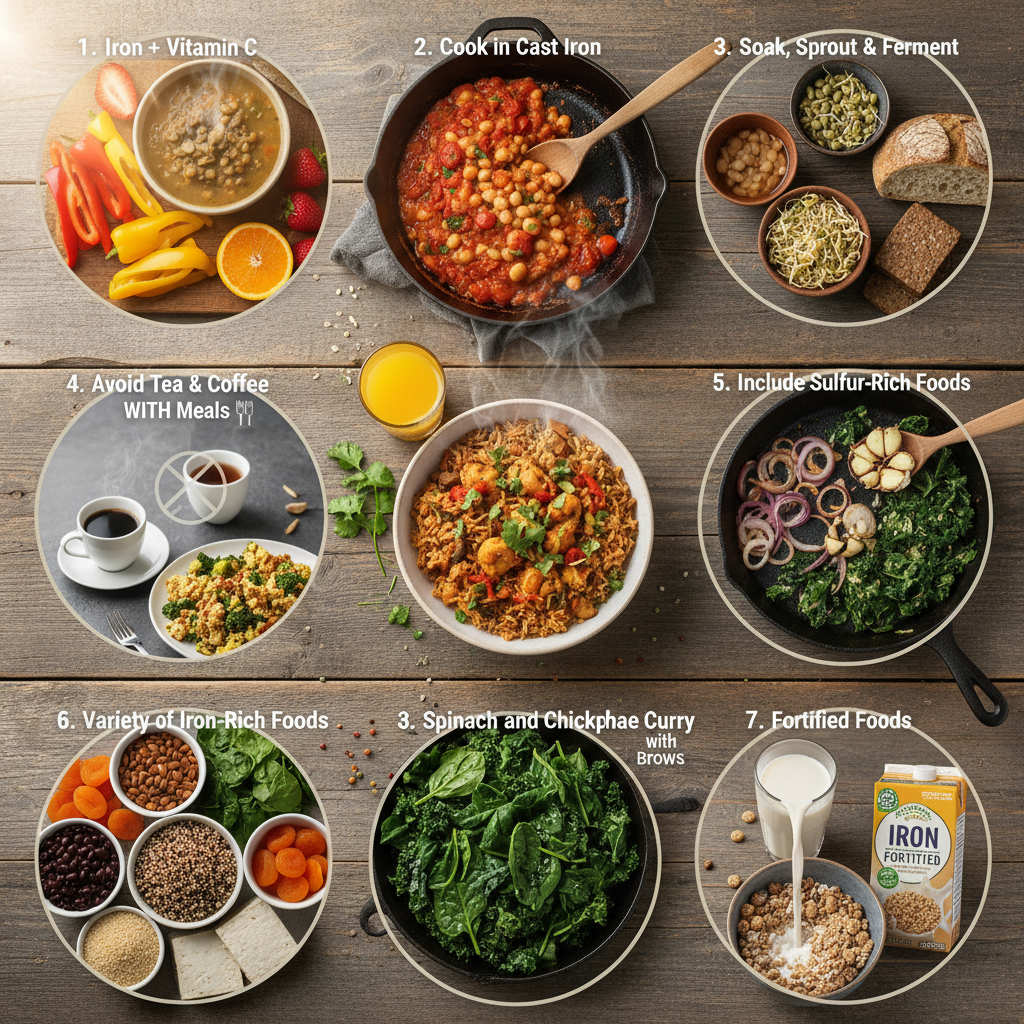
Include a vitamin C source at most meals that contain iron-rich plant foods. For example, add citrus segments to a bean salad, squeeze lemon over lentil dishes, or pair tofu with red peppers. Vitamin C can significantly enhance non-heme iron absorption, making it one of the simplest and most reproducible hacks for plant-based diets. Aim for at least one vitamin C-rich component per iron-focused meal.
Choose iron-rich plant foods and diversify
Build your meals around a variety of iron-containing plant foods such as lentils, chickpeas, beans, tofu, tempeh, quinoa, fortified cereals, pumpkin seeds, pumpkin seeds, dark leafy greens (such as spinach and kale), and dried fruits like apricots. Combining different sources throughout the day helps ensure you get a broad spectrum of minerals and complementary nutrients that support iron utilization.
Mind the inhibitors: when to avoid coffee, tea, calcium around meals
Tea, coffee, calcium-rich foods, and some high-phytate grains can hinder iron absorption if consumed with iron-rich meals. A practical approach is to drink tea or coffee between meals rather than with iron-heavy meals, and to separate calcium-rich foods or supplements from iron-rich meals by at least one to two hours. Small, simple changes can meaningfully improve iron uptake over time.
Cooking tips to boost iron content
Cooking in cast-iron cookware can contribute additional iron to your food, especially when cooking acidic foods like tomato-based sauces. The effect varies, but it can be a convenient boost for some meals. Additionally, methods that reduce phytates—such as soaking, sprouting, and fermenting legumes and grains—can improve iron bioavailability. Incorporating fermented foods like tempeh or miso and choosing whole grains with shorter processing can also support nutrient absorption.
Optimization for life stages and needs
People with higher iron requirements—such as menstruating individuals, pregnant people, athletes, and those with certain medical conditions—may need to emphasize iron-rich foods more consistently and consider regular screening. If you’re in one of these groups or have a history of iron deficiency, consult a clinician about personalized targets and whether a supplement is appropriate, in addition to your dietary strategy.
Putting it into practice: a practical day of meals
Sample iron-smart day:
- Breakfast: Fortified cereal with fortified plant milk, sliced kiwi or strawberries (vitamin C) and a small handful of pumpkin seeds.
- Lunch: Lentil and tomato soup with a side salad of bell peppers and orange segments; drizzle of lemon juice.
- Snack: Hummus with whole-grain crackers and a piece of fruit rich in vitamin C.
- Dinner: Chickpea and spinach curry cooked in tomato-based sauce; served with quinoa and a squeeze of lime.
Testing and supplementation: when to consider them
Iron deficiency can develop gradually and may cause fatigue, pallor, shortness of breath, dizziness, or poor exercise tolerance. If you’re at risk or show symptoms, a healthcare provider can order blood tests such as ferritin, transferrin saturation, and serum iron. If deficiency is confirmed, a clinician may recommend iron supplements. Plant-based iron supplements or formulations designed for better tolerance (for example, ferrous bisglycinate) can be options, but supplementation should be guided by professional advice to avoid adverse effects and interactions.
Putting it all together: practical takeaways for daily life
Iron absorption hacks for plant-based eaters combine smart choices, timing, and preparation. Build meals that pair iron-rich foods with vitamin C sources, minimize simultaneous intake of inhibitors, and use cooking methods that enhance mineral availability. Regularly include a variety of iron-containing foods to cover daily needs, and monitor your status with healthcare guidance if risk factors or symptoms emerge.
References and trustworthiness
Recommendations here reflect current evidence about non-heme iron, absorption modifiers, and practical dietary strategies. For personalized guidance, consult a registered dietitian or clinician, especially for individuals with known iron deficiency risks, pregnancy, or chronic health conditions. Always verify any supplement plan with a healthcare professional.
Conclusion
With these iron absorption hacks for plant-based eaters, you can optimize your iron status through everyday meals. Emphasize variety, pair iron-rich foods with vitamin C, be mindful of inhibitors, and use cooking techniques that improve bioavailability. This balanced approach supports energy, performance, and long-term health on a plant-based path.
A clean, modern infographic illustrating iron absorption in a plant-based diet. Include sections with icons for non-heme iron sources (lentils, chickpeas, tofu, quinoa, spinach), vitamin C enhancers (bell peppers, citrus, strawberries), inhibitors (tea, coffee, calcium), and a visual flow showing how vitamin C enhances absorption and how to time intake to minimize inhibitors. Use a balanced color palette (greens, orange, and blue) with labeled arrows indicating “enhanced absorption” and “inhibited absorption.” Include a small cast-iron skillet icon to symbolize cooking methods that can boost iron content. The layout should be clear for a mobile screen, with concise captions and readable typography. High-resolution, 4K-ready, suitable for blog infographic posts.