Understanding Exercise-Induced Asthma (EIA) for Hikers
Embarking on a hike with EIA requires a foundational understanding of the condition itself. Knowing how your body reacts to physical exertion, particularly in varying outdoor conditions, is the first step towards successful management.
What is Exercise-Induced Asthma?
Exercise-induced asthma, or EIB, occurs when the airways in the lungs narrow during or after strenuous physical activity. This narrowing is a temporary response to the rapid breathing of large volumes of relatively cold, dry air, which can irritate and dry out the sensitive airways. Unlike chronic asthma, EIB primarily manifests with exercise.

Common Triggers on the Trail
Hikers are uniquely exposed to several EIB triggers. The cold, dry air found at higher altitudes or during cooler seasons is a primary culprit. Additionally, pollen from trees and grasses, mold spores, air pollution (like smog or wildfire smoke), and even viral respiratory infections can exacerbate symptoms, making careful planning essential.
Recognizing Symptoms While Hiking
Symptoms of EIB can vary in intensity but typically include coughing, wheezing, shortness of breath, and a feeling of chest tightness. These symptoms usually begin within 5 to 20 minutes of starting exercise, or sometimes 5 to 10 minutes after stopping. Being attuned to these signs is crucial for prompt intervention and maintaining safety on the trail.
Pre-Hike Preparation: Laying the Foundation for a Safe Trek
Thorough preparation before you even step onto the trailhead is paramount for hikers managing EIA. A proactive approach significantly reduces the risk of an asthma attack and builds confidence.
Consult Your Doctor and Develop an Asthma Action Plan
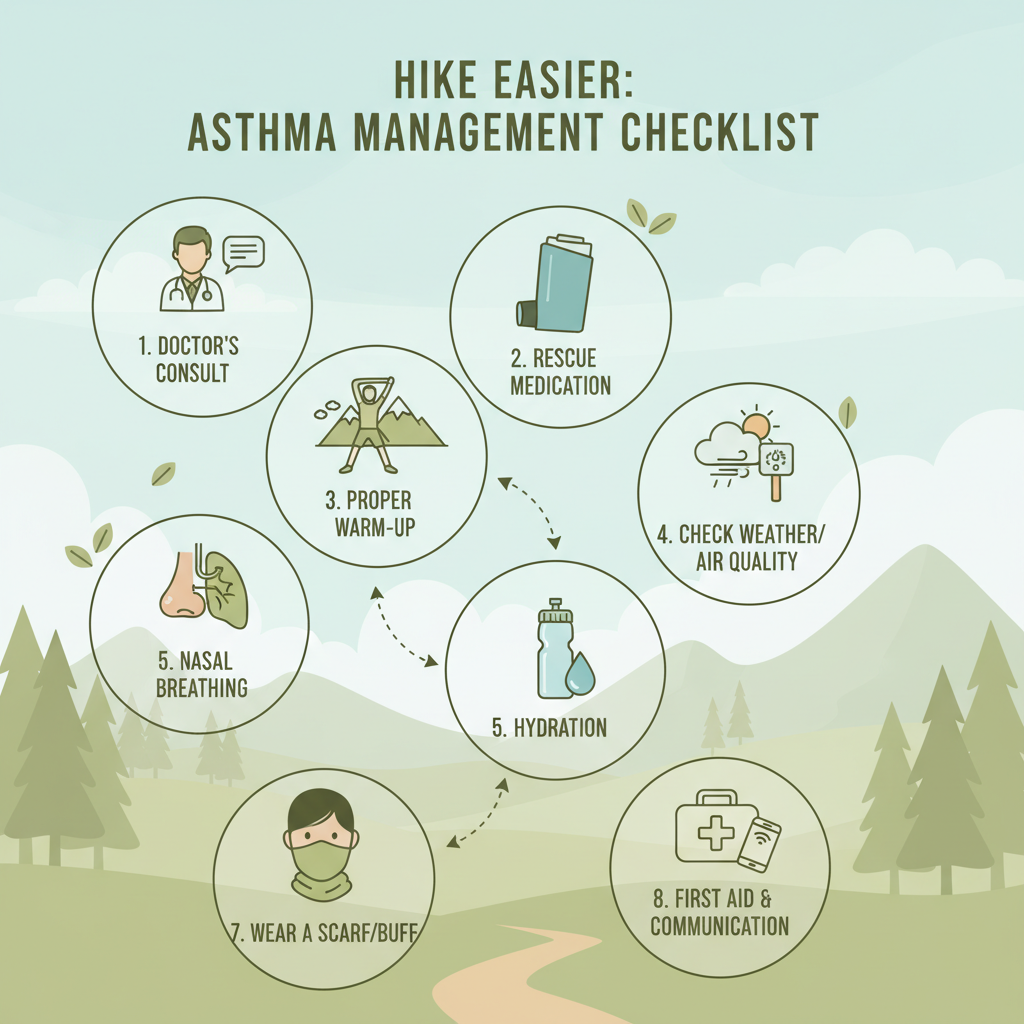
Before any significant hike, especially if you’re new to the activity or have recently been diagnosed, a visit to your doctor is non-negotiable. Your physician can confirm your diagnosis, prescribe appropriate medications, and help you develop a personalized asthma action plan. This plan details your triggers, daily medication, and steps to take if your symptoms worsen, including when to use your rescue inhaler.
Pre-Medication Strategies
For many with EIA, using a short-acting beta-agonist (SABA) inhaler, commonly known as a rescue inhaler, about 15-30 minutes before starting exercise can prevent symptoms. This pre-treatment helps to open the airways, providing protection for several hours. Always follow your doctor’s specific instructions for timing and dosage.
The Importance of a Proper Warm-Up
A gentle warm-up before hitting the main trail helps prepare your lungs for increased exertion. Start with 5-10 minutes of light activity, like slow walking or stretching, gradually increasing intensity. This slow introduction to exercise can help prevent the sudden narrowing of airways that often triggers EIA symptoms.
Checking Weather and Air Quality Conditions
Always check the weather forecast for temperature, humidity, and wind conditions. Cold, dry air is a known trigger, so plan accordingly. Additionally, consult local air quality reports, especially for pollen counts during allergy season or air pollution levels. If conditions are particularly adverse, consider an alternative indoor activity or postpone your hike.
Managing EIA During Your Hike: Stay in Control
Even with thorough preparation, vigilance during your hike is key. Implementing smart strategies while on the move can help you maintain control over your EIA symptoms and enjoy the natural beauty around you.
Pacing Yourself: The Key to Sustained Energy
Avoid pushing yourself too hard, especially at the beginning of your hike or on steep ascents. Maintain a steady, comfortable pace that allows you to talk without gasping. Listen to your body’s signals and take short breaks as needed. Gradual exertion is less likely to trigger EIB than sudden, intense bursts of activity.
Breathing Techniques: Nasal Breathing and Diaphragmatic Breathing
Whenever possible, breathe through your nose during your hike. Nasal breathing helps to warm and humidify the air before it reaches your lungs, reducing irritation. Practicing diaphragmatic (belly) breathing can also improve lung efficiency and capacity, potentially lessening the strain on your airways during exertion.
Staying Hydrated
Adequate hydration is crucial for hikers with EIA. Drinking plenty of water helps keep your airways moist, which can prevent them from drying out and becoming irritated. Carry enough water for your entire trek and sip regularly, even if you don’t feel thirsty.
Monitoring Symptoms and Knowing When to Act
Pay close attention to how you feel throughout your hike. Any signs of coughing, wheezing, or chest tightness should prompt you to slow down or take a break. Early recognition of symptoms allows for timely intervention before they escalate into a full-blown asthma attack.
Emergency Protocol: When to Use Your Rescue Inhaler
If you start experiencing symptoms, stop immediately, sit down, and use your rescue inhaler as prescribed by your doctor. Wait 5-10 minutes to see if your symptoms improve. If they don’t, or if they worsen, use your inhaler again (up to the maximum prescribed doses). If symptoms persist or you experience severe difficulty breathing, it’s a medical emergency, and you should seek immediate help.
Essential Gear for Hikers with Exercise-Induced Asthma
Packing the right gear is non-negotiable for a safe hike, especially when managing a medical condition. Your backpack should contain more than just snacks and water.
Your Asthma Medication: Never Leave Home Without It
Always carry your rescue inhaler (and any other prescribed medications) in an easily accessible pocket or pouch. Ensure it’s not expired and protected from extreme temperatures. Consider carrying a spacer if recommended by your doctor, as it can improve inhaler effectiveness.
Protective Gear for Cold or Dry Air
In cold or dry conditions, wearing a scarf, buff, or balaclava over your mouth and nose can help warm and humidify the air you breathe. This simple piece of gear can significantly reduce the likelihood of cold-air induced bronchoconstriction.
Hydration Systems
A reliable hydration system, such as a water bottle or a hydration bladder, is vital. Choose one that encourages frequent sips and is easy to access without stopping your stride.
Communication Devices and Emergency Kit
Carry a fully charged cell phone (and a portable charger) for emergencies. In areas without service, consider a satellite messenger device. A basic first aid kit, including any personal emergency contacts and a written copy of your asthma action plan, should also be in your pack.
Long-Term Strategies for Hikers with EIA
Managing EIA for hiking is an ongoing process that extends beyond individual treks. Long-term strategies focus on overall health and consistent asthma control.
Maintaining Overall Fitness and Lung Health
Regular physical activity, even non-hiking exercises, can improve lung function and overall fitness, making your lungs more resilient. Consult your doctor or an exercise physiologist for a fitness plan that suits your condition and helps you gradually build endurance without triggering symptoms.
Identifying and Managing Allergen Triggers
If allergens are a significant trigger for your EIA, take steps to identify and minimize exposure. This might involve checking local pollen counts, taking antihistamines as advised by your doctor, or avoiding certain trails during peak allergy seasons.
Nutrition and Hydration Beyond the Trail
A balanced diet rich in fruits, vegetables, and whole grains supports overall health, including respiratory function. Consistent hydration throughout the day, not just on hike days, contributes to well-hydrated airways.
Regular Medical Follow-Ups
Schedule regular check-ups with your doctor or allergist to monitor your asthma control. Your medication regimen or asthma action plan may need adjustments over time, especially if your symptoms change or you plan more challenging hikes.
Conclusion: Embrace the Trails Safely and Confidently
Living with exercise-induced asthma doesn’t mean you have to give up your passion for hiking. With careful planning, adherence to your doctor’s advice, and proactive management strategies, you can confidently navigate the trails and experience the profound benefits of being outdoors. By taking control of your condition through diligent exercise-induced asthma management for hikers, every summit, valley, and scenic vista becomes accessible, allowing you to breathe easy and fully enjoy the adventure.