Our modern lifestyles, often dominated by prolonged sitting, contribute significantly to the shortening and tightening of these crucial muscles, directly impacting the health and flexibility of your lower back. This comprehensive guide will explore the intricate connection between your hip flexors and spinal health, and provide actionable strategies to alleviate discomfort.
Understanding the Connection: Hip Flexors and Your Lower Back
The relationship between your hip flexors and lower back health is more profound than many realize. These powerful muscles play a pivotal role in movement and posture, and their condition can directly influence the stability and flexibility of your spine.
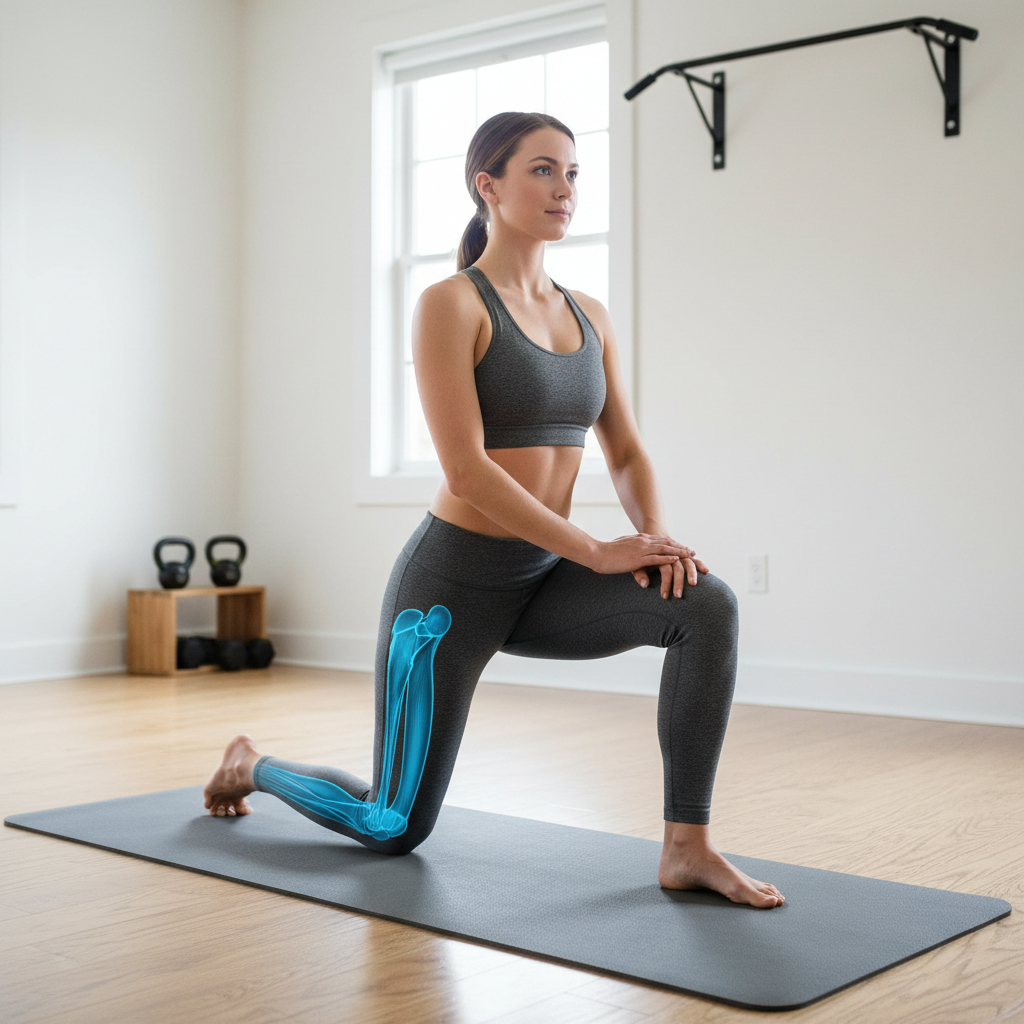
Anatomy of the Hip Flexors
The hip flexor group comprises several muscles, with the iliopsoas being the most prominent. The iliopsoas is actually a combination of two muscles: the psoas major and the iliacus. The psoas major originates from the lumbar spine (lower back vertebrae) and attaches to the lesser trochanter of the femur (thigh bone). The iliacus originates from the inside surface of the pelvis and also attaches to the lesser trochanter. Other muscles like the rectus femoris (part of the quadriceps) also contribute to hip flexion.
Because the psoas muscle originates directly from the lumbar spine, its tightness can exert a direct pulling force on the lower back, leading to compression and discomfort. These muscles are responsible for bringing your knee towards your chest, bending at the waist, and stabilizing the spine.
How Tight Hip Flexors Affect the Spine
When hip flexors become chronically tight and shortened, they pull the pelvis into an anterior tilt. This means the front of your pelvis tips downwards, and the back of your pelvis tips upwards. This anterior pelvic tilt accentuates the natural curve in your lower back, known as lumbar lordosis. An excessive curve increases compression on the lumbar vertebrae and discs, leading to stiffness, pain, and reduced mobility.
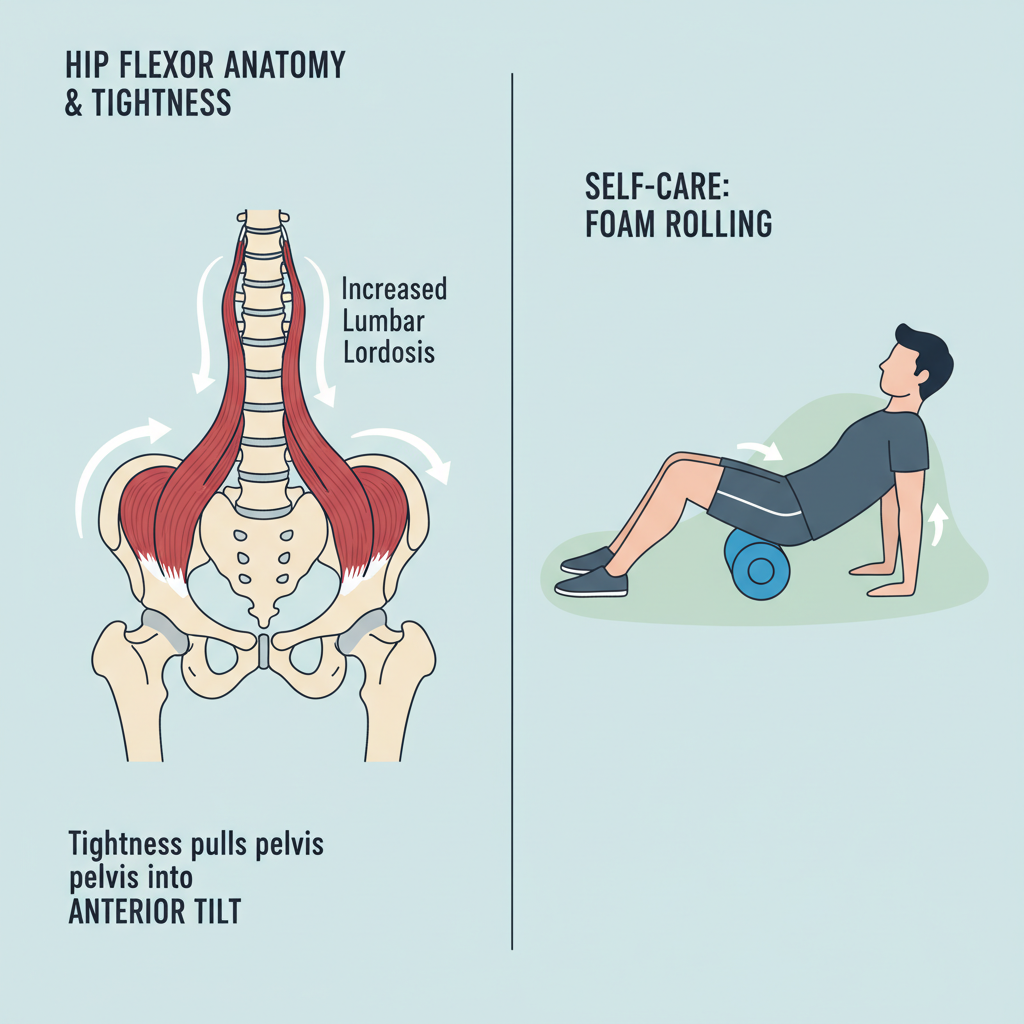
Furthermore, tight hip flexors can inhibit the proper activation of your gluteal muscles and core stabilizers, further compromising spinal support. This muscle imbalance can create a vicious cycle of stiffness and pain, making daily activities challenging and potentially leading to more severe postural issues over time.
Common Causes of Hip Flexor Tightness
Hip flexor tightness is a widespread issue, largely due to several common lifestyle factors. Prolonged sitting, whether at a desk, in a car, or on a couch, keeps the hip flexors in a shortened position for extended periods. Over time, this leads to adaptive shortening of the muscle fibers.
Beyond sedentary habits, certain athletic activities can also contribute to tightness. Runners, cyclists, and athletes who perform repeated hip flexion movements may develop tight hip flexors if they don’t incorporate adequate stretching and mobility work. Even poor posture during standing or walking can exacerbate the problem, as the body compensates for imbalances.
The Science Behind Hip Flexor Releases for Lower Back Stiffness
Addressing tight hip flexors isn’t just about feeling better; it’s about restoring proper biomechanics and reducing undue stress on the lumbar spine. Releasing these muscles can have a profound, evidence-backed impact on lower back health.
Benefits of Releasing Tight Hip Flexors
The primary benefit of performing hip flexor releases is the reduction of tension and the restoration of normal muscle length. This directly helps to correct an anterior pelvic tilt, allowing the pelvis to return to a more neutral position. When the pelvis is neutral, the lumbar spine can decompress, reducing excessive lordosis and alleviating pressure on the spinal discs and nerves.
Additionally, releasing the hip flexors can improve the activation of opposing muscles, particularly the glutes and abdominal muscles. Strong glutes and a stable core are essential for supporting the lower back, improving posture, and preventing future stiffness. Enhanced hip mobility also allows for a greater range of motion in daily activities and during exercise, reducing the risk of injury.
When to Consider Hip Flexor Release
If you experience chronic lower back stiffness, especially after prolonged sitting or in the mornings, hip flexor releases should be a priority. Other indicators include difficulty standing up straight, a noticeable arch in your lower back, or discomfort during activities like walking or running. People with limited hip extension, meaning they struggle to move their leg backward, often have tight hip flexors.
Even without overt pain, incorporating regular hip flexor mobility work can be a preventative measure, especially if your lifestyle involves a lot of sitting. Listen to your body; subtle signs of tightness are often early warnings that intervention is needed.
Effective Hip Flexor Release Techniques You Can Do at Home
Fortunately, many effective hip flexor release techniques can be performed safely and easily in the comfort of your home. Consistency is key to seeing lasting results.
Static Stretching
Static stretches involve holding a stretch for a sustained period, typically 20-30 seconds, to lengthen the muscle fibers.
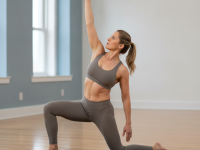
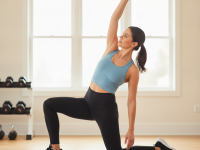
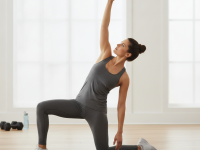
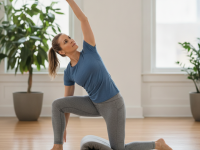
- Kneeling Hip Flexor Stretch: Kneel on one knee (use a pad for comfort) with the other foot flat on the floor in front of you, forming a 90-degree angle. Gently push your hips forward until you feel a stretch in the front of the hip of the kneeling leg. Keep your core engaged and your back straight.
- Couch Stretch: This is an advanced version of the kneeling stretch. Place the top of your foot of the kneeling leg against a wall or couch, with your shin parallel to the wall. Bring your other foot forward into a lunge position. Gently drive your hips forward, ensuring your torso remains upright, feeling a deep stretch in the quadriceps and hip flexor.
Dynamic Stretches
Dynamic stretches involve moving your muscles through their full range of motion, preparing them for activity and improving mobility.
- Leg Swings: Stand tall, holding onto a stable surface for balance. Swing one leg forward and backward in a controlled manner, gradually increasing the range of motion. Focus on keeping your torso stable.
- Walking Lunges: Step forward into a lunge, bringing your back knee close to the ground. As you step forward with the opposite leg, you get a dynamic stretch in the hip flexor of the trailing leg.
Self-Myofascial Release (SMR) with Tools
SMR techniques use tools like foam rollers or massage balls to apply pressure to tight spots or “trigger points” in the muscle, helping to release tension and improve blood flow.
- Foam Rolling the Quads and Hip Flexors: Lie face down, placing a foam roller under your quads. Slowly roll from just above your knees up to your hips, pausing on any tender spots. You can also carefully turn slightly to one side to target the outer thigh and TFL (tensor fasciae latae), which also plays a role in hip flexion.
- Massage Ball for Psoas/Iliacus (Advanced): This requires careful application. Lie on your stomach and place a massage ball or tennis ball just inside your hip bone, aiming for the general area of your iliopsoas. Gently apply pressure and breathe deeply, allowing the muscle to relax around the ball. Do not press directly on your abdominal organs. If you feel pulsatile sensation or discomfort, adjust the position. This is often best learned from a professional first.
Professional Approaches to Hip Flexor Release
While self-care is vital, sometimes professional intervention is necessary to effectively release stubborn hip flexor tightness and address underlying issues.
Manual Therapy and Physiotherapy
Physiotherapists are experts in musculoskeletal health and can employ a range of manual therapy techniques. These include deep tissue massage to break down adhesions, active release techniques (ART) where the therapist applies pressure while the patient moves the limb, and proprioceptive neuromuscular facilitation (PNF) stretching to enhance flexibility. They can also assess your posture and movement patterns, providing personalized exercises for strengthening and stability.
Chiropractic Care
Chiropractors focus on spinal health and alignment. If hip flexor tightness is contributing to pelvic misalignment or vertebral subluxations, a chiropractor can perform adjustments to restore proper joint mechanics. They often work in conjunction with other therapies to address the muscle component alongside spinal alignment.
Dry Needling/Acupuncture
For persistent trigger points within the hip flexors, dry needling or acupuncture may be beneficial. These techniques involve inserting fine needles into specific points to release muscle tension, reduce pain, and promote healing. This should always be performed by a licensed and experienced practitioner.
Integrating Hip Flexor Releases into Your Routine for Long-Term Relief
Achieving lasting relief from lower back stiffness requires a holistic approach that integrates hip flexor releases into a consistent wellness routine.
Consistency is Key
Just like any muscle training, stretching and releasing muscles requires regularity. Aim to perform hip flexor stretches and SMR techniques daily or at least several times a week. Even 5-10 minutes a day can make a significant difference. Incorporate them into your warm-up before exercise or your cool-down afterward, or simply as a break from prolonged sitting.
Complementary Strategies
To fully support your lower back and prevent the recurrence of tightness, it’s crucial to strengthen the muscles that oppose the hip flexors. Focus on core strengthening exercises (planks, bird-dog) to stabilize the spine and glute activation exercises (glute bridges, clam shells) to help pull the pelvis back into a neutral position. Consider ergonomic adjustments to your workspace and regular breaks from sitting to move and stretch.
Listening to Your Body
While hip flexor releases are generally safe, always listen to your body. Never push into pain. A mild stretch sensation is good, but sharp or increasing pain means you should stop. If your lower back stiffness persists despite consistent efforts, or if you experience any numbness, tingling, or weakness in your legs, consult a healthcare professional. A doctor, physiotherapist, or chiropractor can provide an accurate diagnosis and a tailored treatment plan.
By understanding the critical role of your hip flexors and committing to regular release techniques, you can significantly reduce lower back stiffness, improve your posture, and enhance your overall quality of life. Take charge of your back health today!