Understanding Somatic Experiencing: A Body-Centered Approach to Stress
Somatic Experiencing (SE) is a naturalistic approach to the healing of trauma and other stress-related disorders. Developed by Dr. Peter A. Levine, it’s based on the observation that animals in the wild naturally discharge the high arousal energy after a life-threatening event, preventing trauma from being stored in their bodies. Humans, however, often override these instinctual responses, leading to chronic stress, anxiety, and even physical symptoms.
SE works by helping individuals to track their bodily sensations and complete the physiological stress response cycle that may have been interrupted. Instead of focusing solely on the narrative of stressful events, SE guides you to gently engage with the physical sensations, emotions, and impulses that are present in the body. This process allows the nervous system to gradually release frozen stress energy, leading to a profound sense of relief and integration.

Why Somatic Experiencing is Effective for Stress Release
Traditional approaches to stress often focus on managing thoughts or behaviors. While helpful, they sometimes miss the root cause of chronic stress, which is often physiological. When we experience stress, our nervous system activates a “fight, flight, or freeze” response. If this energy isn’t properly discharged, it can remain trapped in the body, leading to a state of chronic hyper-arousal or hypo-arousal.
Somatic Experiencing directly addresses this stored physiological stress. It helps to regulate the nervous system, enabling the body to move out of survival mode and back into a state of balance and relaxation. By gently processing bodily sensations, SE supports the completion of thwarted stress responses, leading to sustained stress relief and improved emotional regulation. It empowers you to tap into your body’s inherent capacity for self-healing.
Core Principles Guiding Somatic Experiencing Practices
Before diving into specific exercises, understanding the foundational principles of Somatic Experiencing is crucial. These principles ensure that the process is safe, gentle, and effective.
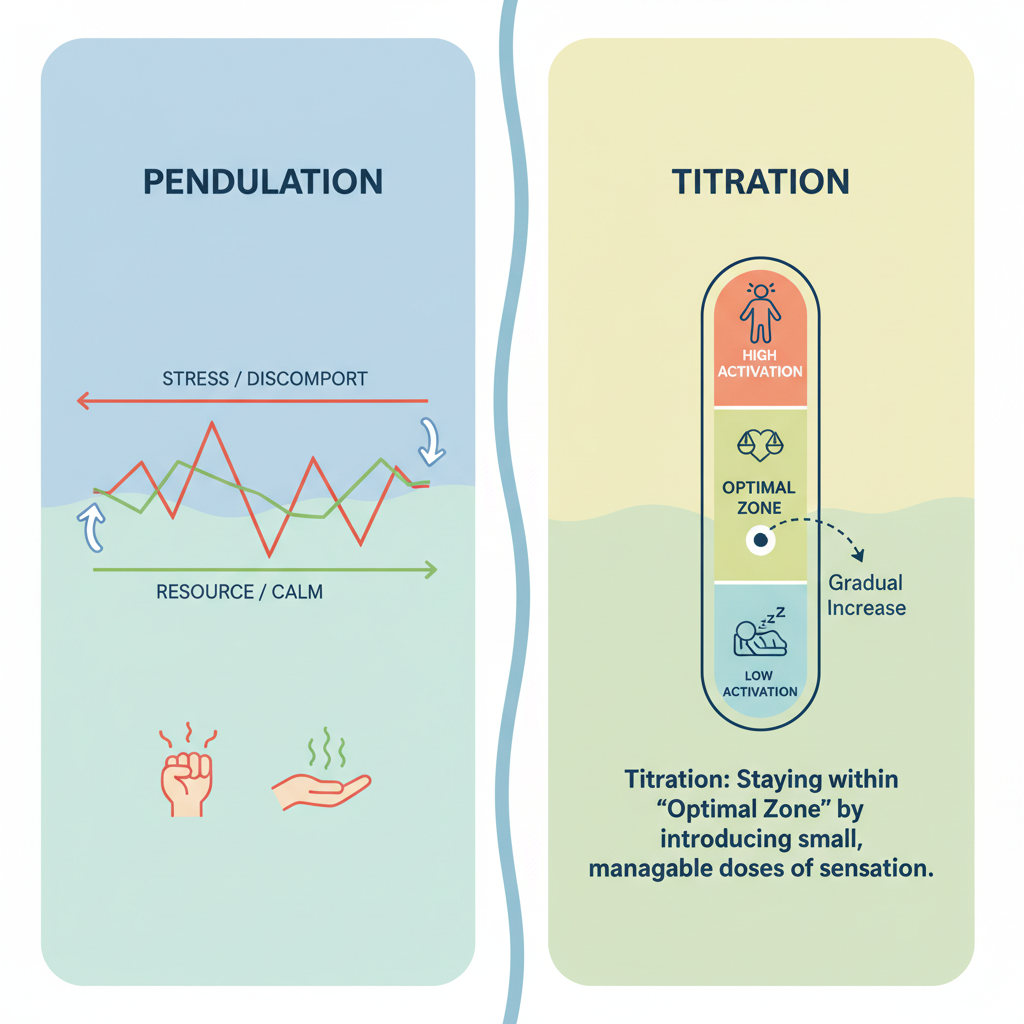
Titration: Small Doses for Safe Processing
Titration involves approaching difficult sensations or emotions in small, manageable “doses.” Instead of confronting overwhelming feelings directly, you learn to dip in and out of them, allowing your nervous system to process information at a pace it can handle. This prevents re-traumatization and builds resilience.
Pendulation: Moving Between Discomfort and Resource
Pendulation is the rhythmic oscillation between states of activation (discomfort, stress) and states of calm (comfort, safety, resource). By gently shifting attention between challenging sensations and reassuring resources, the nervous system learns to self-regulate and integrate difficult experiences without being overwhelmed.
Tracking Sensations: The Language of the Body
Central to SE is the practice of interoception, or tracking internal bodily sensations. This means noticing subtle shifts like warmth, tingling, pressure, coolness, tightness, or looseness. These sensations are the body’s way of communicating, and by paying attention, you gain valuable insight into your nervous system’s state.
Resourcing: Cultivating Safety and Support
Resourcing involves identifying and connecting with internal or external sources of strength, comfort, and safety. This could be a pleasant memory, a supportive person, a cherished place, or even a comforting object. Resources act as anchors, helping you feel grounded and secure when facing stressful sensations.
Discharge: Releasing Stored Energy
Discharge is the natural completion of the stress response. It can manifest as involuntary tremors, shaking, sweating, changes in breathing, warmth or coldness, or even yawning. These are healthy, natural ways the body releases accumulated stress energy, signaling a return to regulation.
Practical Somatic Experiencing Exercises for Stress Release
These exercises can be practiced at home to help regulate your nervous system and release accumulated stress. Remember to go slowly and honor what your body tells you.
1. Orienting: Reconnecting with the Present Moment
Our nervous systems often get stuck in past stress or future worries. Orienting helps to bring you back to the present moment, creating a sense of safety and awareness.
- Sit comfortably and gently turn your head from side to side, slowly and deliberately.
- Allow your gaze to drift naturally across the room, noticing different objects, colors, and textures without judgment.
- Pay attention to any sounds you hear, distinguishing between foreground and background noises.
- As you orient, notice any subtle shifts in your body – perhaps a feeling of curiosity, relaxation, or increased presence.
2. Grounding and Centering: Feeling Supported
Grounding helps you feel connected to the earth, providing a sense of stability and support. Centering brings awareness to your physical core.
- Sit or stand with your feet flat on the floor. Feel the contact points between your feet and the ground, and your body and the chair.
- Notice the weight of your body being supported.
- Bring your awareness to your center, perhaps around your navel or solar plexus. Imagine a gentle core of stability within you.
- You might gently press your feet into the floor or push your sit bones into the chair to deepen the sense of grounding.
3. Tracking Sensations (Mini Body Scan)
This exercise hones your ability to notice internal bodily sensations without judgment.
- Close your eyes gently or soften your gaze.
- Bring your attention to a specific part of your body, like your hands or feet.
- Notice any sensations present: warmth, coolness, tingling, pressure, lightness, heaviness, pulsation.
- Simply observe without trying to change anything. If a sensation is unpleasant, gently widen your attention to include the areas around it, or shift to a neutral area of your body.
- Stay with each area for 30-60 seconds, then slowly move to another part of your body.
4. Resourcing: Activating Internal Calm
Tapping into resources helps your nervous system feel safe and secure, which is essential for stress release.
- Think of a person, place, animal, or memory that brings you a genuine feeling of safety, comfort, joy, or strength.
- Allow yourself to fully visualize or recall the details of this resource. What do you see, hear, smell, feel?
- Notice where in your body you feel the positive sensations associated with this resource. Is there warmth, expansion, ease, or lightness?
- Spend a few minutes savoring these positive sensations, allowing them to spread throughout your body.
5. Vagus Nerve Self-Regulation (Gentle Humming)
The vagus nerve plays a crucial role in regulating the nervous system. Gentle humming can stimulate it, promoting relaxation.
- Take a slow, deep breath into your belly.
- As you exhale, make a gentle humming sound (“Mmmm…”) that you can feel vibrating in your chest, throat, or head.
- Repeat this for several breaths, noticing the calming effect of the vibration.
- You can also try gargling water or gently massaging your neck behind your earlobes (where the vagus nerve is close to the surface).
6. Boundary Setting Exercise (Physical and Energetic)
Stress can arise from feeling overwhelmed or having porous boundaries. This exercise helps establish a sense of personal space.
- Stand or sit and imagine a comfortable, protective boundary around your body, about arm’s length away.
- Visualize this boundary as a gentle force field that allows what is good to come in, and keeps what is not good out. It could be a soft light, a flexible shield, or a gentle current of air.
- Feel the sense of personal space and containment this boundary provides. Notice any sensations of safety or ease in your body as you establish this energetic barrier.
Tips for Effective Practice
- Start Small: Begin with short sessions (5-10 minutes) and gradually increase as you feel comfortable.
- Listen to Your Body: The most important principle is to honor your body’s signals. If you feel overwhelmed, stop and return to a strong resource.
- Be Patient: Healing takes time. Consistency is more important than intensity.
- Cultivate Curiosity: Approach your sensations with an attitude of gentle curiosity, rather than judgment.
- Seek Support: If you’re dealing with significant trauma or chronic stress, consider working with a certified Somatic Experiencing Practitioner (SEP).
When to Seek Professional Somatic Experiencing Therapy
While these exercises are beneficial for daily stress management, complex trauma or deeply embedded stress patterns may require professional guidance. A certified SEP can expertly guide you through the process of titration and pendulation, ensuring that you process difficult material safely and effectively. They provide a therapeutic container that supports deeper healing and nervous system regulation.
Embrace Your Body’s Wisdom for Lasting Calm
Somatic Experiencing exercises for stress release offer a profound pathway to reclaiming your inner peace and resilience. By tuning into your body’s innate wisdom, you can gently unwind the grip of stress and foster a deeper connection with yourself. Integrate these practices into your daily routine, and discover the transformative power of allowing your body to complete its natural healing cycle. Your journey towards a calmer, more grounded self begins with listening to the subtle language of your sensations.