Understanding the Sensitive Stomach: More Than Just Discomfort
A sensitive stomach isn’t a diagnosis in itself, but rather a descriptor for a range of symptoms often associated with conditions like Irritable Bowel Syndrome (IBS), gastritis, acid reflux, or general food sensitivities. It signifies that your digestive system is easily irritated by certain foods, stress, or even changes in routine. Common symptoms include:
- Abdominal pain or cramping
- Bloating and gas
- Diarrhea or constipation (or alternating)
- Nausea
- Heartburn or indigestion
- Feeling uncomfortably full after small meals
The good news is that by focusing on foods that are naturally easy to digest and rich in gut-supporting nutrients, you can significantly alleviate these symptoms and improve your overall digestive health.
General Principles for Eating with a Sensitive Stomach
Before diving into specific foods, it’s crucial to establish some foundational eating habits that can make a world of difference for a delicate digestive system.
Eat Slowly and Mindfully
- Chew Thoroughly: Digestion begins in the mouth. Breaking down food properly here reduces the workload on your stomach and intestines.
- Avoid Rushing: Eating quickly can lead to swallowing air, contributing to gas and bloating.
- Listen to Your Body: Pay attention to hunger and fullness cues to avoid overeating, which can overwhelm your digestive system.
Portion Control and Regular Meals
- Smaller, More Frequent Meals: Instead of three large meals, try 5-6 smaller ones throughout the day. This keeps your digestive system working steadily without being overloaded.
- Consistent Schedule: Eating at roughly the same times each day can help regulate your digestive rhythm.
Stay Hydrated
- Drink Plenty of Water: Water is essential for moving food through your digestive tract and preventing constipation. Aim for still, plain water.
- Avoid Drinking Large Amounts with Meals: Some find that large quantities of liquid with meals can dilute digestive enzymes; try to drink mostly between meals.
Opt for Gentle Cooking Methods
How you prepare your food is just as important as what you eat. Cooking methods that make food easier to digest include:
- Steaming
- Boiling
- Baking
- Poaching
- Stewing
Minimize frying, deep-frying, and heavy grilling, as these methods can add excess fat and create compounds that are harder for a sensitive stomach to process.

Top Healthy Digestion Foods for Sensitive Stomachs
Now, let’s explore the specific foods that can be your allies in the journey towards a happier gut.
1. Gentle Grains and Starches
These provide essential energy without irritating the digestive lining.
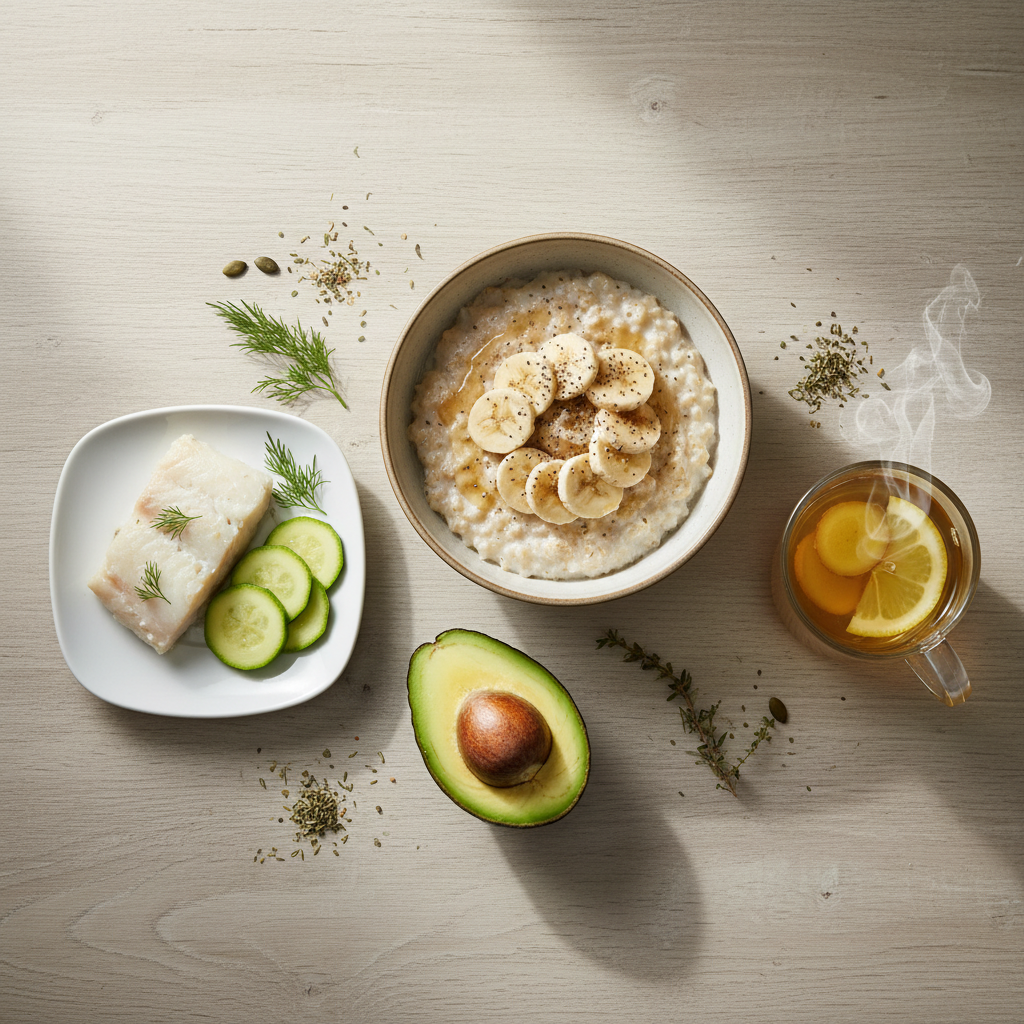
- Oats: A fantastic source of soluble fiber, oats can soothe the digestive tract, help regulate bowel movements, and reduce inflammation. Opt for plain rolled oats or steel-cut oats, avoiding instant varieties with added sugars or artificial ingredients.
- Rice: White rice is often recommended during periods of digestive upset due to its low fiber content, making it easy to digest. Brown rice offers more fiber and nutrients, but may be better tolerated in smaller portions or for those with less severe sensitivity.
- Quinoa: A complete protein and gluten-free, quinoa is relatively easy to digest for many. Its balanced nutrient profile and mild flavor make it a great addition to salads or as a side dish.
- Sweet Potatoes: Rich in vitamins A and C, and containing both soluble and insoluble fiber, sweet potatoes are gentle and nourishing. Baking or steaming them can enhance their digestibility.
2. Lean Proteins
Protein is vital for tissue repair and overall health, but heavy, fatty meats can be difficult to digest. Focus on lean, easily digestible sources.
- Chicken (skinless, boneless): White meat chicken is low in fat and a good source of protein. Steamed, baked, or poached chicken is ideal.
- Fish (white fish): Cod, tilapia, haddock, and other white fish are lean, light, and generally well-tolerated. Salmon offers beneficial omega-3s but can be richer for some; consume in moderation if sensitive.
- Tofu and Tempeh: For plant-based protein, these soy products are excellent. Fermented tempeh can be even easier to digest due to the fermentation process.
- Eggs: A versatile and complete protein source, eggs are generally well-tolerated, especially when boiled, poached, or scrambled lightly.
3. Soothing Fruits
While some fruits can cause gas due to their fiber content, many are incredibly soothing and beneficial for sensitive stomachs.
- Bananas: Soft, low in acid, and rich in pectin (a soluble fiber), bananas are known to help firm up stool and provide easily digestible carbohydrates.
- Melon (Cantaloupe, Honeydew): High in water content and easy to digest, melons are hydrating and gentle on the gut.
- Papaya: Contains papain, an enzyme that aids in protein digestion, making it a powerful digestive aid.
- Berries (in moderation): Strawberries, blueberries, and raspberries offer antioxidants and fiber. Start with small portions, as their seeds can be irritating for some.
- Cooked Apples or Pears (peeled): Raw apples can be difficult, but cooking and peeling them breaks down their tougher fibers, making them much easier to digest.
4. Cooked Vegetables
Raw vegetables, particularly cruciferous ones, can be a major source of gas and bloating. Cooking them thoroughly helps break down tough fibers.
- Carrots: Rich in nutrients and fiber, cooked carrots are very gentle on the stomach.
- Zucchini and Yellow Squash: These mild, watery vegetables are easy to digest, especially when steamed or roasted until tender.
- Spinach and Leafy Greens (cooked): While raw spinach can be fibrous, cooking it makes it much more palatable for a sensitive gut.
- Green Beans: Another mild and easily digestible cooked vegetable.
- Asparagus Tips: The tips are generally better tolerated than the tougher stalks for some.
5. Probiotic-Rich Foods (with caution)
Probiotics introduce beneficial bacteria to your gut, which can improve digestion and reduce inflammation. However, some fermented foods might initially cause discomfort for very sensitive individuals, so introduce them slowly.
- Plain Yogurt (live active cultures): Opt for plain, unsweetened yogurt. If you are lactose intolerant, choose lactose-free or plant-based yogurts fortified with probiotics.
- Kefir: A fermented milk drink that often contains more diverse probiotic strains than yogurt and may be better tolerated by some lactose-sensitive individuals.
- Miso: A fermented soybean paste that can be added to broths.
- Sauerkraut and Kimchi (small amounts): While excellent sources of probiotics, their high fiber and acidity can be irritating for some. Start with very small portions.
6. Healthy Fats (in moderation)
Fats are essential, but too much can slow digestion and cause discomfort. Focus on monounsaturated and polyunsaturated fats.
- Avocado: A source of healthy fats and potassium, avocado is generally well-tolerated in moderate amounts.
- Olive Oil: Use high-quality extra virgin olive oil for dressings or light cooking.
7. Herbal Teas
Certain herbal teas can have a soothing effect on the digestive tract.
- Ginger Tea: Known for its anti-nausea and anti-inflammatory properties, ginger can calm an upset stomach.
- Peppermint Tea: Can help relax digestive muscles and relieve gas and cramping, though some with acid reflux find it worsens symptoms.
- Chamomile Tea: Has anti-inflammatory and antispasmodic properties that can soothe stomach discomfort.
Foods to Approach with Caution or Avoid
Just as important as knowing what to eat is knowing what to limit or eliminate, at least temporarily.
- High-FODMAP Foods: For many with IBS, foods high in Fermentable Oligosaccharides, Disaccharides, Monosaccharides, and Polyols can trigger symptoms. Examples include certain fruits (apples, mangoes), vegetables (onions, garlic, cauliflower), legumes, wheat, and dairy. Consulting a dietitian about a Low-FODMAP diet might be beneficial.
- Spicy Foods: Capsaicin in chili peppers can irritate the digestive lining.
- Fried and Greasy Foods: High fat content is difficult to digest and can lead to heartburn and stomach upset.
- Artificial Sweeteners and Additives: Many artificial sweeteners (sorbitol, mannitol, xylitol) can act as laxatives and cause gas.
- Excess Caffeine and Alcohol: Both can irritate the digestive tract and disrupt bowel function.
- Dairy Products (if lactose intolerant): Lactose can cause significant bloating, gas, and diarrhea for those who lack the enzyme to break it down.
- Gluten (if sensitive or celiac): For individuals with celiac disease or non-celiac gluten sensitivity, gluten-containing grains (wheat, barley, rye) are major triggers.
- Carbonated Drinks: The bubbles can introduce excess air into the digestive system, leading to bloating.
Meal Planning and Lifestyle Tips for a Sensitive Stomach
Beyond individual food choices, integrating these strategies into your daily life can provide additional relief.
Keep a Food and Symptom Diary
This is arguably one of the most powerful tools. By tracking what you eat and drink, along with any symptoms you experience, you can identify your personal trigger foods and those that bring you comfort.
Prioritize Stress Management
The gut-brain connection is powerful. Stress can significantly impact digestive function. Incorporate stress-reducing activities like meditation, yoga, deep breathing exercises, or spending time in nature.
Consider Supplements (with professional guidance)
Digestive enzymes, prebiotics, or specific probiotic strains might be helpful for some, but always consult with a doctor or registered dietitian before introducing new supplements.
Sample Meal Ideas for a Sensitive Stomach
Breakfast:
- Oatmeal made with water or lactose-free milk, topped with sliced banana and a drizzle of maple syrup.
- Scrambled eggs with gently cooked spinach.
- Smoothie with lactose-free yogurt, papaya, and a small piece of ginger.
Lunch:
- Baked chicken or fish with steamed zucchini and a small serving of white rice.
- Quinoa salad with cooked carrots, cucumber, and a light olive oil dressing.
- Turkey slices (low sodium, preservative-free) on gluten-free bread with lettuce and a side of melon.
Dinner:
- Poached salmon with steamed sweet potato and green beans.
- Chicken and vegetable broth-based soup with rice noodles, shredded chicken, and cooked carrots.
- Tofu stir-fry with well-cooked, mild vegetables like squash and bok choy, using gluten-free soy sauce or tamari.
Snacks:
- Banana
- Rice cakes
- Small handful of plain almonds (if tolerated)
- Small serving of plain lactose-free yogurt
When to Seek Professional Help
While dietary adjustments can provide significant relief, it’s crucial to remember that this article is not medical advice. If you experience persistent or severe digestive symptoms, unexplained weight loss, blood in stool, or changes in bowel habits, consult a doctor or a gastroenterologist. They can help diagnose any underlying conditions and provide personalized recommendations.
Embracing a Gut-Friendly Lifestyle
Navigating a sensitive stomach requires patience, awareness, and a willingness to experiment. By incorporating these healthy digestion foods for sensitive stomachs, adopting mindful eating practices, and listening to your body, you can pave the way for a calmer, more comfortable digestive system. Food should be a source of nourishment and enjoyment, not dread. Start small, be consistent, and celebrate every step towards a healthier, happier gut.